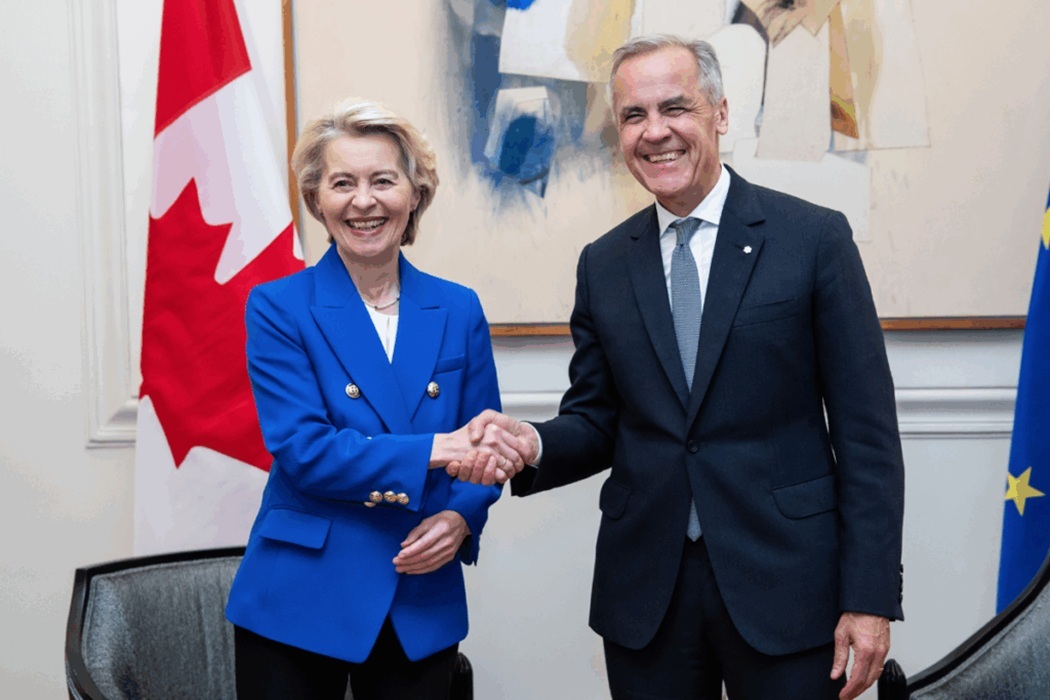
Canada and the European Union have abandoned the eye-catching idea of making Canada an "associate member" of the EU, removing the phrase from the joint declaration due to be issued at their two-day summit in Montreal. In its place, the declaration promises an "ever closer association" between Ottawa and the 27-nation bloc, with work to define the relationship continuing until another summit next year. The retreat on wording, reported by Reuters from a draft seen ahead of the summit, is less a collapse of the project than a recognition of its central problem: nobody could say what associate membership actually meant.
The summit, hosted by Canadian Prime Minister Mark Carney and opening on Thursday 29 October, is still being presented by both sides as a milestone. European officials have described it as opening a new chapter in the partnership, and Carney has framed it as the launch of a year of formal negotiations. The label may have been the news in September, when European Commission President Ursula von der Leyen first floated it. The substance — trade, defence, energy, critical minerals, artificial intelligence and cybersecurity — is what the Montreal talks are actually about.
Table of Contents
- What was dropped, and what replaced it
- Why EU capitals objected to the label
- Carney's calculation: diversification away from Washington
- The Trump factor
- What 'ever closer association' could actually deliver
- Key takeaways
- Frequently Asked Questions
- Sources
- Chronicle related reading
What was dropped, and what replaced it
Von der Leyen proposed six weeks ago that Canada become the EU's first associate member, a striking gesture at a moment when transatlantic relations were under severe strain. According to Reuters, the draft declaration prepared for Montreal removes the terms "associate member" and "associated membership" entirely. The German Press Agency, cited by Free Malaysia Today, reports that the statement now calls instead for an "ever closer association" between Canada and the EU.
The declaration, which officials plan to make public on Friday at the summit's close, also waters down some of the commitments originally envisaged. Provisions on financial market integration and mutual preferential treatment on economic security measures have been weakened, according to the dpa reporting. That softening tells its own story: when 27 governments must agree on a text, ambition tends to survive only where it is already well defined.
Even so, the summit is not an empty ritual. The declaration commits both sides to keep defining the relationship until their next summit in 2027, and it centres on an initiative Carney has called an "Alliance for the Future" — practical cooperation that stops short of membership but goes well beyond a standard trade relationship.
Why EU capitals objected to the label
The core objection was legal, not political. There is no precedent for EU associate membership and no definition of it in the bloc's treaties. Germany led a group of member states arguing that they could not formally endorse a concept that had neither legal standing nor a fleshed-out framework, diplomats told Reuters. France, Italy and Greece were among the other governments that raised objections during negotiations over the summit text.
Germany had an additional sensitivity. Chancellor Friedrich Merz had previously proposed an intermediate arrangement for Ukraine that could allow Kyiv to attend EU summits and ministerial meetings without voting rights. Berlin did not want the same terminology applied to Canada, whose situation is fundamentally different: unlike Ukraine, Canada has no legal route to EU membership at all, since membership is limited to European states.
The episode also exposed a process complaint. Several capitals felt the proposal had been announced before it had been properly discussed among member states, leaving negotiators to retrofit a legal meaning onto a political slogan. Dropping the label, in that light, was the price of getting all 27 governments to sign the same declaration.
Carney's calculation: diversification away from Washington
For Carney, the summit is part of a broader strategy to reduce Canada's economic and security reliance on the United States. Since President Donald Trump imposed tariffs on Canadian goods, Ottawa has been hunting for alternative partnerships, and the EU — Canada's second-largest trading partner — is the obvious candidate. Nearly 70 percent of Canadian exports still go to the United States, a dependence that tariffs have turned from a fact of geography into a political vulnerability.
Carney has been characteristically pragmatic about the wording dispute. "The good news is it doesn't matter about specific names or nomenclature," he told reporters on Tuesday. "What matters is the difference it will make to the lives of Canadians." He described the summit as the launch of further formal negotiations that will take another year — a timeline that manages expectations while keeping the project alive.
That pragmatism also reflects domestic politics. Carney has stressed that Canada is not seeking full EU membership, a clarification aimed at critics at home who might see the whole exercise as symbolic posturing. His pitch is practical: deeper cooperation that delivers jobs, investment and security, without surrendering sovereignty to Brussels.
The Trump factor
Washington has loomed over the entire exercise. Trump previously called the associate membership proposal "laughable" and warned that if he interpreted it as a "hostile act", the United States might stop trading with Europe "on many things". The warning put EU capitals in an awkward position: a gesture meant to signal solidarity with Canada risked becoming a fresh irritant in the bloc's own fraught trade relationship with Washington.
Canada's efforts to draw closer to the EU therefore carry a calculated risk. Trade talks between Canada and the United States continue, and Ottawa must weigh the value of European diversification against the danger of antagonising its largest trading partner. The toned-down declaration may, paradoxically, help on that front: "ever closer association" is harder to portray as a provocation than a brand-new membership category.
The same tension runs through the wider geopolitical backdrop. Canada and Europe have found common cause in an era of American unpredictability, but neither side can afford to treat that alignment as a substitute for managing the relationship with Washington.
What 'ever closer association' could actually deliver
Strip away the label, and the agenda remains substantial. According to reporting on the summit discussions, the proposed partnership could expand collaboration across trade, defence, energy, critical minerals, artificial intelligence, cybersecurity and digital technology. Officials are also examining Canadian liquefied natural gas exports to Europe, better connections between Canada, Europe and Asia, and more opportunities for young people to work across the Atlantic.
Von der Leyen, arriving in Montreal on Wednesday, continued to advocate for the closer partnership, describing it as a way to bring Canada closer to Europe than ever before. The test will be whether the year of negotiations Carney promised produces binding agreements rather than further declarations. On that front, the summit's real deliverable may be the process itself: a formal, year-long negotiation with a deadline at the 2027 summit.
For now, the Montreal summit captures a familiar pattern in international politics. The headline idea collapses under legal scrutiny, the language is softened until everyone can sign it, and the underlying shift — in this case, a North American country anchoring itself more firmly to Europe — proceeds anyway, more quietly than first advertised.
Key takeaways
- Canada and the EU have removed "associate member" and "associated membership" from their Montreal summit declaration, replacing the terms with a pledge of "ever closer association".
- The label failed because it has no legal status or precedent in EU treaties, and Germany led member-state opposition to endorsing an undefined concept.
- The two-day Montreal summit, hosted by Mark Carney, still launches a year of formal negotiations, with a further summit planned for 2027.
- The drive reflects Carney's strategy of reducing Canada's dependence on the United States, which takes nearly 70 percent of Canadian exports, after Trump-era tariffs.
- Trump had called the associate membership idea "laughable" and warned it could be treated as a hostile act, adding pressure to soften the text.
Frequently Asked Questions
What is EU associate membership, and why does it not exist for Canada?
Associate membership is a status proposed by European Commission President Ursula von der Leyen in September 2026 that would have made Canada the EU's first associate member. It does not currently exist: there is no legal definition of it in EU treaties and no precedent for it. That absence of a legal basis was the main reason member states, led by Germany, refused to endorse the term in the Montreal summit declaration.
What did Canada and the EU agree instead?
They agreed to pursue an "ever closer association" and to continue work defining their relationship until another summit in 2027. The declaration centres on an "Alliance for the Future" covering practical cooperation in trade, defence, energy, critical minerals, artificial intelligence, cybersecurity and digital technology, rather than any membership status.
Is Canada seeking full membership of the European Union?
No. Prime Minister Mark Carney has stressed that Canada is not seeking full EU membership, which in any case is limited to European states. The goal is deeper practical cooperation while preserving both sides' independence.
Why does this matter now?
The summit comes as Canada tries to diversify its economic and security partnerships after the United States imposed tariffs on Canadian goods. The EU is Canada's second-largest trading partner, but nearly 70 percent of Canadian exports still go to the US, so closer European ties are a long-term hedge rather than an immediate replacement.
What happens next?
Formal negotiations are expected to run for another year, with the relationship to be defined further by the next Canada-EU summit in 2027. The Montreal declaration is due to be published at the close of the summit on Friday.
Sources
- Reuters — Canada, European Union officials drop "associate member" from joint summit declaration
- Free Malaysia Today / dpa — EU backtracks on Canada becoming "associate member"
- Europe Says — Canada and EU step back from "associate member" label amid push for closer ties