North Korea has sharply criticised the United States over its arms sales and military support for Taiwan, accusing Washington of fuelling tensions in the Taiwan Strait. The warning, carried by the state-run Korean Central News Agency (KCNA) on Wednesday, came in the same week that Kim Jong Un pledged continued support for Russia — a pairing that underscores Pyongyang's deepening alignment with Moscow and its confrontational posture toward Washington.
Table of Contents
- What Pyongyang said
- The timing: support for Russia
- Taiwan: the broader flashpoint
- Why it matters
- Key takeaways
- Frequently Asked Questions
- Sources
- Related reading
What Pyongyang said
According to Reuters, a KCNA commentary cited North Korean international affairs analyst Kim Myong Chol as saying that US policy on Taiwan was undermining peace and stability in the region. The commentary framed American weapons deliveries and military backing for the island as deliberate provocations that raise the risk of confrontation across the strait.
The language follows a familiar template in North Korean state messaging: casting Washington as the driver of instability while positioning Pyongyang as a defender of regional peace. But analysts note that the focus on Taiwan — rather than the usual rhetoric about the Korean Peninsula itself — reflects how closely North Korea is watching cross-strait dynamics as part of its broader anti-US posture.
The timing: support for Russia
The Taiwan warning arrived alongside a fresh pledge of support for Russia from Kim Jong Un, tying the two messages together. The pairing is not accidental: North Korea's relationship with Moscow has tightened substantially in recent years, with Pyongyang supplying military support for Russia's war effort and the two countries formalising a strategic partnership.
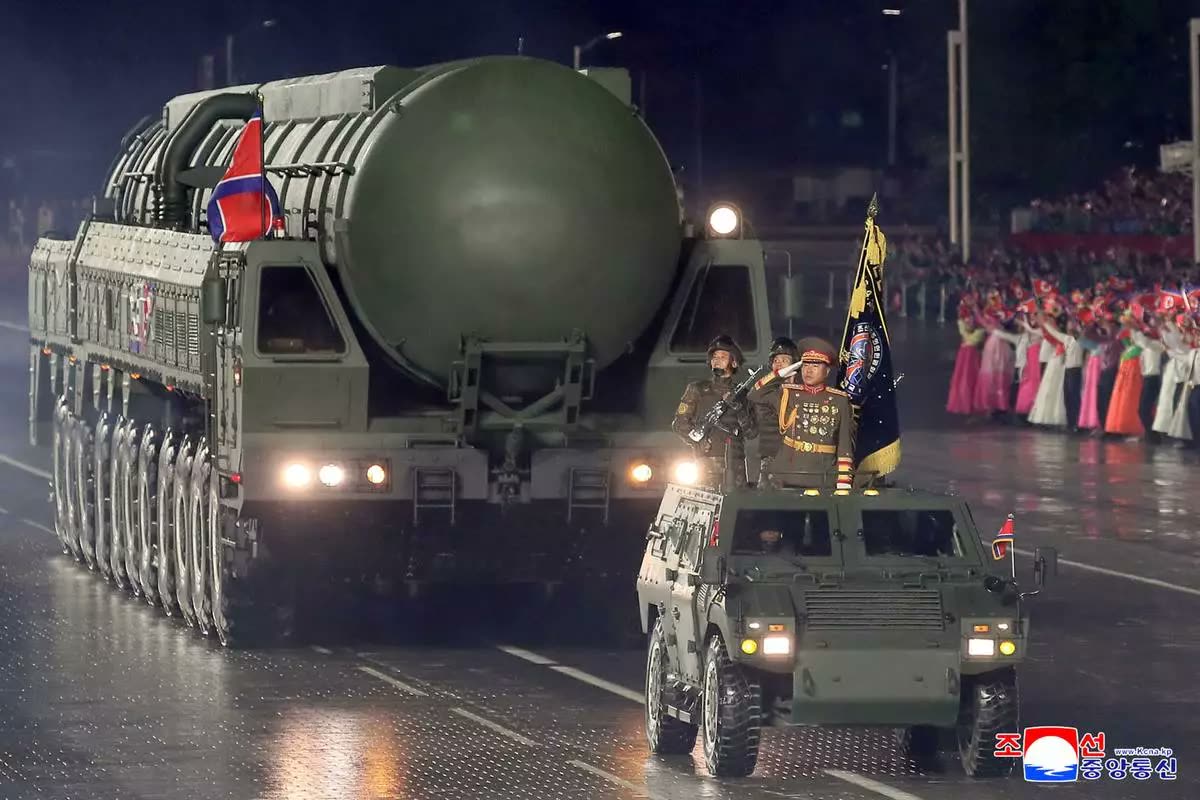
North Korea has also been advancing its own military capabilities — Kim recently inspected new weapons systems, including AI-guided missiles — giving its diplomatic statements added weight in the region.
Taiwan: the broader flashpoint
Cross-strait tensions remain one of Asia's most dangerous fault lines. The United States maintains a policy of providing Taiwan with defensive weapons — a stance Beijing considers a violation of its sovereignty. Taiwan recently received new F-16V fighter jets, deliveries that drew fresh objections from China and highlighted how the island's military build-up continues alongside diplomatic friction.
North Korea's intervention in the debate adds another layer. Pyongyang has no formal stake in Taiwan's status, but by aligning itself with Beijing's position, it reinforces the bloc of authoritarian states pushing back against US-led alliances in the Indo-Pacific. For Washington, the message is a reminder that pressure points across the region — from Pyongyang to the Taiwan Strait to the South China Sea — are increasingly connected.
Why it matters
The practical impact of a KCNA commentary is limited; North Korea wields no direct influence over Taiwan's future. But the symbolism is significant. It signals that Pyongyang intends to stay relevant in wider Asian security debates, and it suggests the Russia–North Korea partnership will continue to echo Chinese positions on Taiwan — creating a coordinated front against US alliances.
For policymakers in Washington, Taipei, Seoul and Tokyo, the episode is a reminder that deterrence in the region must account for a trio of adversaries that increasingly coordinate their messaging, if not yet their actions.
Key takeaways
- KCNA published a commentary on October 7 accusing the United States of fuelling Taiwan Strait tensions through arms sales and military support for Taipei.
- The statement, attributed to analyst Kim Myong Chol, claimed Washington's Taiwan policy undermines regional peace and stability.
- In the same week, Kim Jong Un pledged continued support for Russia, underscoring the tightening Pyongyang–Moscow partnership.
- The warnings add to existing cross-strait friction, including Taiwan's recent receipt of F-16V fighter jets and Beijing's objections.
Frequently Asked Questions
What did North Korea actually say about Taiwan?
A KCNA commentary published on October 7, citing international affairs analyst Kim Myong Chol, accused the United States of fuelling tensions in the Taiwan Strait through arms sales and military support for Taiwan, and said US policy was undermining regional peace and stability.
Does North Korea have a stake in the Taiwan issue?
Not directly. North Korea has no formal position on Taiwan's status, but its criticism aligns with Beijing's stance and reflects Pyongyang's broader strategy of opposing US alliances and military presence across the Indo-Pacific.
What did Kim Jong Un pledge to Russia?
Kim pledged continued support for Russia, consistent with the deepening strategic partnership between the two countries. North Korea has provided military support for Moscow's war effort in recent years.
Why does Taiwan matter so much in regional security?
Taiwan sits at the centre of a strategic rivalry between the United States and China. Beijing claims the island as its territory; the US provides Taiwan with defensive weapons while maintaining strategic ambiguity on defence commitments. Any escalation could draw in multiple major powers.
How does this fit with North Korea's own weapons programmes?
Pyongyang continues to advance its military capabilities, including missile development — Kim recently inspected new AI-guided missile systems. The diplomatic warnings reinforce its image as an active player in regional security dynamics beyond the Korean Peninsula.
Sources
- Reuters World News Summary via Devdiscourse: North Korea warns US over Taiwan
- Straits Times: While You Were Sleeping, Oct 7, 2026