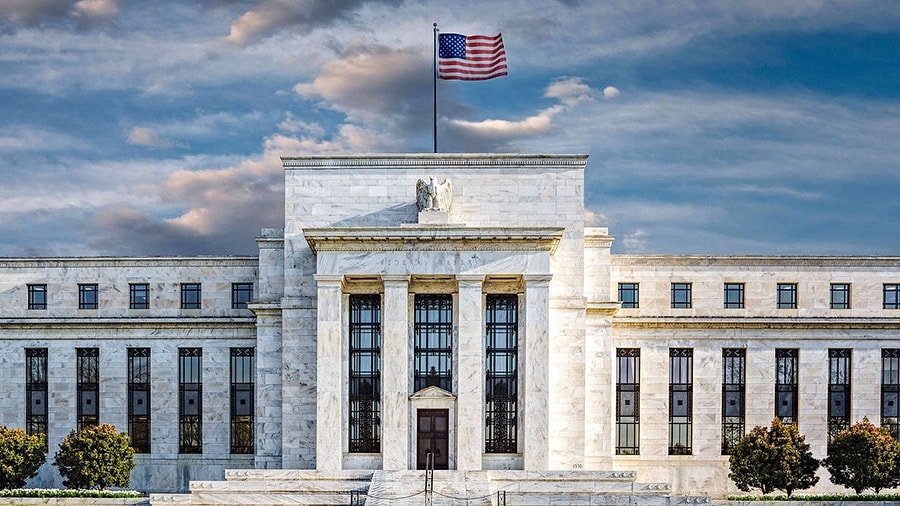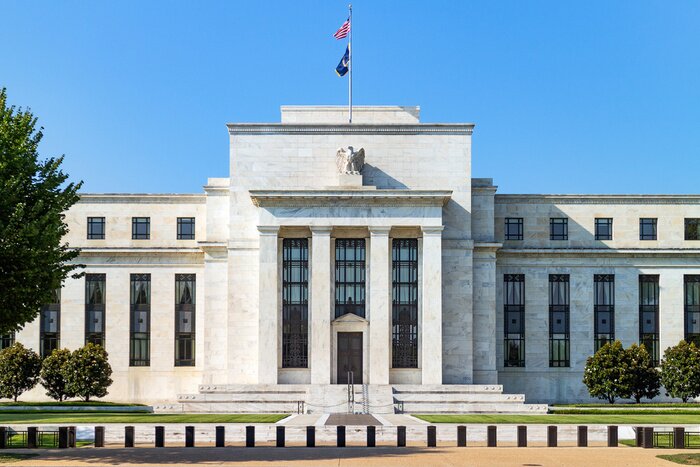
The United States Federal Reserve has cut its benchmark interest rate for the second time this year, lowering the target range by a quarter of a percentage point to 3.75 to 4 percent as officials respond to a labour market that has lost momentum while inflation remains above their long-run goal.
The decision, taken by the Federal Open Market Committee (FOMC) after its policy meeting on Wednesday, marks another step in the central bank's gradual easing cycle. It leaves borrowing costs lower than they were at the start of the year, a shift that ripples through mortgages, business loans, credit cards and savings accounts across the world's largest economy — and, through the dollar and global capital flows, well beyond it.
Table of Contents
- A cooling labour market tips the balance
- Inflation still above target
- What the cut means for households and businesses
- A delicate moment for central banks worldwide
- What comes next
- Frequently Asked Questions
A cooling labour market tips the balance
The committee's statement pointed to an economy that is still expanding, but at a more moderate pace than before. Job gains have slowed this year, and the unemployment rate has edged up, even though it remained low through August, according to the FOMC statement reported by Xinhua.
That combination — growth that has not stalled, but hiring that has clearly weakened — is the core of the Fed's dilemma. Cut too slowly, and a softening labour market could harden into rising unemployment. Cut too fast, and price pressures that have not yet fully subsided could reignite. Wednesday's quarter-point move is, in that sense, a deliberately measured step rather than a rush: enough to ease pressure on borrowers, modest enough to keep the Fed's options open.
The decision also arrives against an unusual backdrop for American policymaking. The Fed has been operating under sustained political pressure from the White House this year, and its independence — the principle that interest rates are set on economic evidence rather than political timetable — has become a live public debate. The committee's insistence on data-dependent, meeting-by-meeting decisions is, in part, a defence of that independence.
Inflation still above target
The FOMC restated its longer-run goal of maximum employment and inflation at 2 percent. Price growth has come down substantially from its peak, but it has not yet settled at target, and the committee has repeatedly said it will not declare victory prematurely.
Energy prices remain a particular source of uncertainty. An oil shock linked to the war involving the United States and Israel against Iran has pushed up costs in recent weeks, and central bankers on both sides of the Atlantic have flagged it as an upside risk to inflation. That risk is one reason the Fed has preferred quarter-point steps to larger moves: easing must be weighed against the possibility that energy-driven price increases feed through into broader inflation.
What the cut means for households and businesses
For ordinary borrowers, the effect of a quarter-point cut is real but gradual. Mortgage rates, which track long-term bond yields as much as the Fed's overnight rate, tend to move only partly and with a lag. But credit-card rates, car loans and small-business lending respond more directly, and each cut lowers the cost of servicing existing variable-rate debt.
For businesses, cheaper borrowing can support investment and hiring at a moment when both have cooled. For savers, the flip side is lower returns on deposits and money-market funds. And for emerging markets, a lower US rate typically eases pressure on their currencies and their own borrowing costs, since capital has less incentive to chase dollar yields.
Markets had widely expected a cut at this meeting, and the announcement itself produced no dramatic reaction — a sign that the Fed's communication had prepared investors. What matters more now is the path the committee signals for the months ahead, and whether officials see further easing as likely or prefer to pause and assess the data.
A delicate moment for central banks worldwide
The Fed is not easing in isolation. Across the Atlantic, the European Central Bank is navigating its own fraught moment: its president, Christine Lagarde, has announced she will step down in February 2027, nine months before her term expires, opening a high-stakes succession race just as the ECB confronts resurgent inflationary pressures and rising bond yields, notably in France. Readers can follow that story in our earlier coverage of Lagarde's early departure.
The contrast is instructive. Where the Fed is cutting into a cooling labour market, the ECB has lately been leaning the other way, weighing rate increases against an oil-driven inflation shock. The two central banks face the same global forces — energy prices, trade tensions and political uncertainty — but from different positions, and their divergent paths will shape exchange rates, capital flows and growth on both continents through the winter.
The Fed's own history underlines how unusual the current cycle has been. The last time it moved rates sharply upward, it delivered its first rate hike in three years as inflation surged; the easing phase now under way is the slow unwinding of that tightening, calibrated meeting by meeting.
What comes next
The key questions for the Fed's remaining meetings this year are whether job growth stabilises or deteriorates further, and whether inflation resumes its downward path or stalls above target. If hiring weakens more sharply, pressure for faster easing will grow. If inflation proves sticky, the committee may pause even as the labour market cools — the hardest trade-off in central banking.
For now, the message from Wednesday's decision is one of cautious support: the Fed is willing to ease, but it is not in a hurry, and every further step will depend on the data. Households, businesses and markets will be watching the next employment and inflation reports closely — they, more than any speech, will determine whether this second cut of the year is followed by a third.
Frequently Asked Questions
What did the Federal Reserve decide?
The Federal Open Market Committee lowered the target range for the federal funds rate by 25 basis points, to 3.75 to 4 percent, its second rate cut of the year.
Why did the Fed cut rates now?
The committee pointed to economic activity expanding at a moderate pace, job gains that have slowed this year, and an unemployment rate that has edged up but remained low through August — a cooling labour market that warranted some easing even as inflation remains above the 2 percent target.
How does a rate cut affect ordinary people?
It gradually lowers borrowing costs on credit cards, car loans and variable-rate debt, can support business investment and hiring, and tends to reduce returns on savings accounts and money-market funds.
What could change the Fed's path from here?
Weaker-than-expected jobs data would strengthen the case for further cuts, while stubborn inflation — particularly if energy prices keep rising — could push the committee to pause. The Fed says its decisions will remain driven by incoming economic data.