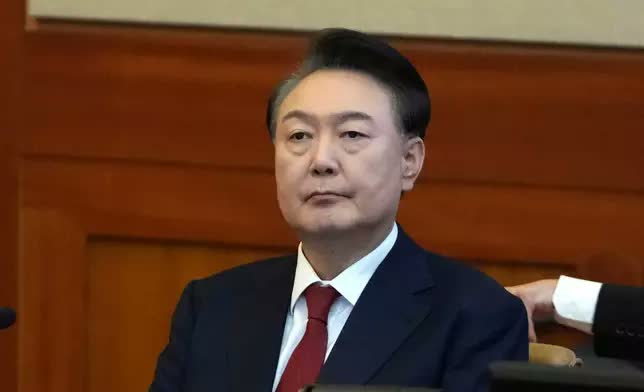
South Korean special prosecutors on Thursday again demanded the death penalty for former president Yoon Suk Yeol, telling an appeals court in Seoul that the life sentence he received in February was too lenient for a man who used the armed forces against his own parliament in a failed attempt to impose military rule.
The demand, made at the closing stage of Yoon's appeal trial before the Seoul High Court, renews the maximum sentence prosecutors sought at his first trial. Under South Korean law, the only sentences available for leading an insurrection are death, life imprisonment, or life confinement — and the prosecution team, led by special counsel Cho Eun-suk, argued that nothing short of death could fully answer a crime of this gravity.
Table of Contents
- An "unforgivable" attack on the constitutional order
- Why prosecutors say life imprisonment is not enough
- The defence: a warning, not a coup
- The night of December 3, 2024
- What happens next
- Frequently Asked Questions
An "unforgivable" attack on the constitutional order
In their closing argument, the special prosecutors described Yoon's December 3, 2024 martial law declaration as a "self-coup staged by an elected president" that plunged the nation into shock and horror. They said the insurrection "demolished every principle of common sense and every achievement of this nation's constitutional history," and that the commander in chief, who had sworn to uphold the Constitution, instead dispatched armed troops against the people. According to The Korea Herald, the team told the court there was "no reason to hesitate to impose the death penalty" and called the offence an unforgivable crime that sought to turn South Korea's clock back 40 years.
The appeal is being heard by the Seoul High Court's Criminal Division 12-1, presided over by Judge Lee Seung-cheol. Yoon, who entered the courtroom in a dark navy suit and black horn-rimmed glasses, is appealing the life sentence handed down in February by the Seoul Central District Court, which found that he illegally mobilised troops and police to seize the legislature, arrest political opponents, and establish unchecked rule.
Why prosecutors say life imprisonment is not enough
The prosecution's core argument is that the first trial court weighed the case too narrowly. Prosecutors challenged three of its findings: that the operation did not appear meticulously planned, that martial law ended quickly, and that the use of force was restrained. They argued the operation failed not because Yoon showed restraint, but because of public resistance and because soldiers and police officers were reluctant to follow orders. Martial law ended, they said, only because the National Assembly demanded its lifting.
They also disputed treating Yoon's long career as a prosecutor as a mitigating factor, arguing that he had used knowledge gained in that career to commit the crime. And they said the lower court had applied Supreme Court precedents only partially, taking too narrow a view of the insurrection's preparations and aims. As Al Jazeera reported, the team argued that Yoon's actions posed a grave threat to the country's democracy — the same reasoning behind their original death-penalty request in January.
The defence: a warning, not a coup
Yoon's legal team has consistently rejected the insurrection charge. His lawyers told reporters that prosecutors were repeating an argument "devoid of evidence and legal logic," and maintained that the martial law declaration was intended to raise public awareness of what Yoon called attempts by the opposition-led legislature to paralyse state affairs. They said he had no intention of causing harm or establishing authoritarian rule, and described the decree as a form of "message martial law" — a warning shot rather than a genuine bid for power.
The defence has also pointed to the scale of the deployment, noting that only around 280 unarmed order-maintenance troops were sent to the National Assembly, and arguing that no riot took place. That framing will be tested again when Yoon's lawyers deliver their own closing arguments and he gives his final statement, scheduled for early November.
The case is only one of several legal fronts Yoon faces. He is the subject of eight trials in total, covering the martial law attempt, his wife's alleged corruption, and the 2023 death of a marine officer. In a separate case earlier this year, he was acquitted of charges relating to poll funds — a reminder of how sprawling, and how politically charged, his post-presidency legal battles have become.
The night of December 3, 2024
The events at the heart of the case unfolded in a single chaotic night. Late on December 3, 2024, Yoon appeared on television to declare emergency martial law, accusing the opposition of sympathising with North Korea and paralysing government. Heavily armed soldiers and police moved to blockade the National Assembly in Seoul, but a quorum of lawmakers broke through the cordon, entered the chamber, and voted to overturn the decree. Within hours, Yoon's own cabinet was forced to lift it.
The backlash was swift and total. Yoon was impeached by the National Assembly, and in April 2025 the Constitutional Court unanimously upheld his removal from office, triggering a snap presidential election. He was arrested, tried, and in February 2026 sentenced to life imprisonment for leading an insurrection. He apologised the following day for the "frustration and hardship" his decree caused the South Korean people, while insisting he stood behind its "sincerity and purpose."
The episode also reverberated beyond South Korea's borders, shaking confidence in one of Asia's most stable democracies and complicating Seoul's relationships with allies at a delicate moment for regional security — a context explored in our coverage of South Korea's recent diplomatic tensions.
What happens next
Closing proceedings continue next week, with Yoon's lawyers set to present their final arguments and Yoon himself due to give a final statement on November 5. The court will then announce a sentencing date. Even if the High Court were to impose the death penalty, an execution is highly unlikely: South Korea has not carried out an execution since 1997 and effectively maintains a moratorium on capital punishment, following years of calls for its abolition.
Whatever the court decides, the appeal verdict will be a landmark in South Korea's democratic history — the first time a former president's fate has been weighed at this level of appeal, and a test of whether the country's courts treat an elected leader's attempt to seize unchecked power as a crime deserving of the ultimate punishment, or as one already answered by life behind bars.
Frequently Asked Questions
Why are prosecutors seeking the death penalty for Yoon Suk Yeol again?
They already sought it at his first trial in January 2026, but the court sentenced him to life imprisonment in February. At the appeal hearing, special counsel Cho Eun-suk's team argued the life sentence was too lenient and that only the death penalty could fully hold Yoon accountable for leading an insurrection.
What did Yoon Suk Yeol do in December 2024?
Late on December 3, 2024, Yoon declared emergency martial law, sent troops and police to blockade the National Assembly, and sought to arrest political opponents. Lawmakers broke through the blockade and voted to overturn the decree within hours, forcing his cabinet to lift it.
Has South Korea executed anyone recently?
No. South Korea has not carried out an execution since 1997 and effectively maintains a moratorium on capital punishment, so even a death sentence would be unlikely to lead to an execution.
When will the appeals court decide?
Yoon's lawyers will deliver closing arguments and Yoon will give his final statement on November 5, after which the Seoul High Court will announce a sentencing date.