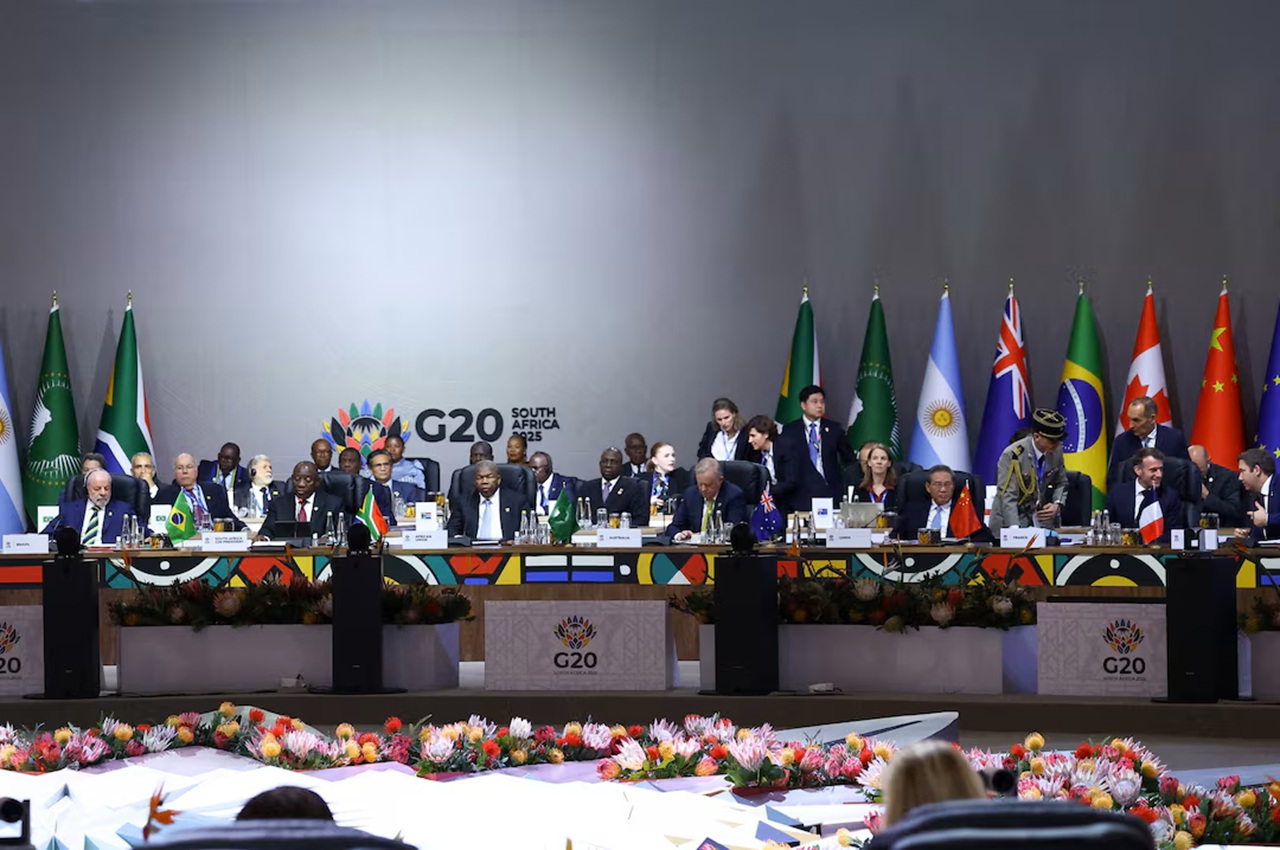
Foreign ministers from the world's 20 largest economies opened two days of talks in Atlanta on Friday, October 30, in a meeting expected to be fractious from the start, with the wars in Ukraine and Iran, surging energy prices and disputes over shipping lanes dividing a forum that was built to forge consensus.
United States Secretary of State Marco Rubio is hosting and chairing the gathering, held under the American presidency of the G20, just days before crucial US midterm elections on November 3. The talks are meant to set the stage for a leaders' summit in December at President Donald Trump's Doral resort in Miami — but few breakthroughs are expected in Atlanta, where the disagreements on the table are the same ones that have paralysed the group for months.
Table of Contents
- A divided room, and a conspicuous guest
- Energy and shipping lanes at the centre
- No joint statement expected
- Notable absences and sidelined voices
- Why Atlanta matters despite low expectations
- What happens next
- Frequently Asked Questions
A divided room, and a conspicuous guest
The most closely watched encounter in Atlanta is between Rubio and Russian Foreign Minister Sergey Lavrov, whose presence adds a layer of tension to an already difficult meeting. Russia has been shunned by most of the West since its 2022 invasion of Ukraine, and Lavrov himself remains under international sanctions. His trip to Atlanta is a rare visit to a NATO country since the invasion began, Reuters reported.
Washington is pursuing two tracks at once: diplomacy on Ukraine, and an effort to keep Moscow's cooperation on reining in fuel prices — a key campaign issue in the midterms. Lavrov, for his part, plans to argue against sanctions at the meeting, a position likely to frustrate European ministers, according to analysts at the Atlantic Council cited by Reuters. The balancing act captures the awkwardness of the moment: the United States wants to talk to Moscow about ending a war and lowering petrol prices, while its European partners want pressure on Russia maintained.
The meeting's Friday schedule reflects that tension, with a morning session on geopolitical issues and an afternoon session on energy and economic growth, according to the Associated Press. On the sidelines, the foreign ministers of the Quad — the United States, India, Japan and Australia — are also meeting.
Energy and shipping lanes at the centre
If there is a unifying theme in Atlanta, it is the economic shockwave of war. Global energy prices have rocketed since US-Israeli strikes on Iran from late February triggered Tehran's blockage of the Strait of Hormuz, the narrow waterway through which a large share of the world's traded oil passes. Brent crude has climbed above $116 a barrel, on track for a fourth consecutive monthly gain.
Washington's stated priority is agreement on freedom of navigation — in the Strait of Hormuz, the Red Sea, the Black Sea and the South China Sea. A State Department official said the talks would address energy and supply-chain challenges and stressed a "shared resolve to keep critical sea lanes open to commerce without threats or tolls", Reuters reported.
That ambition runs into a familiar obstacle. China dissented against wording on free navigation in Hormuz and worldwide at an earlier gathering of finance ministers, and the same objection could surface again in Atlanta. The dispute is not academic: the Hormuz crisis has already disrupted shipping badly enough to strand crews at sea, as Chronicle reported in the rescue of 25 crew members from a burning tanker near the Strait, and to push governments across the region into emergency postures.
The Iran question also hangs over the room in a more immediate way. The Associated Press has reported that US officials told several Middle Eastern countries and allies to prepare for possible renewed US strikes against Iran after Tuesday's midterm elections, and for possible Iranian retaliation. Israel has separately threatened to strike Iran, and Trump has signalled he could attack after the elections — a prospect that makes the Atlanta discussions about energy security feel less like planning and more like contingency.
No joint statement expected
Diplomats are not expecting the meeting to produce a joint declaration. Instead, a diplomatic source told Agence France-Presse that the United States is expected to issue a chair's summary — a document written by the host alone — after the talks conclude on Saturday. That outcome would underline how far the G20 has drifted from its origins as a consensus forum.
"The G20 is no longer really a forum where foreign ministers can reach agreement on a statement," one diplomatic source told AFP, in remarks carried by Kuwait Times. The expectation of a chair's summary rather than a negotiated text is itself a measure of the divisions: on Ukraine, on Iran, on tariffs and on China's actions in the South China Sea, the members cannot agree on language, let alone policy.
The trade dimension compounds the problem. The ministers meet against a backdrop of US tariffs and disputes over industrial policy that have already split the group at earlier gatherings this year, including the G20 trade split seen in Milwaukee. Atlanta's agenda links those trade frictions to the wars directly: Washington wants to argue that security shocks are also economic shocks, and that disrupted sea lanes and energy supplies are a shared problem even when the wars behind them are not shared positions.
Notable absences and sidelined voices
Two absences have drawn attention. China's top diplomat, Wang Yi, is not in Atlanta and is sending his deputy instead, the US State Department said — a downgrade that limits how far any discussion involving Beijing can go. And Ukraine, which was invited to earlier G20 meetings, was not invited this year; US officials said they chose to include only formal members. South Africa, a G20 member, was also not invited, according to reports from the meeting.
The exclusions matter because they shape what Atlanta can plausibly decide. A discussion of the Ukraine war without Ukraine in the room, and of Asian security questions without China's foreign minister present, is a discussion with built-in limits. It also feeds the criticism that the G20 under the current presidency is narrowing rather than broadening its circle at precisely the moment its agenda is widening.
Why Atlanta matters despite low expectations
It would be easy to dismiss a meeting with no joint statement in prospect, but Atlanta is best read as a staging post rather than a destination. The December leaders' summit in Miami — scheduled for December 14 and 15 at Trump's Doral resort, in the United States' 250th anniversary year — is where the political weight of the presidency will be tested. Atlanta is where the groundwork, and the fault lines, become visible.
The meeting is also a test of whether the G20 can still function as an economic forum while wars dominate its agenda. The group's original purpose was coordinating economic policy; its current reality is that geopolitics now drives the economics — through energy prices, shipping insurance, sanctions and supply chains. If ministers cannot agree even on the meaning of freedom of navigation, the Miami summit will inherit a thinner agenda and a more divided membership.
There is a further, domestic dimension for the host. The talks take place days before midterm elections in which fuel prices are a live campaign issue, and in which the administration's handling of both wars is under scrutiny. The Atlanta choreography — hosting Lavrov, pressing China, warning allies about Iran — is being watched at home as much as abroad.
What happens next
The ministers conclude their talks on Saturday, October 31, after which the expected chair's summary will show how much common ground, if any, was found. Attention will then turn to the leaders' summit in Miami in December, and to the separate question of whether a trilateral meeting involving Ukraine and Russia materialises — a prospect Chronicle has covered in the planned G20 trilateral meeting in the United States.
The more immediate watchpoint is what happens after the midterms. If the reported warnings about renewed strikes on Iran prove accurate, the Atlanta discussions about sea lanes and energy security will look less like diplomacy and more like a prelude. For now, the ministers leave Atlanta with the same wars they arrived with — and a clearer map of where they disagree.
Frequently Asked Questions
What is the G20 foreign ministers' meeting in Atlanta?
It is a two-day meeting, on October 30 and 31, 2026, of the foreign ministers of the Group of 20 major economies, hosted and chaired by US Secretary of State Marco Rubio under the United States' presidency of the group. It is a preparatory meeting ahead of the G20 leaders' summit in Miami in December.
Why is the Atlanta meeting expected to be fractious?
The members are divided over the wars in Ukraine and Iran, over US tariffs, and over China's actions in the South China Sea. Those disputes have pushed up energy prices and unsettled global trade, and they make agreement on a joint statement unlikely.
Why is Sergey Lavrov's attendance significant?
Russia's foreign minister is under international sanctions and has rarely visited a NATO country since Russia's 2022 invasion of Ukraine. His presence puts the tension between engaging Moscow diplomatically and maintaining pressure on it at the centre of the meeting.
Will the meeting produce a joint statement?
No joint declaration is expected. Diplomats anticipate that the United States will instead publish a chair's summary — a document drafted by the host alone — after the talks conclude.
What happens after Atlanta?
The G20 leaders' summit is scheduled for December 14 and 15 at President Donald Trump's Doral resort in Miami. The Atlanta talks are intended to prepare the ground for that summit, including on energy security and freedom of navigation.