The United Nations closed its political mission in Somalia on Saturday 31 October 2026, bringing to an end more than three decades of successive UN political operations in the East African country. The United Nations Transitional Assistance Mission in Somalia (UNTMIS) ceased operations after a two-year transition agreed with the federal government, with its remaining functions transferred to Somali institutions and to UN agencies, funds and programmes already working in the country (Al Jazeera) (Arab News).
The closure is, in the UN's own framing, a handover rather than a departure. The world body is not leaving Somalia: its humanitarian and development agencies remain, and the separate African Union security mission continues, for now, under its own mandate. What ends is the dedicated political mission — the UN's standing instrument for supporting Somalia's state-building, constitutional reform and electoral process. For a country whose modern history has been shaped, at almost every turn, by international engagement, that is a milestone worth marking carefully, without overstating what it means.
From UNPOS to UNTMIS: a mission in three acts
The story of the UN's political presence in Somalia runs through three successive missions. It began with the UN Political Office for Somalia (UNPOS), established in 1995, in the years after the Somali state collapsed and the early UN peacekeeping operations of the 1990s came to a traumatic end. UNPOS was a small political office for a country without a functioning central government, tasked with keeping diplomacy alive where peacekeeping had failed.
In 2013, the Security Council created the UN Assistance Mission in Somalia (UNSOM), a larger mission designed for a different moment: Somalia had a new federal government, a provisional constitution and, for the first time in decades, a plausible path toward democratic transition. UNSOM's mandate was to support the Somali authorities in the transition to democracy and the rule of law, after more than two decades of conflict involving militias, Islamist groups and criminal gangs.
The final act began in May 2024, when Somalia's President Hassan Sheikh Mohamud asked the UN to end the mission ahead of the expiry of its mandate that October. He later revised the request, proposing a two-year transition instead of an abrupt closure. The Security Council agreed: UNSOM was renamed the UN Transitional Assistance Mission in Somalia (UNTMIS) on 1 November 2024, and the two-year handover began, in two phases, under resolutions 2753 (2024) and 2809 (2025). The second phase concluded on 31 October 2026, the date the Council had set for the mission to cease operations.
A transition requested by Mogadishu
The politics of the closure matter. This was not a mission expelled or defunded; it was a mission whose end the host government itself requested, as a statement of sovereignty and of confidence in institutions that, by the UN's account, have grown steadily stronger. That framing — national ownership of the peacebuilding agenda — runs through every official statement about the transition, from the Secretary-General's office to the mission's own farewell message.
"Today is not an end to the partnership between the United Nations and Somalia — rather, it marks the conclusion of one chapter and the beginning of another," said Raisedon Zenenga, UNTMIS officer-in-charge and the UN Secretary-General's deputy special representative for Somalia, in a statement marking the closure. UN spokesperson Stéphane Dujarric stressed that the UN would continue to support Somalia through its agencies, funds and programmes, working with the Somali authorities, the African Union and other international partners to promote peace, stability, human rights and sustainable development.
The practical side of the handover was set out in a roadmap agreed jointly between the Somali government and the UN. The mission's mandates have been transferred to Somali institutions, to the UN country team and to the UN Support Office for Somalia (UNSOS), which provides logistical assistance to the African Union force and eligible Somali security personnel.
What remains unresolved
The closure arrives while Somalia's hardest problems are still open. Al-Shabaab, the Islamist militant group that has fought the federal government for nearly two decades, remains a potent threat, even as Somali forces, backed by the African Union mission, have pushed it back in places. Disagreements over the political and electoral process — between the federal government and some federal member states, and over the pace of constitutional reform — continue to test the institutions the UN mission spent years helping to build. And the humanitarian picture remains severe, with millions of Somalis dependent on aid after years of drought, flooding and conflict.
The security architecture around the transition is itself on a short clock. The African Union Support and Stabilisation Mission in Somalia (AUSSOM), which supports Somali security forces, holds a mandate that runs only until 31 December 2026, as does that of UNSOS. Decisions about what replaces or extends those missions will shape whether the political handover of October holds in practice. Somalia's recent diplomacy — including Mogadishu's firm rejection of outside interference in its affairs, covered in our report on the Berbera dispute — suggests a government increasingly determined to set the terms of international engagement itself.
The UN's experience in Somalia also carries a broader lesson for an organisation under pressure everywhere. In an era when several long-running missions face host-government requests to wind down, Somalia is being presented as the orderly case: a planned, phased, jointly agreed transition, rather than a collapse. Whether that model travels depends on what happens next in Mogadishu — and on whether the Somali institutions now taking up the mission's work can sustain the political process without the daily presence of a special representative.
A chapter, not an exit
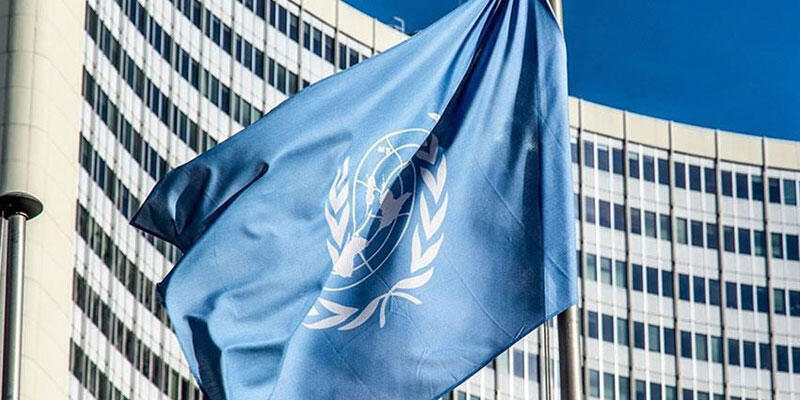
For Somalis, the closure will be felt less as a single event than as a quiet change in who sits at the table. The UN flag will still fly over agency compounds across the country; aid convoys will still run; diplomats will still shuttle between Mogadishu and the federal member states. What has ended is the distinct political mission that, for thirteen years as UNSOM and two as UNTMIS, embodied the international community's commitment to Somalia's democratic transition.
That distinction is the honest measure of the day. Three decades of political engagement — from a small office in the mid-1990s, through the ambitious state-building mission of 2013, to a managed handover in 2026 — have left Somalia with institutions that did not exist a generation ago, and with challenges that no mission, however long, could resolve on its own. The UN's departure from the political stage is, in that sense, both an achievement and a gamble: a vote of confidence in Somali ownership, made while the outcome of that ownership is still being written. It echoes a wider pattern of UN missions reaching the end of their mandates — including the recent Security Council deadlock over Western Sahara, covered in our report on the MINURSO mandate expiry — and it will be judged, ultimately, not by the ceremony of closure but by what Somali institutions do with the responsibilities they have now inherited, in a country where climate shocks and conflict still compound each other, as we reported in our coverage of the flooding crisis.
Key takeaways
- UNTMIS ceased operations on 31 October 2026, ending more than three decades of successive UN political missions in Somalia.
- The closure followed a two-year transition requested by President Hassan Sheikh Mohamud and approved by the Security Council.
- The mission's functions pass to Somali institutions and to UN agencies, funds and programmes; the UN itself is not leaving Somalia.
- The African Union mission AUSSOM and the UN support office UNSOS hold mandates only until 31 December 2026, leaving near-term security questions open.
- Al-Shabaab, political disputes and humanitarian needs remain the central challenges for the institutions inheriting the mission's work.
Frequently Asked Questions
What was UNTMIS?
UNTMIS, the United Nations Transitional Assistance Mission in Somalia, was the final form of the UN's political mission in Somalia. It was created on 1 November 2024 when the earlier mission, UNSOM, was renamed and given a two-year transition mandate, and it ceased operations on 31 October 2026.
Why did the mission close?
Somalia's President Hassan Sheikh Mohamud asked the UN in May 2024 to end the mission, later proposing a two-year phased transition instead of an immediate closure. The Security Council agreed, setting 31 October 2026 as the date for the mission to cease operations after its functions were transferred to Somali institutions and UN agencies.
Is the United Nations leaving Somalia?
No. UN humanitarian and development agencies, funds and programmes continue to operate in Somalia, and the UN Support Office for Somalia continues to provide logistical assistance. What ended was the dedicated political mission, not the UN's presence in the country.
What happens to security in Somalia now?
Somali security forces continue to be supported by the African Union Support and Stabilisation Mission in Somalia (AUSSOM), but its mandate runs only until 31 December 2026, as does that of the UN support office. Decisions on what follows will be critical to sustaining security gains against Al-Shabaab.