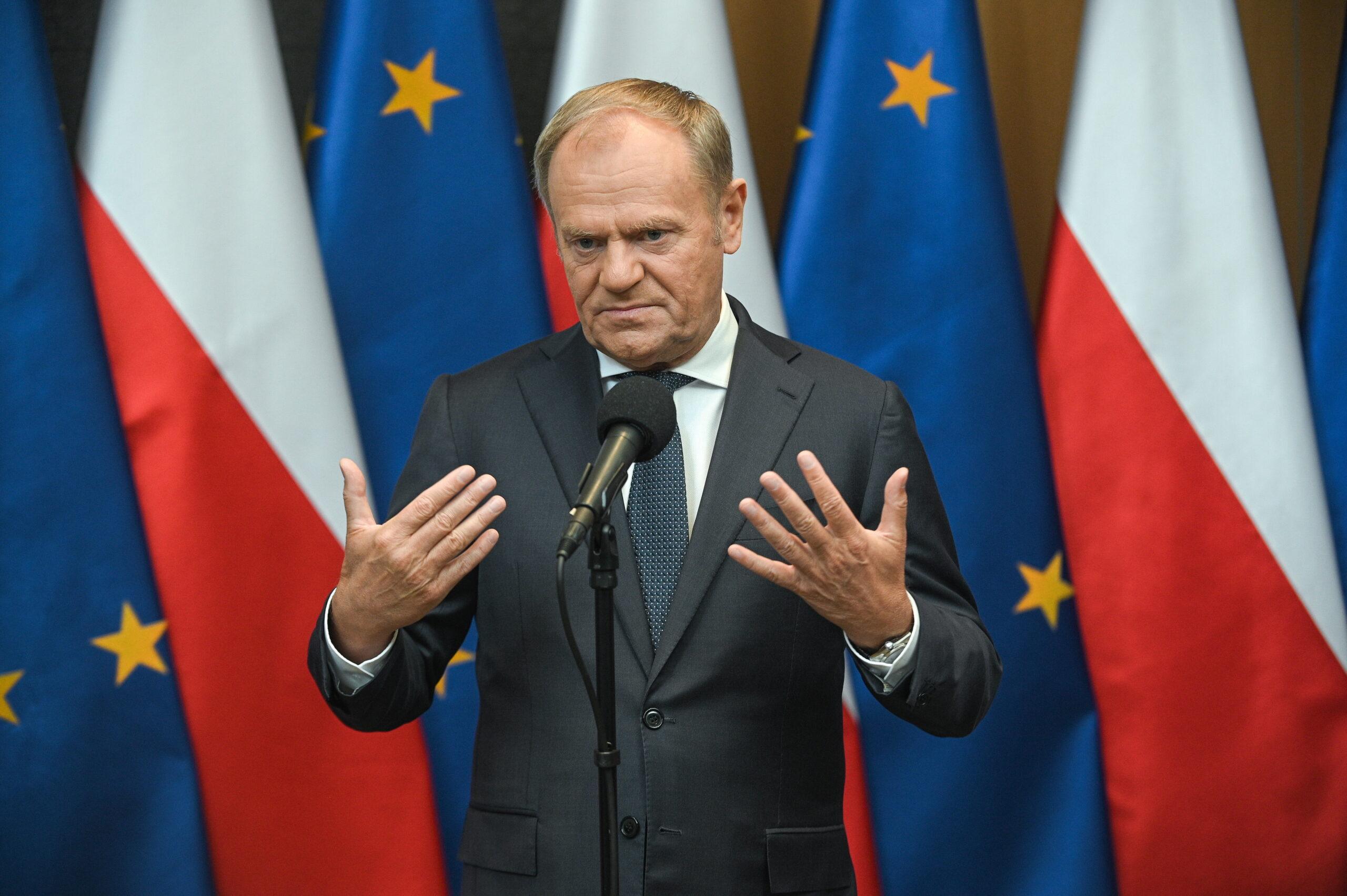
Polish police have received information about a possible attack on Prime Minister Donald Tusk and Deputy Prime Minister and Defence Minister Wladyslaw Kosiniak-Kamysz, an Interior Ministry spokesperson announced on Sunday, putting the country on a fresh security footing. The revelation triggered an emergency gathering of security chiefs and deepened concerns about a state already rattled by a wave of violence in schools earlier this week.
"Following information received by the Polish Police regarding a possible attack on Prime Minister Donald Tusk and Deputy Prime Minister and Defense Minister Wladyslaw Kosiniak-Kamysz, Interior Minister Marcin Kierwinski, and the Minister-Coordinator of Special Services, Tomasz Siemoniak, have ordered action to be taken in this matter," spokesperson Karolina Galecka wrote on X on Sunday, according to Reuters.
Emergency meeting at the counter-terrorism centre
An emergency meeting was scheduled for 11:00 a.m. on Sunday at the Internal Security Agency's (ABW) Counter-Terrorism Centre, bringing together representatives of the police, the Government Protection Service and ABW officers to assess the intelligence and decide on next steps, reported the Associated Press.
No further details about the reported plot have been made public, and officials have not said how credible the threat is believed to be or whether any suspects have been identified. The announcement is a developing story, and Polish authorities are expected to issue updates after the Sunday meeting.
A week of high alert
The announcement comes at an already tense moment for Poland. Authorities have been on high alert following three school attacks within four days in the Mazovia province, where the capital Warsaw is located, culminating in the death of a school caretaker on Thursday. The government deployed police reassurance measures nationwide and responded to the third school attack in Warsaw, amid rumours circulating on social media about further planned violence.
Hybrid-war backdrop
The reported threat against Tusk and Kosiniak-Kamysz also lands in the context of Tusk's repeated warnings about Russian hybrid operations against NATO's eastern flank. In September, the prime minister warned that the coming weeks and months could bring intensified Russian activity and did not rule out an escalation extending onto Polish territory, a warning echoed by Lithuania's foreign minister, according to RBC-Ukraine.
Warsaw has repeatedly accused Moscow of sabotage, cyberattacks and disinformation campaigns aimed at destabilising countries that support Ukraine. Moscow has denied any such plans. With Tusk himself navigating both the school-violence crisis and renewed transatlantic turbulence over Ukraine — see the Trump-Putin diesel deal dispute — Sunday's alert adds another layer of strain to Poland's security posture.
Why this matters
A reported plot against a sitting EU prime minister and his defence minister is a grave matter regardless of its credibility: it forces a recalibration of personal security, absorbs the attention of the country's top counter-terrorism officials, and feeds public unease in a week already marked by school violence. If the intelligence proves serious, the emergency measures ordered on Sunday will shape Poland's response for weeks. If it proves less so, the episode still underscores how quickly threat reporting can unsettle a frontline NATO state living with the shadow of hybrid war.
Frequently Asked Questions
What did Polish police report?
An Interior Ministry spokesperson said police had received information about a possible attack on Prime Minister Donald Tusk and Deputy Prime Minister and Defence Minister Wladyslaw Kosiniak-Kamysz, and that the Interior Minister and the minister-coordinator of special services had ordered action to be taken.
Who is attending the emergency meeting?
Representatives of the police, the Government Protection Service and the Internal Security Agency (ABW) met at the ABW Counter-Terrorism Centre on Sunday at 11:00 a.m. to assess the information and next steps.
Why is Poland already on high alert?
Three school attacks in four days in Mazovia province, culminating in the death of a school caretaker on Thursday, had already placed authorities on high alert, with nationwide police reassurance deployments.
How does this connect to Russia?
Tusk warned in September about likely intensified Russian hybrid attacks on NATO's eastern flank, and Poland has long accused Moscow of sabotage and destabilisation campaigns — a backdrop that gives Sunday's alert additional weight, though no official link to Russia has been stated in this case.