The United States produced more natural gas than ever before in July. Gross withdrawals — the total volume of gas extracted at the wellhead — averaged 137 billion cubic feet per day (Bcf/d), the highest monthly level on record, according to the U.S. Energy Information Administration's latest Natural Gas Monthly report. It was the first new production record of 2026, following five record-setting months during 2025.
The surge was driven overwhelmingly by the Permian Basin, the shale giant straddling western Texas and eastern New Mexico that remains one of the world's most prolific oil and gas regions. New wells coming online in Texas and New Mexico pushed combined gross withdrawals in the two states up by 1.7 Bcf/d — a 3.2% jump — between June and July alone, the EIA reported.
Table of Contents
- The Permian Effect: Oil Wells Producing Ever More Gas
- Pipeline Relief: New Routes to the Gulf Coast
- Why the Record Matters Now
- Key Takeaways
The Permian Effect: Oil Wells Producing Ever More Gas
Much of the Permian's growth is a byproduct of its crude oil dominance. As wells in the basin mature, their gas-to-oil ratios are rising — each barrel of oil is accompanied by more associated gas than before. That structural shift, combined with higher natural gas prices, improved new-well productivity and more efficient operations, has turned the region into the single largest source of U.S. gas growth.
Growth was not confined to the Permian. Production also rose in Louisiana, Oklahoma and North Dakota, with gross withdrawals in each state climbing by more than 0.1 Bcf/d during July, Pipeline & Gas Journal reported.
Pipeline Relief: New Routes to the Gulf Coast
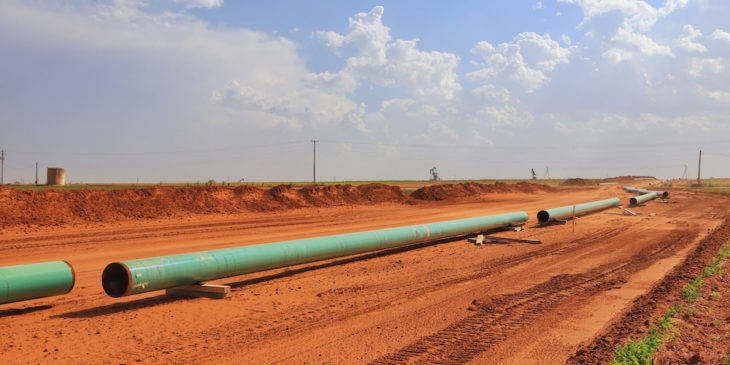
A record at the wellhead means little if the gas cannot reach buyers. For years, transportation bottlenecks have periodically trapped Permian gas in West Texas, depressing regional prices. That constraint is now easing: new pipeline infrastructure is expanding takeaway capacity from the basin toward liquefied natural gas (LNG) export terminals along the Gulf Coast.
One such project, the Hugh Brinson Pipeline, began interstate flows ahead of schedule during the summer, adding another route for gas moving out of West Texas. Additional capacity expected online is set to improve access from the Permian to Gulf Coast markets, the EIA said.
Why the Record Matters Now
The timing is notable. Just this week, the G7 agreed to release up to 100 million barrels of crude oil and diesel reserves to counter record diesel prices, and Brent crude closed near $102 a barrel — a market roiled by the wars in Iran and Ukraine and repeated Ukrainian strikes on Russian refineries, as we reported in our coverage of the G7 reserve release. A parallel boom in U.S. gas output strengthens Washington's hand in energy diplomacy: record domestic production feeds both domestic demand and the growing LNG export trade that supplies allies in Europe and Asia.
For energy investors, the trend signals continued demand for gathering, processing and transmission infrastructure. For climate policy, it raises the familiar tension between energy security and emissions goals — more gas means more supply, but also more methane and CO₂ unless abatement keeps pace. The EIA's three production measures tell a nuanced story: gross withdrawals reflect the full well stream, while marketed production excludes gas used for repressuring, vented and flared gas, and removed non-hydrocarbons.
Key Takeaways
- All-time high: U.S. gross natural gas withdrawals hit 137 Bcf/d in July 2026 — the first new monthly record of 2026 after five record months in 2025.
- Permian-driven: Texas and New Mexico added a combined 1.7 Bcf/d (+3.2%) from June to July; rising gas-to-oil ratios in maturing Permian wells are contributing more associated gas.
- Broader gains: Louisiana, Oklahoma and North Dakota each grew output by more than 0.1 Bcf/d.
- Pipeline unlock: The Hugh Brinson Pipeline began interstate flows ahead of schedule, easing long-standing West Texas takeaway bottlenecks and linking Permian gas to Gulf Coast LNG terminals.
- Strategic context: The record arrives amid an oil and diesel supply crunch (Brent near $102), boosting the U.S. position as a swing supplier of energy to global markets.