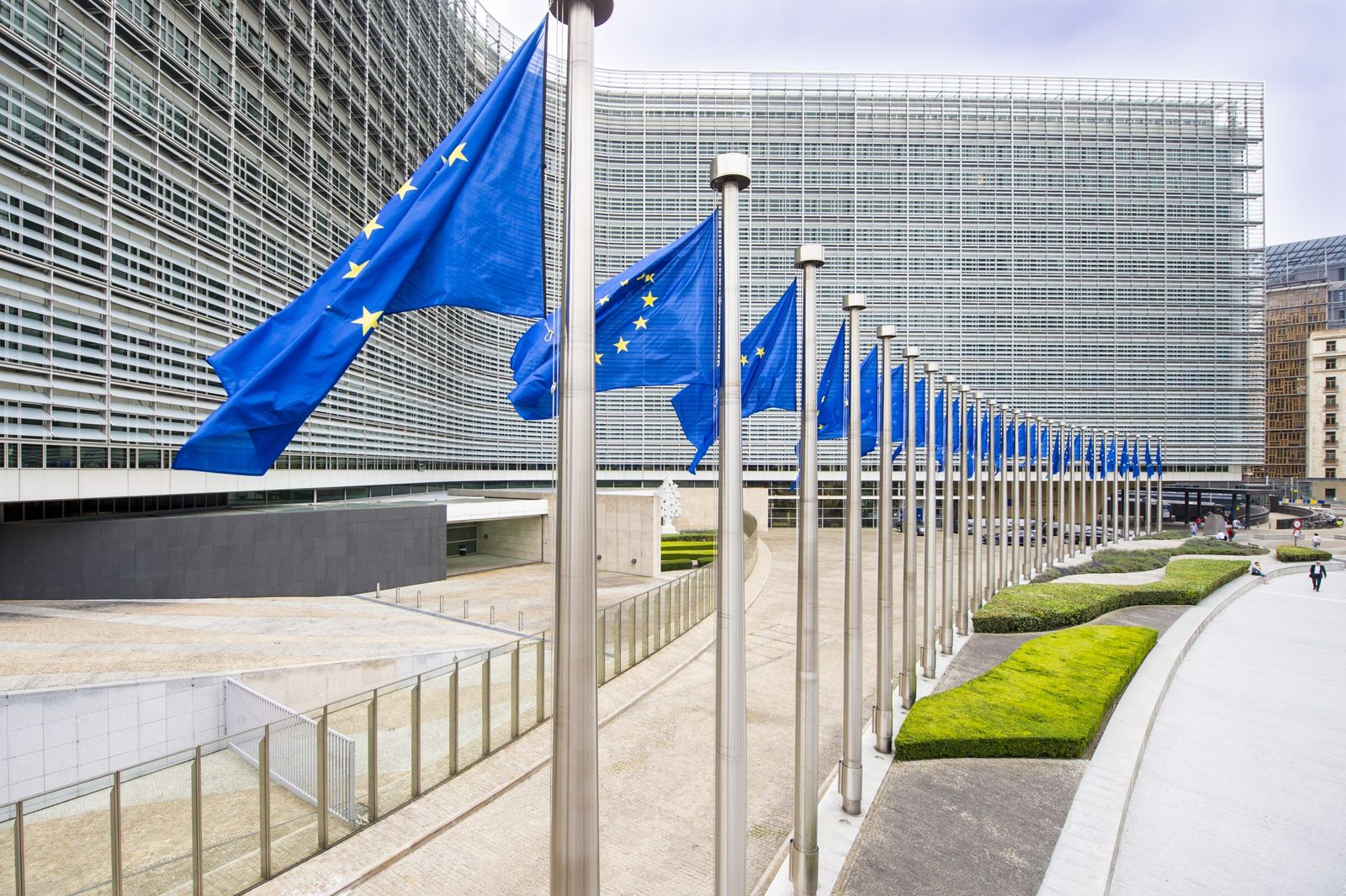
The European Union's ambassadors on Wednesday agreed to take the next step toward opening two more negotiation chapters in Ukraine and Moldova's accession bids — a move that could put the two largest enlargement clusters on the table at an intergovernmental conference in Luxembourg next week. The decision, reported by the Kyiv Independent, marks the clearest sign yet that Brussels intends to keep its eastward expansion moving despite years of gridlock, and it arrives alongside a broader package of reforms designed to prepare the bloc for new members.
Table of Contents
- What the ambassadors decided
- What still has to happen before Oct. 13
- Hungary's shadow over the process
- The bigger picture: roadmaps on Oct. 28
- Moldova's parallel track
- Why this matters beyond Brussels
- Frequently Asked Questions
What the ambassadors decided
Ambassadors from the EU's 27 member states agreed on Oct. 7 to advance the accession process to the stage where two so-called negotiation clusters — on the internal market and on competitiveness — can be opened with Ukraine and Moldova. These are the two largest of the six clusters into which the bloc divides the reforms candidate countries must complete, covering vast swaths of economic policy: goods, services, capital, labor mobility, company law, intellectual property and competition rules among them.
The decision applies to both countries together, because the EU has politically linked their accession efforts. Earlier this year, the first two clusters — on the rule of law and on external relations — were already opened, in June and July respectively.
What still has to happen before Oct. 13
The ambassadors' green light is not the finish line. Several procedural gates remain before the clusters can formally open at the Intergovernmental Conference scheduled for Oct. 13 in Luxembourg:
- Ukraine must first submit a written negotiating position to the EU, which is understood to be ready.
- A working group of technical experts from all 27 member states must agree on the bloc's common position.
- Ambassadors and then ministers from the 27 countries must formally adopt it.
The tightest deadline, however, is political rather than procedural: if Ukraine's parliament fails to pass a long-promised law on national minority rights by Oct. 12, the formal meeting to open the clusters the following day will not be allowed to proceed.
Hungary's shadow over the process
Budapest has been the single largest obstacle to Kyiv's progress. Hungary stalled Ukraine's bid until the country strengthened the rights of its Hungarian-speaking minority, a politically charged issue in the western Zakarpattia region. A political deal was struck in early summer, unlocking the first two clusters — but momentum stalled again when Hungary demanded that Kyiv adopt implementing legislation on minority education reflecting the summer agreement. The bill was finally submitted to the Ukrainian parliament on Oct. 2, which was deemed enough for the ambassadors to proceed — but the actual vote remains the decisive test.
The standoff illustrates the structural reality of enlargement: every step requires unanimity among 27 capitals, and bilateral disputes between a candidate and a single member state can freeze the entire machine. That is precisely why the Commission is simultaneously pushing reforms that would make it harder for new — and existing — members to go back on their commitments once inside (see our earlier report on the backsliding safeguards).
The bigger picture: roadmaps on Oct. 28
The ambassadors' decision is part of a wider enlargement push. On Oct. 6, the College of Commissioners adopted a package of pre-enlargement policy reviews — the institutional groundwork for the EU to absorb new members. And on Oct. 28, the Commission plans to present the 2026 Enlargement Package, including indicative accession roadmaps for the four leading candidates: Montenegro, Albania, Ukraine and Moldova. According to reporting by European Pravda, the roadmaps will remain valid only if the countries "maintain the pace of reforms."
Enlargement Commissioner Marta Kos has sketched four areas of change for the process: internal reforms of the bloc itself, stronger democratic safeguards, gradual integration of candidates before full membership, and transitional measures. A leaked Commission document, reported by the Financial Times, has also floated the politically explosive idea of limiting Ukraine's access to the EU's €55-billion-a-year agricultural subsidy system after accession — a concession aimed at reassuring Poland, France and Italy, which fear competition from Ukrainian grain. Ukraine has reportedly signalled it could accept delayed farm subsidies to speed up its entry.
Moldova's parallel track
Moldova, the smaller of the two candidates, received a significant vote of confidence on Oct. 5 at the EU–Moldova Association Summit in Brussels: the EU announced the disbursement of €157 million under its Reform and Growth Facility after the Commission assessed that Chisinau had completed 18 linked reforms. Commissioner Kos said the Union was monitoring Kyiv's parliament for the minorities law, but praised both countries' reform progress "despite difficult circumstances."
Why this matters beyond Brussels
Enlargement has moved from a technocratic file to a central question of European geopolitics. Ukraine was granted candidate status in June 2022, months after Russia's full-scale invasion, and its bid is now openly framed as part of the continent's security architecture: a Ukraine anchored in EU institutions is a Ukraine less exposed to Russian pressure. For Moldova — economically fragile, politically contested, and strategically placed — the process is equally existential.
Yet the Oct. 12 vote in Kyiv is a reminder of how fragile progress remains. Miss it, and the Luxembourg ceremony is off; the clusters stay shut; and the signal sent to Moscow — that the EU's door is genuinely open — dims once again.
Frequently Asked Questions
What are accession clusters?
EU accession negotiations are divided into six thematic "clusters" of reforms, plus fundamentals. Candidates must align their laws with EU rules in each cluster before membership. The internal market and competitiveness clusters — now on the table for Ukraine and Moldova — are the two largest, covering most economic legislation.
When could the clusters actually open?
If all conditions are met, the EU would open the two clusters at the Intergovernmental Conference in Luxembourg on Oct. 13. The hard precondition is that Ukraine's parliament passes the national minorities law by Oct. 12.
Why is Hungary blocking Ukraine's bid?
Budapest has tied its consent to stronger protections for Ukraine's Hungarian-speaking minority, particularly in education. A summer political deal unlocked the first clusters, but Hungary demanded implementing legislation before the next step — the bill submitted on Oct. 2 is meant to satisfy that demand.
What are the Oct. 28 roadmaps?
The Commission plans to publish indicative EU membership roadmaps for Montenegro, Albania, Moldova and Ukraine as part of the 2026 Enlargement Package. They will sketch the path to membership without fixed accession dates, and remain conditional on continued reform.
Does this mean Ukraine will join the EU soon?
No. Opening clusters is a mid-stage negotiating step, not a membership decision. Full accession requires completing all clusters, approval by every member state, and ratification in national parliaments — a process that historically takes years.