The United States Supreme Court on Wednesday heard oral arguments in Department of the Air Force v. Prutehi Guåhan, a case that will determine whether the US Air Force can continue disposing of hazardous munitions by detonating them on a beach in Guam. The dispute raises questions that reach far beyond one beach: the environmental rights of a US territory's people, the limits of military exemptions from environmental law, and how far federal agencies must go before taking actions that may endanger a community's water. Al Jazeera reports the hearing stems from a challenge by Prutehi Guahan, a Guam conservation group, which argues the decades-long practice harms the ecosystem, a site of deep cultural significance, and the island's water resources.
Table of Contents
- What the Air Force has been doing since 1982
- Why this beach matters so much
- The legal fight: NEPA and the permit renewal
- A broader fight over territory rights
- What happens next
- Frequently Asked Questions
What the Air Force has been doing since 1982
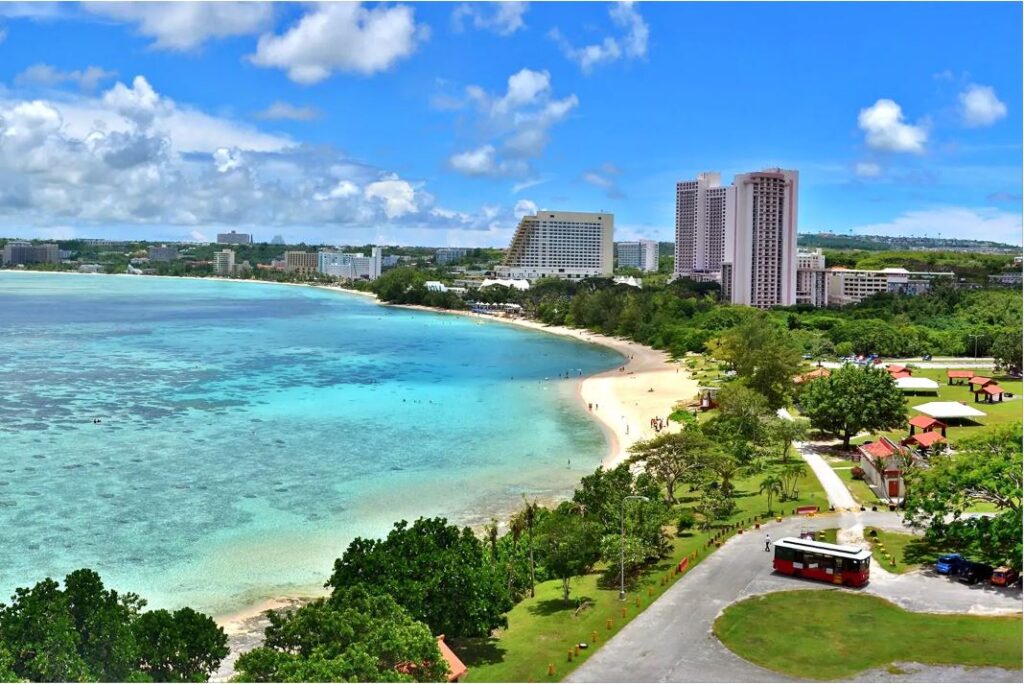
Since 1982, the US Air Force has used a stretch of Tarague Beach in northern Guam, adjacent to Andersen Air Force Base, as a range to dispose of hazardous munitions by open burning and open detonation. The ordnance includes unexploded munitions, tear gas canisters and propellants — waste that is, by definition, dangerous to handle and to destroy.
The permit for the activity has been issued by the Guam Environmental Protection Agency and renewed repeatedly over four decades. When the Air Force applied to renew it in 2021, the renewal drew public scrutiny over pollution and contamination — and, crucially, was not accompanied by the environmental review that federal law may require. The permit has still not been approved amid those concerns.
Prutehi Guahan, a nonprofit focused on protecting Guam's natural and cultural resources, sued the Air Force and the Department of Defense in 2022, arguing the permit renewal violated the National Environmental Policy Act (NEPA). A federal trial judge dismissed the lawsuit, but a divided panel of the US Court of Appeals for the 9th Circuit reinstated it last year, ruling that the Air Force was required to conduct an environmental review. The government then appealed to the Supreme Court, which agreed in March to hear the case.
Why this beach matters so much
Tarague Beach is not just any stretch of sand. For the people of Guam — predominantly the Indigenous Chamorro people — it is a place of cultural and historical significance, a site where communities fish offshore, harvest traditional medicines, and recreate. It is also a nesting habitat for endangered green sea turtles and migratory seabirds.
Most critically, the detonation range sits directly above Guam's sole-source aquifer, which provides drinking water to more than 80 percent of the island's roughly 170,000 residents. Open detonations release toxic chemicals — smoke, explosive residues and heavy metals — into the air and soil, and the group argues those contaminants have nowhere to go but down into the island's water supply. According to Earthjustice, which represents Prutehi Guahan before the Court, the Air Force chose to press ahead with a practice it knew could threaten the water an entire island depends on.
The military counters that the circuit court's ruling is sweeping and "will have massive implications beyond this case," warning that it would saddle the military and federal agencies with permitting burdens Congress never intended. Prutehi Guahan's answer is simpler: it is asking the Air Force to meaningfully consider the impacts of, and alternatives to, the open detonations — including less sensitive locations — before deciding to proceed.
The legal fight: NEPA and the permit renewal
At its core, the case is a technical clash between two bedrock environmental statutes. NEPA, signed in 1969, requires federal agencies to assess the environmental impact of major actions — including preparing a full Environmental Impact Statement — before moving forward. The Resource Conservation and Recovery Act of 1976 (RCRA) gives the Environmental Protection Agency authority over hazardous waste and lets states and territories run their own hazardous-waste programs.
The Air Force's position has been that RCRA's permitting process is the "functional equivalent" of NEPA, so no separate environmental review was needed. The 9th Circuit rejected that argument, holding that the decision to seek renewal of the longstanding permit was a final agency action reviewable under the Administrative Procedure Act — and that NEPA applied.
The outcome matters well beyond Guam. In May 2025, the Supreme Court already narrowed NEPA's reach in a case about an 88-mile rail line in Utah, with Justice Brett Kavanaugh writing that NEPA "is a procedural crosscheck, not a substantive roadblock." How the justices handle the Guam dispute will further define how much environmental review the federal government — including the military — actually owes.
A broader fight over territory rights
The case has drawn attention for a second reason: it is, in effect, a test of the rights of people who live in US territories. Guam's roughly 170,000 residents cannot vote in presidential elections and have only limited representation in Congress, yet the island has served as one of America's most important military anchors in the western Pacific since the United States took it from Spain in 1898, in the wake of the Spanish-American War.
For decades, Guam's strategic value — hosting Andersen Air Force Base and Naval Base Guam — has meant heavy US military use of land and sea. Residents have long argued that this strategic importance has not translated into commensurate influence over decisions that affect their health, land and water. The Supreme Court's decision will not change Guam's political status, but it will determine whether one community's challenge to a federal practice can force the most powerful military on Earth to answer basic questions about what it puts into an island's air and soil.
What happens next
The justices heard arguments on October 7. A decision is expected in the current term, typically by late June 2027. If the Court sides with Prutehi Guahan, the Air Force would have to conduct a full NEPA environmental review — including public input and consideration of alternatives such as newer disposal technologies or a less sensitive site — before any future permit renewal. If the Court sides with the government, the practice of open detonations on Tarague Beach could continue under the existing RCRA permit framework with no NEPA review at all.
Either way, the ruling will set precedent for how NEPA interacts with military hazardous-waste operations across the country — and for how seriously the law takes the voices of communities like Guam's.
Further reading: on another major environmental case before the Court, see Supreme Court Allows Boulder Climate Lawsuit Against ExxonMobil and Suncor to Proceed; on tensions around US bases in the Pacific, see US Marine Arrested Over Murder of Okinawa Woman.
Sources: Al Jazeera, Earthjustice
Frequently Asked Questions
What is the Supreme Court case about?
The case, Department of the Air Force v. Prutehi Guåhan, concerns the Air Force's practice of detonating hazardous munitions on Tarague Beach in Guam. A local conservation group argues the Air Force violated federal law by renewing its permit for the practice without conducting the environmental review required by the National Environmental Policy Act.
Why is Tarague Beach significant?
The beach is sacred to Guam's people, a nesting ground for endangered green sea turtles, and sits above the island's sole-source aquifer, which supplies drinking water to more than 80 percent of Guam's roughly 170,000 residents. Communities also fish offshore and harvest traditional medicines nearby.
What did the lower courts decide?
A federal trial judge dismissed the lawsuit, but the 9th Circuit Court of Appeals reinstated it in a 2-1 ruling, holding that the Air Force's 2021 permit renewal was a final agency action subject to NEPA review. The government appealed, and the Supreme Court agreed to hear the case.
What are the possible outcomes?
If the Court sides with Prutehi Guahan, the Air Force must conduct a full environmental review — with public input and consideration of alternatives — before renewing the permit. If it sides with the government, open detonations can continue under the existing hazardous-waste permit framework.
Why does this matter beyond Guam?
The ruling will clarify how the National Environmental Policy Act applies to military hazardous-waste operations nationwide, and it spotlights the rights of residents of US territories, who cannot vote in presidential elections and have limited representation in Congress.