LIVERPOOL — Everton are effectively back on the market. The club's American owners, The Friedkin Group (TFG), announced on Friday that they are open to selling a controlling stake in Everton as part of an effort to attract fresh investment — less than two years after taking over the Premier League side from Farhad Moshiri.
The announcement, confirmed by both the club and the ownership group, makes Everton one of the most significant football assets to change hands in recent English football history, coming barely 21 months after a takeover that was meant to end a long period of instability.
Table of contents
- What the owners said
- From crisis to a new stadium: the TFG era so far
- Why now? The logic of an early exit
- What it means for supporters and the squad
- Frequently Asked Questions
- Sources
- Related reading
What the owners said
In a joint statement, TFG said it is "exploring new investment options" for Everton Football Club, including the "potential sale of a controlling interest," according to Reuters.
"When TFG became custodians of Everton, the club faced significant financial uncertainty and challenges both on and off the pitch," the owners said. "The immediate priority was to provide the stability, investment and support needed to secure the club's future, including helping to bring the long-promised stadium to completion for its deserving supporters."
"With that foundation now safely in place, the time is right to consider the next chapter for Everton."
The group, led by American billionaire Dan Friedkin, stressed it would only entertain proposals from parties it believes can build on the progress made since the takeover, and that it will continue to support the club on and off the pitch throughout the process. TFG has retained investment bank Moelis & Company to advise on the sale process, and said neither the group nor the club would comment further while it is under way.
From crisis to a new stadium: the TFG era so far
The Friedkin Group completed its acquisition of Everton in December 2024, buying out the 99.5 percent shareholding of former owner Farhad Moshiri in a deal reported at the time to be worth more than $500 million, per ESPN.
TFG inherited a club in deep trouble: Everton had been docked points for breaches of the Premier League's financial rules, had endured multiple relegation battles, and was carrying the enormous cost of its long-delayed new stadium at Bramley-Moore Dock.
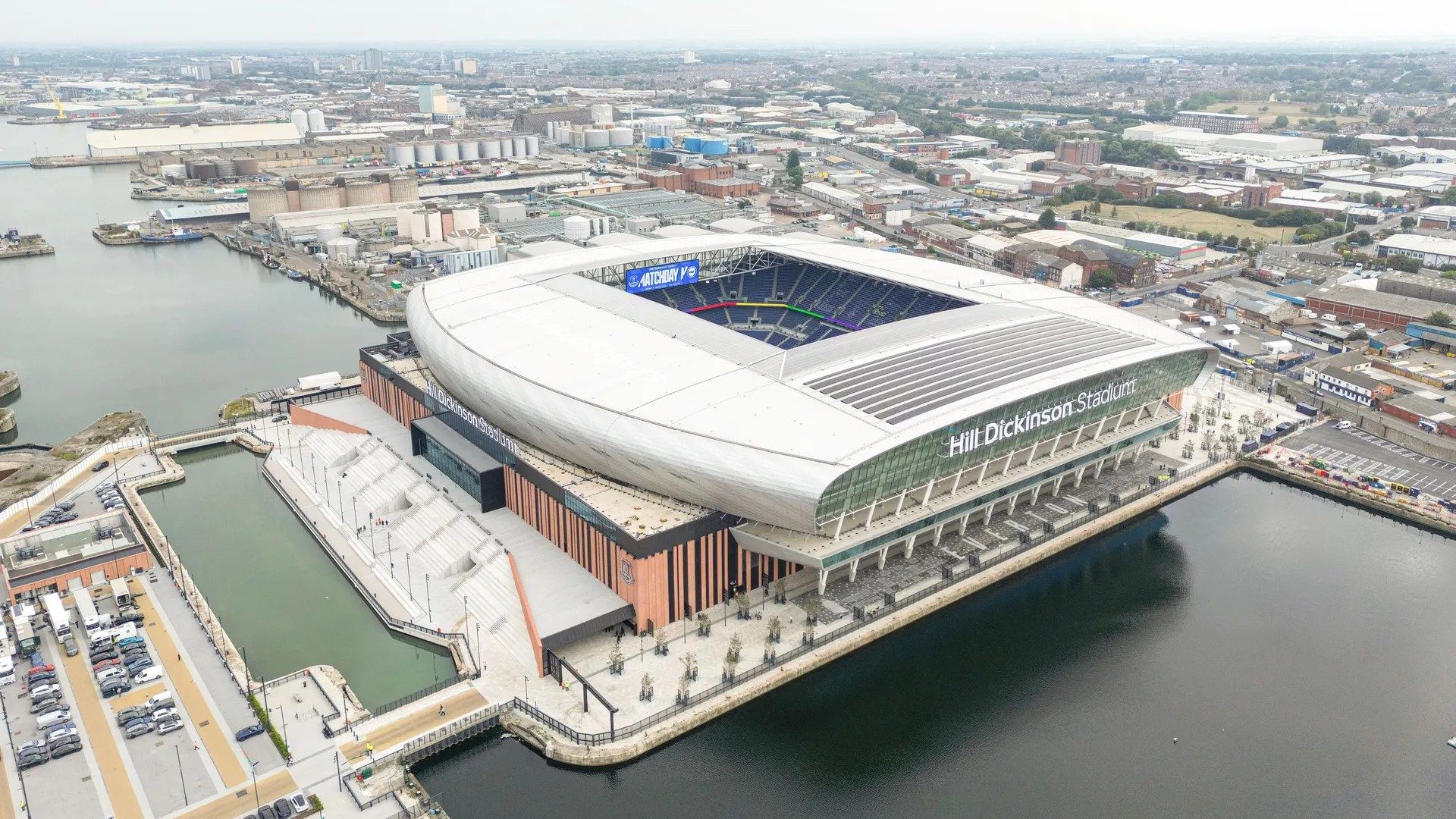
Under TFG, the defining achievement has been the completion of the move to the Hill Dickinson Stadium, a 52,000-plus capacity arena that ended the club's 133-year association with Goodison Park. The group also owns Italian side AS Roma and French club AS Cannes, giving it a multi-club portfolio spanning three European leagues.
Why now? The logic of an early exit
Selling so soon after taking over may look abrupt, but it follows a recognizable playbook in modern football finance: stabilize a distressed asset, complete the flagship infrastructure project, then invite in capital at a higher valuation.
According to Al Jazeera, TFG's decision follows a summer transfer window that drew criticism from supporters. Everton generated significant income through player sales but made only limited additions to the squad before the deadline — a source of frustration on the blue side of Merseyside.
There is also a human dimension to the story. Last month, Everton manager David Moyes revealed he had never spoken directly to Dan Friedkin, an admission that raised eyebrows about the ownership's day-to-day engagement with the club. The episode feeds a broader question supporters will now be asking: does the next chapter bring owners who are more visible — and more willing to spend?
The club sits at an interesting valuation moment. A completed, state-of-the-art stadium, a settled Premier League status, and cleaner books make Everton a far more attractive asset than the one TFG bought in December 2024.
What it means for supporters and the squad
For now, little changes operationally: TFG says its focus remains unchanged and it will keep supporting the club "in all ways necessary to achieve success on the pitch." But a sale process in football inevitably brings uncertainty — over budgets, over the manager's position, and over transfer strategy, with the January window looming.
Premier League ownership rules mean any sale will be scrutinized by the league's owners' and directors' test, which examines the source of funds and the suitability of prospective buyers. The process is likely to take months rather than weeks.
Whoever takes control will inherit one of English football's most storied — and most expectant — fanbases. Everton's supporters, having endured a decade of false dawns, PSR battles, and the pain of leaving Goodison Park, will judge any new owner on one thing above all: ambition matched by action.
Frequently Asked Questions
Who owns Everton currently?
Everton are owned by The Friedkin Group (TFG), a US-based consortium led by billionaire Dan Friedkin, which acquired the club from Farhad Moshiri in December 2024.
Is Everton actually being sold?
The club and its owners have confirmed they are "exploring new investment options," including the potential sale of a controlling stake. TFG says it will only sell to buyers it believes can take the club forward, and has hired Moelis & Company to advise on the process.
How much did the Friedkin Group pay for Everton?
The December 2024 deal to acquire Farhad Moshiri's shareholding was reported to be worth more than $500 million.
What other clubs does the Friedkin Group own?
TFG also owns Italian Serie A side AS Roma and French club AS Cannes.
What happens next?
The sale process is under way with an investment bank advising. The club has said there will be no further comment until the process concludes. Any deal would need to pass the Premier League's owners' and directors' test.