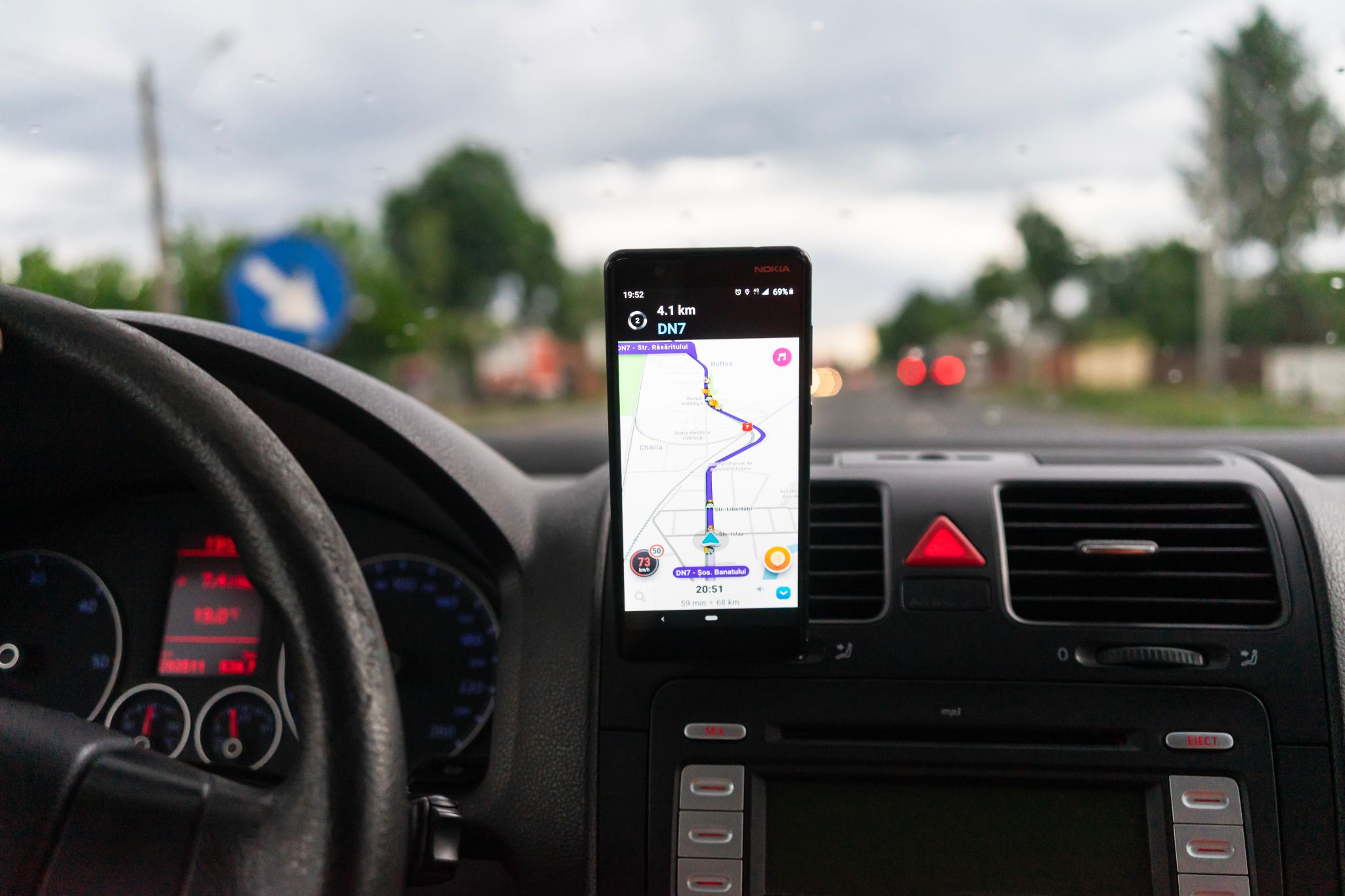
Erbil — Iraq's communications minister has ordered the popular navigation app Waze banned from the end of December 2026, arguing that the Google-owned software was built in Israel and is still run from there — a justification that puts one of Baghdad's most widely used apps on a collision course with the country's strict anti-normalisation laws.
The announcement, made by Communications Minister Mustafa Sanad on the sidelines of the Hitex 2026 technology exhibition in Erbil, was later accelerated: Sanad first told journalists and the broadcaster Rudaw the ban would take effect at the beginning of 2027, then moved the date forward to the end of this year after a wave of online mockery about the decision, according to The National.
Contents
- What Iraq decided and why
- The minister doubles down on Facebook
- How Waze ended up in the crosshairs
- The legal backdrop: the 2022 anti-normalisation law
- Iran got there first
- How would the ban even work?
- Frequently Asked Questions
- Sources
- Further reading
What Iraq decided and why
Waze is one of the most widely used navigation apps in Baghdad and other Iraqi cities, where drivers depend on its real-time traffic alerts to navigate congested streets. Sanad acknowledged that popularity but said alternatives exist, pointing to Google Maps and Iraqi domestic navigation systems.
His stated reason was blunt. "Because it comes from the entity [Israel] and is Israeli-made, we will ban it at the beginning of 2027," he told Rudaw. Speaking to journalists in the Iraqi Kurdistan region, he put it even more directly: "The reason is because it is made in Israel," according to The National.
The announcement follows a steady drumbeat of calls from Iran-aligned politicians and groups in Iraq to boycott Israeli-linked products and services since the Gaza war began in October 2023 — a campaign that has now reached the phones in Iraqis' pockets.
The minister doubles down on Facebook
The decision was met with widespread derision online, where many Iraqis questioned how banning an app owned by Google would accomplish anything beyond punishing ordinary drivers. Rather than backing down, Sanad took to Facebook and accelerated the timetable.
"We have decided to revoke our previous decision to ban the Waze app at the start of 2027 and instead move the effective date of the ban to the end of next December," he wrote, calling the move "in response to the citizens' wishes," according to Kurdistan24.
He also expanded the rationale. Waze is "a famous Israeli app and is still managed by them," he wrote, adding that "such apps help [with] scanning Gaza, and the app provides the company with money and information" — a claim The National reported as part of his defence of the decision.
How Waze ended up in the crosshairs
Waze began life as FreeMap in 2006 before being renamed Waze in 2008. It was founded and developed in Israel and headquartered in the city of Ra'anana until Google acquired it in 2013 for roughly $1 billion, operating it as a subsidiary ever since. It continues to maintain a presence in Tel Aviv, Rudaw reported.
What sets the app apart from conventional mapping services such as Google Maps and Apple Maps is its heavy reliance on crowdsourced data. Its active user base — the self-styled "Wazers" — reports accidents, police checkpoints, road closures, speed cameras and traffic jams in real time, letting the platform recalculate routes automatically.
The irony is that Waze's crowd-sourced traffic layer has already been a geopolitical flashpoint in the opposite direction: in October 2023, Google temporarily disabled live traffic data on Maps and Waze in Israel and Gaza at the request of the Israeli military, to prevent the tools from revealing troop movements.
The legal backdrop: the 2022 anti-normalisation law
Iraq has formally been in a state of war with Israel since the latter's establishment in 1948 and has never recognised it or established diplomatic relations. In 2022, the Iraqi parliament unanimously passed an anti-normalisation law criminalising any diplomatic, political, military, economic or cultural ties with Israel, Rudaw noted.
The law applies to all Iraqi citizens, state institutions, media outlets, foreign entities and private companies operating inside Iraq — including in the Kurdistan Region. Violations carry penalties up to and including life imprisonment or the death penalty.
That framework has underpinned Baghdad's efforts to sever ties with Israel-linked entities — but digital services present a grey area. Some products with Israeli origins are now owned by American companies and remain accessible in Iraq. Waze, bought by Google more than a decade ago, sat in that grey zone until Sanad pulled it out.
Iran got there first
Iraq would not be the first regional power to target the app. Iran blocked access to Waze in 2017, citing its Israeli origins and potential counterintelligence risks — the same grounds on which it had blocked the messaging app Viber three years earlier, according to Europesays.
The parallel underscores a broader pattern: navigation and messaging apps, precisely because they map where people are and where they go, keep getting treated as strategic infrastructure rather than consumer software.
How would the ban even work?
That is the question Iraqi drivers are now asking — and the ministry has not answered it. As The National reported, it remains unclear how the ban will be enforced: telecoms companies could be ordered to block Waze's servers, or the app could be removed from app stores in Iraq. Either way, tech-savvy users can typically circumvent such blocks with VPNs, a lesson Iran's own Waze ban demonstrated.
The deeper question, raised in Iraqi tech circles and echoed in Al Jazeera's analysis, is whether banning one app protects users' location data at all — and whether Iraq can build a credible domestic alternative in the time it takes to switch off an American-owned product. On both counts, the sceptics are winning the argument online.
Frequently Asked Questions
Why is Iraq banning Waze?
Communications Minister Mustafa Sanad says the app was developed in Israel and remains managed from there, which he says violates Iraq's opposition to normalisation with Israel. The ban was first announced for early 2027 and then moved forward to the end of December 2026.
Isn't Waze owned by Google?
Yes. Google acquired Waze in 2013 for about $1 billion and runs it as a subsidiary. Iraq's position is that the Israeli origins and continued management from Israel are what matter, not the American ownership.
How widely used is Waze in Iraq?
It is one of the most-used navigation apps in Baghdad and other Iraqi cities, prized for its real-time, crowdsourced traffic alerts. The minister says Google Maps and Iraqi domestic navigation systems can replace it.
Has any other country banned Waze?
Iran blocked Waze in 2017 on similar grounds — its Israeli origins and potential intelligence risks — after blocking the messaging app Viber in 2014 for the same reason.
How will the ban be enforced?
That is unclear. Telecoms could be ordered to block Waze's servers, or app stores could remove it in Iraq. Neither measure would be difficult to circumvent with a VPN.
Sources
- The National — Iraq to ban Waze navigation app over Israeli links
- Rudaw — Iraq to ban Waze navigation app in 2027 over links to Israel
- Al Jazeera — Why has Iraq decided to ban online map service Waze?