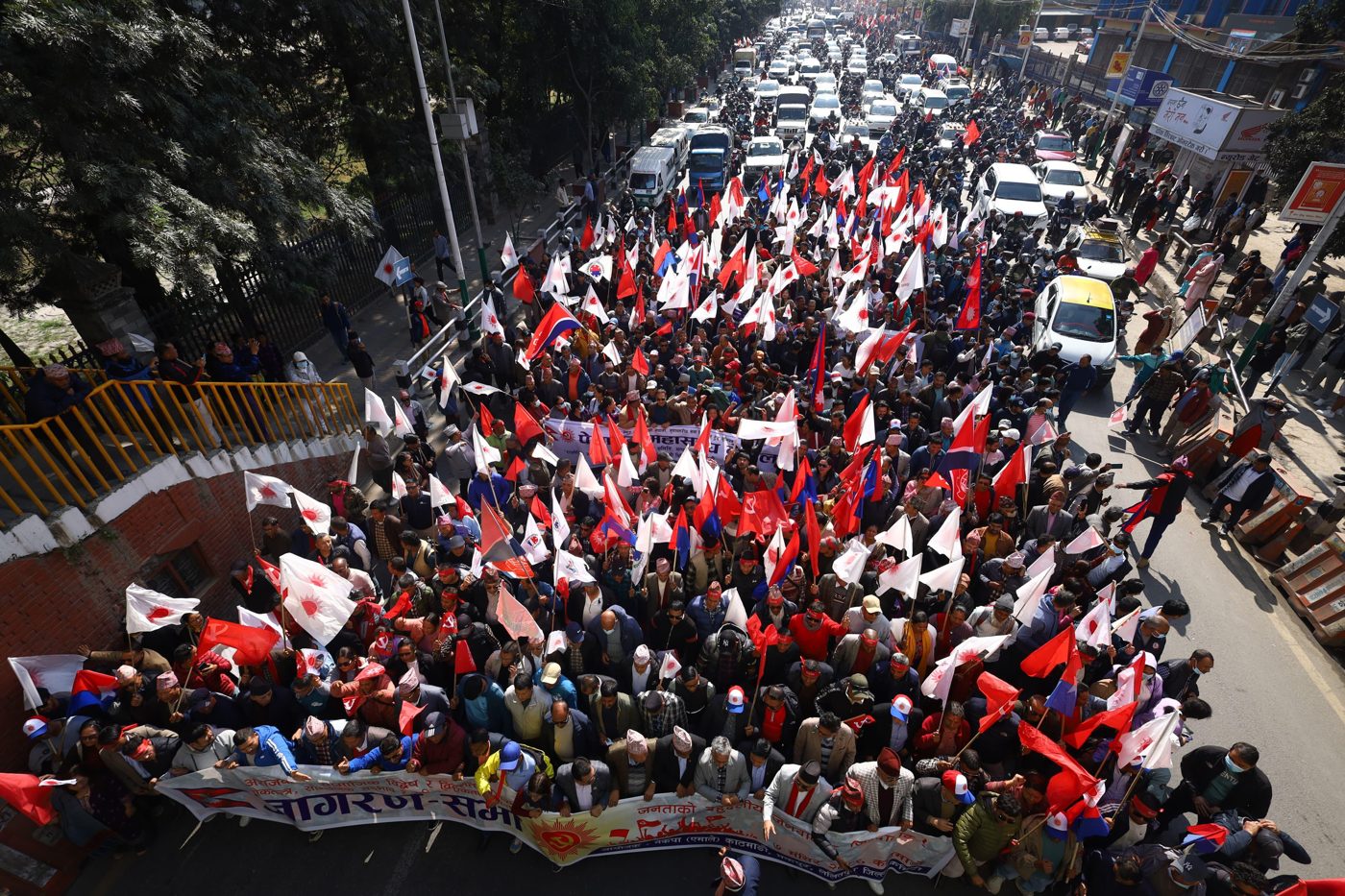
Gagan Kumar Thapa has been elected president of the Nepali Congress, securing 6,584 votes — 93.88% of the total ballots cast — against 375 for his rival Shyam Krishna Khadgi, the party's Central Election Committee announced on Saturday, according to the Kathmandu Post.
Contents
- The scale of the victory
- "A pair of oxen" at the helm
- A party still fighting over its own leadership
- Thapa's political arc
- The long road to 2027
- Frequently Asked Questions
- Sources
- Related reading
The scale of the victory
A total of 7,013 votes were cast in the presidential ballot at the party's 15th General Convention, with 54 declared invalid. Thapa won by a staggering margin of 6,209 votes, while Khadgi managed just 5.35%. A third aspirant, Kishor Singh Rathore, had filed a nomination against Thapa but withdrew before voting. The count concluded late Friday night at the Rashtriya Sabha Griha in Kathmandu, with ballot boxes for other office-bearer and Central Working Committee positions moved to the party's Sanepa office for continued counting.
"A pair of oxen" at the helm
Thapa will be flanked by Bishwa Prakash Sharma, who was elected senior vice-president unopposed, with Pushpa Bhusal similarly unopposed as women vice-president. The Thapa–Sharma pairing has history: in December 2021, ahead of the 14th general convention, the late Congress leader Pradip Giri famously described the two as a "pair of oxen" who should pull the Congress plough forward together. Five years on, the metaphor has become reality — though the two were not even on the same factional ticket in 2021, with Thapa winning general secretary from Shekhar Koirala's panel and Sharma from Prakash Man Singh's camp.
A party still fighting over its own leadership
The landslide does not end the Nepali Congress's internal feud. Thapa first became party president after a controversial Special General Convention convened by his faction in January 2026, which replaced the leadership of former prime minister Sher Bahadur Deuba. The Election Commission recognised the Thapa-led committee, and the Supreme Court upheld the special convention's legitimacy in April — yet Deuba's supporters boycotted this weekend's 15th convention and plan to hold their own separate gathering from 7 to 9 December. Two parallel conventions, two rival claims to the same party legacy: the courts may again have the final word.
Thapa's political arc
Thapa, 50, rose to prominence as a student leader during the 2006 people's movement, when his speeches denouncing the monarchy and championing a republic resonated with a generation of young Nepalis. He was elected general secretary at the 14th general convention in 2021 and has since positioned himself as the face of leadership change and organisational reform. But his task is daunting: in the March 5 parliamentary elections the Nepali Congress finished a distant second, Thapa himself lost his own constituency, and the relatively new Rastriya Swatantra Party emerged as the largest bloc in the 275-member House of Representatives with a near two-thirds majority.
The long road to 2027
With the 2027 local elections approaching, Thapa has identified the recovery of the party's traditional voter base — including an estimated one million voters he says the party has lost — as his priority. Whether his landslide internal mandate can translate into electoral revival depends on three tests: healing or decisively winning the leadership dispute with the Deuba faction, building a credible alliance strategy, and convincing younger voters that Nepal's oldest party has a place in its future. Nepal, a landlocked Himalayan nation where political convulsions often echo through the region, will be watched closely — including on environmental challenges it faces alongside its political ones.
Frequently Asked Questions
Who won the Nepali Congress presidency?
Gagan Kumar Thapa, securing 6,584 votes (93.88%) against 375 (5.35%) for Shyam Krishna Khadgi, at the party's 15th General Convention in Kathmandu.
What is the margin of victory?
Thapa won by 6,209 votes out of 7,013 ballots cast, with 54 ballots declared invalid.
Who is Bishwa Prakash Sharma?
Sharma was elected senior vice-president unopposed, alongside women vice-president Pushpa Bhusal. He and Thapa were famously described as a "pair of oxen" who should pull the party forward together.
Is the leadership dispute over?
No. A rival faction led by former prime minister Sher Bahadur Deuba boycotted the convention and plans its own gathering from 7 to 9 December, claiming to represent the legitimate Nepali Congress.
Why does this election matter?
The Nepali Congress is Nepal's oldest party but is in crisis: it finished second in the March 5 parliamentary elections, its president lost his own seat, and a new party dominates parliament. Thapa's mandate is a chance at generational renewal — if the split can be resolved.
Sources
- The Kathmandu Post: Gagan Thapa wins Congress presidency with 94 percent of the vote
- The Statesman: Gagan Thapa wins Nepali Congress president race with 94% votes, but leadership battle is far from over
- The Kathmandu Post: Congress reins pass to Gagan Thapa and Bishwa Prakash Sharma