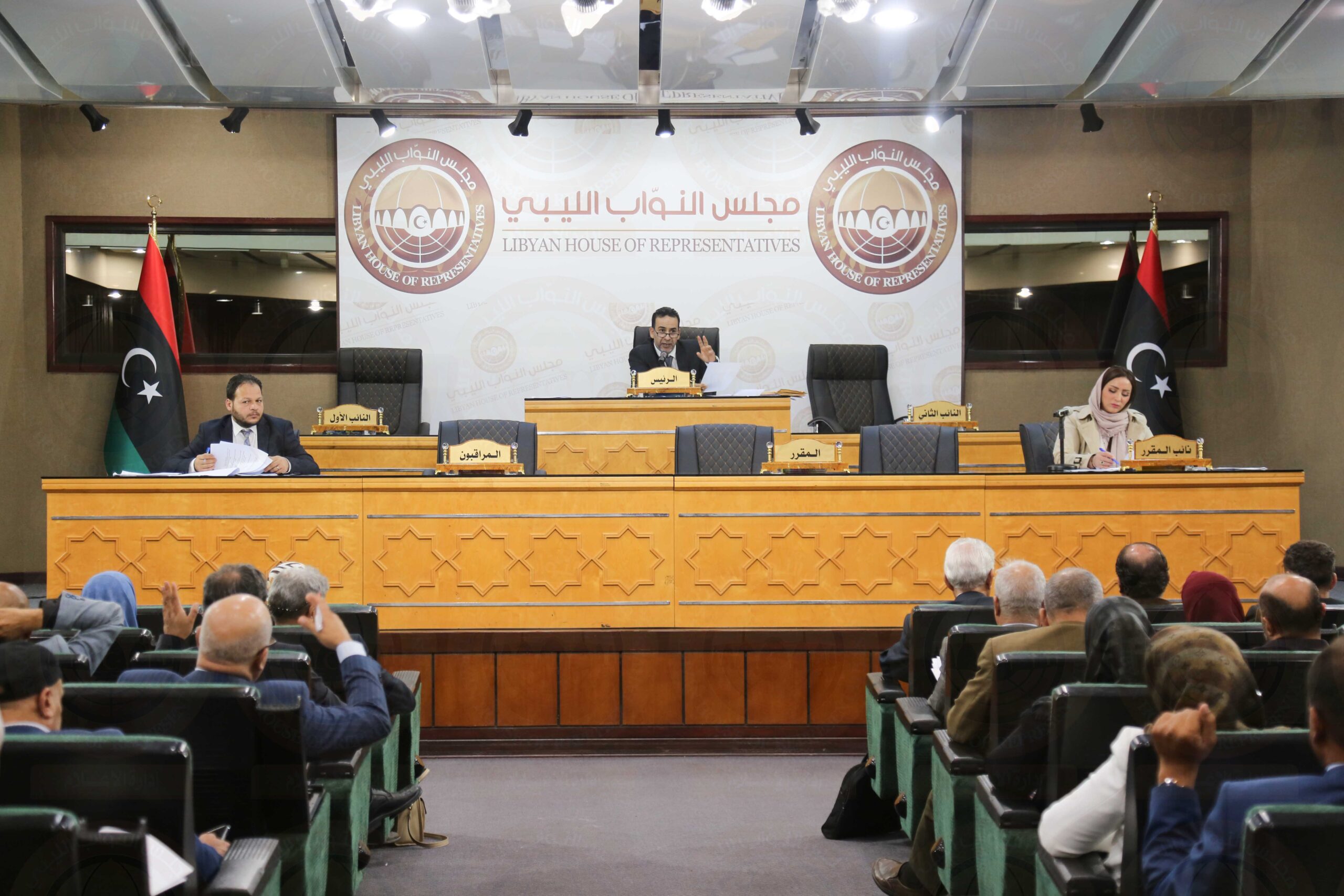
Libya's eastern-based House of Representatives has ended the 12-year speakership of Aguila Saleh, electing Tobruk lawmaker Al-Salhin Abdelnabi al-Obeidi as his replacement. The vote, held in Benghazi on Tuesday, followed a Monday session in which 98 of the 102 MPs present rewrote the chamber's internal rules to cap the speaker and his deputies at a single 12-month term — scrapping the open-ended arrangement in place since 2014.
The shake-up strikes at one of the most durable figures of Libya's eastern power structure. Saleh, 82, a close political ally of military commander Khalifa Haftar, has led the chamber since August 2014. His exit was engineered over two days of procedural manoeuvring that Saleh himself declared illegitimate — and that analysts describe as the latest move in a consolidation of power by Haftar's family.
Contents
- How the ouster was engineered
- A 12-year fixture of the eastern establishment
- Who is Al-Salhin Abdelnabi al-Obeidi?
- Reading the power play: Saddam Haftar's shadow
- What it means for Libya's reunification push
- Key takeaways
- Frequently Asked Questions
- Sources
- Related coverage from Chronicle
How the ouster was engineered
The removal played out across two sessions. On Monday, lawmakers voted overwhelmingly — 98 of 102 present — to amend the House's internal rules, creating a new presidency structure and limiting the speaker and deputy speakers to one 12-month term, after which a new election must be held. On Tuesday, in a session chaired by second deputy speaker Mesbah Douma with more than 100 members attending, the chamber elected al-Obeidi as speaker, along with Tarek al-Ashtar as first deputy speaker and Douma as second deputy.
Saleh rejected the proceedings outright. He called Monday's session "unofficial" and said it had "no legal effect," cancelled a session he had himself convened for Tuesday, and was backed by his first deputy, Fawzi al-Nuwairi, who said no meeting could produce official decisions unless it met the law's rules on quorum and voting.
The revolt was driven by months of accumulated frustration. "There was significant discontent among MPs with the previous leadership over numerous errors," lawmaker Jebreel Oheida told Reuters. "We tried to engage with the leadership to address these issues, but to no avail. Among these errors were decisions made without consulting MPs." Two weeks before the vote, 86 lawmakers accused Saleh in a joint statement of barring them from entering the parliament building to hold a session on reforms.
A 12-year fixture of the eastern establishment
Saleh has been a central figure in eastern Libya's political machinery since the 2014 parliamentary election, when the House of Representatives — elected that year — fled to Tobruk after Tripoli fell to militias. His 2015 residence in Al Qubbah was bombed by ISIL militants, one of the deadliest attacks of the post-2011 era, and he later played a prominent role in diplomatic efforts to resolve Libya's conflict. In 2021 he briefly withdrew from parliament to run in the presidential election that never happened.
Throughout, Saleh was seen as the political anchor of the Haftar camp. The parliament in Benghazi has been the eastern administration's key institutional asset — a counterweight to the UN-recognised Government of National Unity in Tripoli led by Prime Minister Abdul Hamid Dbeibah. That made his ouster all the more striking: it did not come from Tripoli or from international mediators, but from within his own chamber.
Who is Al-Salhin Abdelnabi al-Obeidi?
The new speaker represents Tobruk and comes from the same tribe as Saleh — a detail widely read as a signal of continuity intended to soften the blow of the change. He has chaired the parliament's Libyan-Turkish friendship committee, sits on its foreign affairs committee, and holds a master's degree in civil engineering. Before his election, he was known as a prominent parliamentary figure rather than a factional heavyweight — which is precisely what makes the circumstances of his elevation interesting to analysts.
Reading the power play: Saddam Haftar's shadow
Observers see the hand of the Haftar family behind the shake-up. Emadeddin Badi, an analyst at the London-based Chatham House, told Daily Sabah/AFP that "Aguila Saleh appears to be the latest casualty of Saddam Haftar's drive to centralize decision-making in eastern Libya and bulldoze his way into a political role."
The theory runs that as Saddam Haftar — one of the commander's sons — consolidates control over eastern Libya's security and economic levers, even loyalist figures like Saleh become expendable when they guard institutional independence too jealously. The two-day procedural blitz, conducted without Saleh's participation, fits that pattern: a legislature being brought to heel rather than empowered.
What it means for Libya's reunification push
The timing is awkward. A US-backed initiative aimed at reviving the political process and unifying Libya's fractured institutions is reportedly under discussion, and the international community has been pressing for reforms that could lead to long-delayed national elections. Arab News, in an analysis piece, asked whether the parliamentary upheaval could help break the country's political deadlock — the optimist's case being that a more flexible leadership might engage constructively with Tripoli.
The pessimist's case is stronger on current evidence. If the ouster entrenches the Haftar family's grip on the east rather than freeing the parliament to negotiate, the practical effect is further concentration of power on one side of the divide — the opposite of reunification. The 12-month term cap could make future speakers more accountable, or it could make them more dependent on whoever controls the majority. Either way, the eastern chamber is entering uncharted territory: it has not had a speaker other than Saleh since 2014.
Key takeaways
- Libya's eastern House of Representatives elected Al-Salhin Abdelnabi al-Obeidi as speaker on 6 October 2026, ending Aguila Saleh's 12-year tenure.
- The vote came a day after 98 of 102 MPs present approved a new rule limiting the speaker and deputies to a single 12-month term.
- Saleh, an 82-year-old ally of Khalifa Haftar, called the sessions unofficial and said they had no legal effect; his first deputy echoed the challenge on quorum grounds.
- Lawmakers cited months of frustration with decisions taken without consultation; 86 MPs had earlier accused Saleh of blocking them from entering parliament.
- Analysts read the shake-up as part of Saddam Haftar's drive to centralise power in eastern Libya — which could complicate, rather than help, UN-backed reunification efforts.
Frequently Asked Questions
Who was ousted in Libya's parliament?
Aguila Saleh Issa, who had served as speaker of the eastern-based House of Representatives since August 2014 — roughly 12 years — was removed on 6 October 2026. He is a longtime political ally of eastern military commander Khalifa Haftar.
Who replaced him?
Al-Salhin Abdelnabi al-Obeidi, a lawmaker representing Tobruk, was elected speaker by more than 100 MPs in a session in Benghazi chaired by second deputy speaker Mesbah Douma. He comes from the same tribe as Saleh, holds a master's degree in civil engineering, and has chaired the parliament's Libyan-Turkish friendship committee.
Why did lawmakers remove Saleh?
Discontent had built over months. Lawmaker Jebreel Oheida told Reuters there was "significant discontent among MPs with the previous leadership over numerous errors," including decisions made without consulting members. Weeks earlier, 86 MPs accused Saleh of blocking them from entering the parliament building to hold a session on reforms.
Was the removal legal?
That is disputed. Saleh called the sessions unofficial and said they had "no legal effect," arguing the procedures in the law governing parliament were not followed. His first deputy, Fawzi al-Nuwairi, said no meeting could produce official decisions without meeting the legal rules on quorum and voting.
How does this affect Libya's peace process?
Potentially in either direction. The change comes as a US initiative on reviving the political process and unifying Libya's institutions is under discussion. If the new leadership engages more flexibly with Tripoli, it could help. But analysts warn the ouster may entrench the Haftar family's grip on the east — with Chatham House's Emadeddin Badi calling Saleh "the latest casualty of Saddam Haftar's drive to centralize decision-making" — which would deepen, not heal, the division.
Sources
- Reuters, 6 October 2026: "Libya's eastern lawmakers elect Abdulnabi as speaker after 12 years of Saleh."
- Al Jazeera, 7 October 2026: "Libya's parliament removes Speaker Saleh after 12 years as discontent grows."
- Arab News, 7 October 2026: "Can parliamentary upheaval in Libya break the country's political deadlock?"
- Daily Sabah / AFP, 6 October 2026: "Libya parliament speaker ousted after 12 years amid power shift."