Life has a handedness. Every protein in your body is built from amino acids that are almost exclusively "left-handed" — a mysterious asymmetry that chemistry alone does not explain. Now, for the first time, scientists have measured that handedness molecule by molecule with a tiny electrical sensor. The advance could give future spacecraft a pocket-sized instrument for sniffing out life's most telltale signature on other worlds.
Contents
- Why chirality matters for the search for life
- The nanogap breakthrough
- Testing on a meteorite and desert soil
- What this means for space missions
- Key takeaways
- Frequently Asked Questions
- Sources
- Related coverage from Chronicle
Why chirality matters for the search for life
Amino acids come in two mirror-image forms — left-handed and right-handed — just like your two hands. In non-biological chemistry, both forms appear in roughly equal amounts. But in every known living thing, amino acids are overwhelmingly left-handed. That lopsidedness is one of biology's deepest fingerprints: find a sample where left-handed amino acids dominate, and you may be looking at the work of life — or at least at something chemistry alone would not produce.
The problem is scale. Detecting chirality in the tiny, precious samples available from meteorites or planetary missions has historically required bulky instruments and large amounts of material. A technique that could do it molecule by molecule, with a device small enough to fly, would change the game.
The nanogap breakthrough
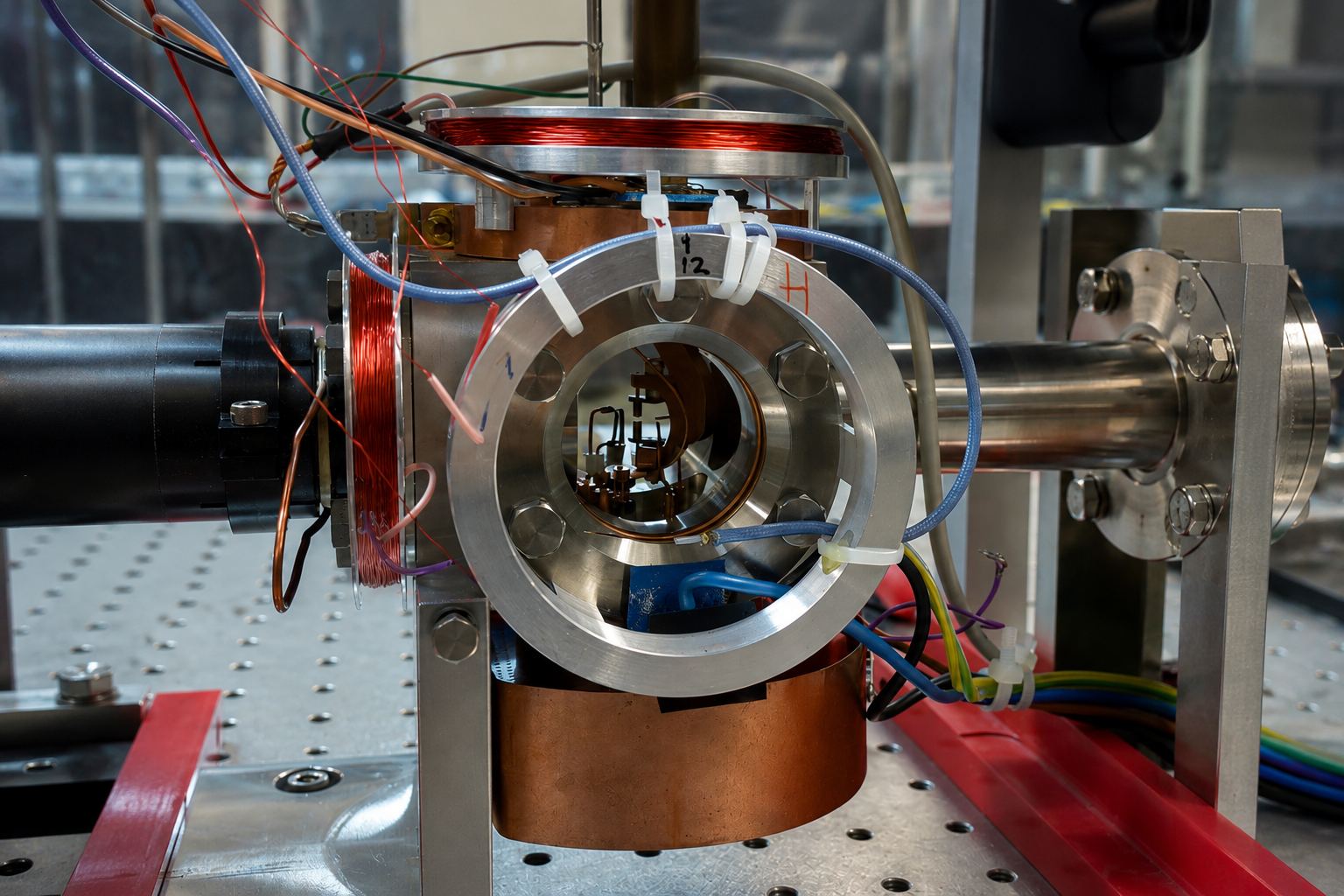
A team led by senior author Masateru Taniguchi has now achieved exactly that: the first discrimination of amino acid chirality at the single-molecule level using electrical sensing through a nanogap — a gap between two electrodes so narrow that a single molecule can bridge it and conduct current. The way current flows through the gap reveals which handedness the molecule has.
"This is the first discrimination of amino acid chirality at the single-molecule level and constitutes a fundamental advance in chemical sensing," said one of the researchers involved in the work. The Debrief
The study, titled "Chiral discrimination of amino acids in meteorite and desert soil extracts via single-molecule nanogap conductance," appeared in Nature Communications on 5 October 2026. Nature Communications
Testing on a meteorite and desert soil
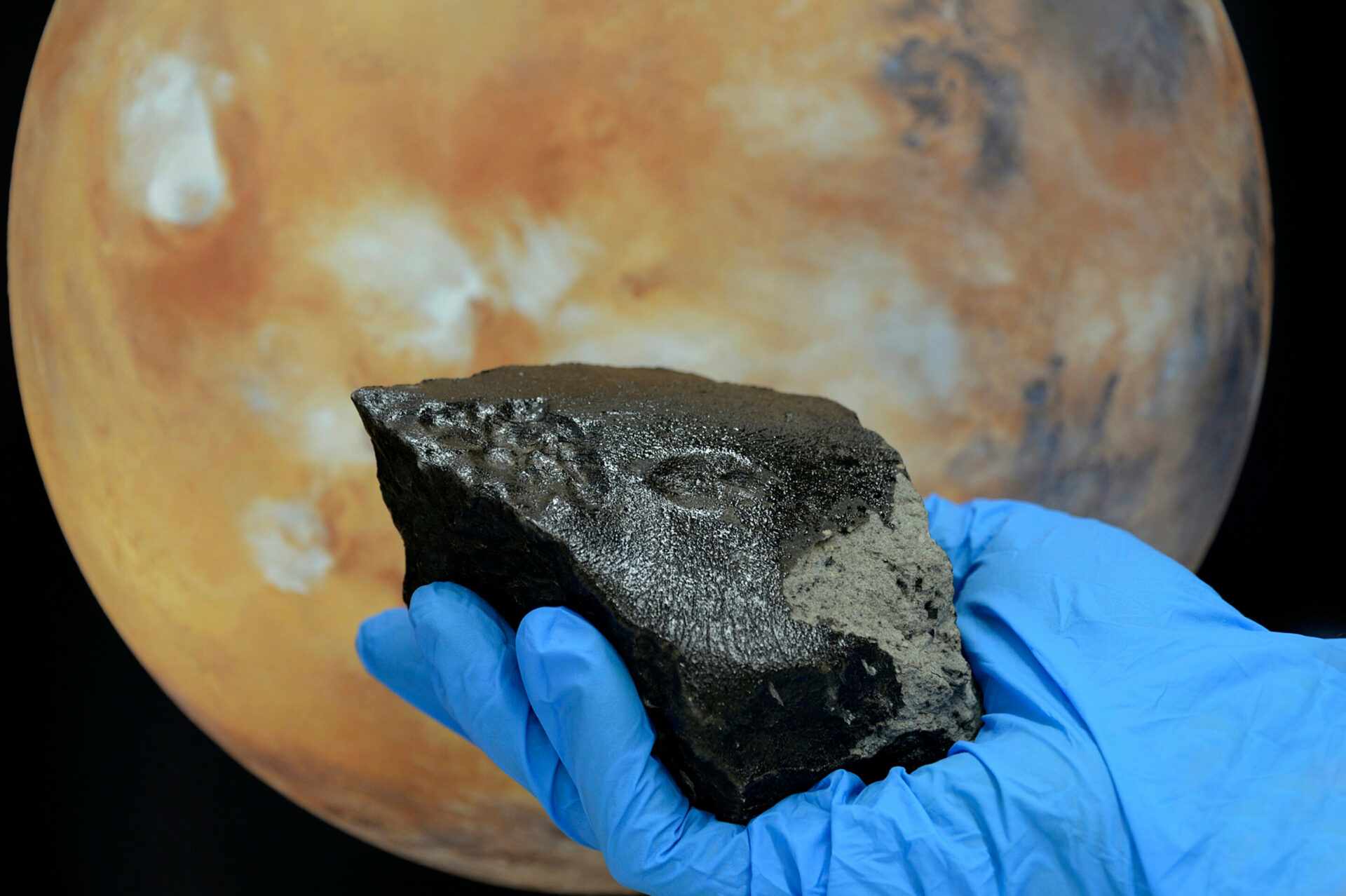
To prove the method works on the kinds of samples astrobiologists actually care about, the researchers tested it on two demanding materials: extracts from the Murchison meteorite — a famous carbon-rich space rock that fell in Australia in 1969 and is known to contain amino acids — and soil from Chile's Atacama Desert, one of the driest, most Mars-like places on Earth. In both cases, the electrical technique captured the major features of the amino acid composition comparably well to established methods that analyse far larger numbers of molecules at once. The Debrief
That matters because a future life-detection instrument would likely analyse microscopic grains or thin residues — exactly the regime where single-molecule sensitivity becomes decisive.
What this means for space missions
Today's spacecraft instruments for chemical analysis are marvels, but they are also power-hungry and heavy. A nanogap electrical sensor, by contrast, is inherently tiny: the team anticipates incorporating such instruments into future astrobiology missions, giving scientists a new, lightweight way to scan for life's molecular fingerprint far from Earth.
There are important caveats. Chirality is a clue, not a conviction: abiotic processes can also produce skewed handedness under certain conditions, and a single measurement would never alone prove the presence of life. But as part of a suite of biosignature measurements, single-molecule chiral sensing would be a powerful addition — especially on missions to icy moons like Europa or Enceladus, where sample volumes are vanishingly small.
Key takeaways
- Researchers have, for the first time, distinguished left- and right-handed amino acids one molecule at a time using electrical sensing across a nanogap.
- The method worked on real-world astrobiology samples: extracts from the Murchison meteorite and Atacama Desert soil.
- Because the sensor is inherently small, it could one day fly on spacecraft hunting for biosignatures beyond Earth.
- Chirality remains one of the strongest molecular fingerprints of life — but it is a clue that must be combined with other evidence.
Frequently Asked Questions
What is chirality, and why do scientists care about it?
Chirality means an object cannot be superimposed on its mirror image, like left and right hands. Many biomolecules are chiral, and life on Earth overwhelmingly uses the left-handed version of amino acids. A sample with a strong handedness imbalance is therefore a promising — though not definitive — sign of biology.
How does the nanogap sensor work?
A single molecule bridges a nanometre-scale gap between two electrodes. The electrical current passing through the molecule differs subtly depending on its handedness, allowing the sensor to identify which mirror-image form it is measuring.
What was tested in the new study?
The researchers analysed extracts from the Murchison meteorite, which landed in Australia in 1969 and is rich in organic molecules, and soil from the Atacama Desert. The nanogap method performed comparably to established bulk techniques while operating at the single-molecule scale.
Could this instrument actually fly to another world?
That is the long-term vision. The technique's miniaturised, low-power nature makes it a candidate for future astrobiology payloads — for example on missions sampling plumes from icy moons or surface material on Mars.
Sources
- The Debrief — nanotech breakthrough for the search for life: https://thedebrief.org/in-the-quest-for-life-beyond-earth-a-nanotech-breakthrough-could-supercharge-the-search-using-electrical-sensing/
- Nature Communications — study on single-molecule nanogap chirality sensing (5 Oct 2026): https://www.nature.com/ncomms/