Ten years after American diplomats in Havana began reporting piercing sounds, crushing pressure and pain that never fully went away, the mystery at the heart of the "anomalous health incidents" is back at the centre of the intelligence debate. A new book by two veteran CBS 60 Minutes producers, published next week, accuses parts of the US government of suppressing evidence that Russia attacked its own spies — and newly disclosed reporting suggests Washington has now acquired, via the dark web, a man-portable device that may prove such attacks were physically possible all along.
Contents
- What happened in Havana, and what came next
- The competing theories
- New evidence: a book, a device and a paper trail
- What the official record says now
- Why it matters: the proliferation problem
- Key takeaways
- Frequently Asked Questions
- Sources
- Related coverage from Chronicle
What happened in Havana, and what came next
In 2016, staff at the US embassy in Havana began describing episodes unlike anything in the medical literature: strange sounds, a wave of pressure or pain in the head, followed by lingering symptoms — brain fog, loss of balance, tinnitus, chronic nerve pain, fatigue and cognitive effects that in some cases have lasted for years. Washington's own terminology is deliberately dry: "anomalous health incidents", or AHIs.
The reports did not stop in Cuba. Over the past decade, dozens of CIA officers and other government personnel around the world reported similar episodes — more than a hundred in 2021 alone, including clusters in Vienna and incidents on the White House grounds. Many of the victims worked on Russia, or had been stationed in Kyiv around the 2014 Maidan revolution.
The competing theories
From the start, the evidence split into warring camps. On one side, the directed-energy hypothesis: a foreign adversary — Russia the chief suspect — using a pulsed microwave or sonic weapon to wound or intimidate covert American operatives. David Relman, the Stanford professor who chaired the 2022 US scientific panel on the incidents after reviewing more than a thousand classified documents, told The Guardian that a subset of cases was "most plausibly explained by exposure to pulsed microwave energy".
On the other side, sceptics argue for mass psychogenic illness. Sociologist Robert Bartholomew and neurologist Robert Baloh published a book dismissing the episodes as a stress-driven hoax; neuroscientist Douglas Fields has said energy-weapon theories defy the laws of physics. Other explanations on the table include environmental toxins, crickets, and surveillance equipment turned up too high. Some voices inside the CIA itself accused victims of exaggerating or fabricating symptoms for medical payouts — a charge forensic neuroscientist James Giordano rejects, pointing to objective clinical signs with a distinct pattern he says cannot be faked: tumbling sensations, head, chest and throat pressure, cognitive disruption, sudden onset, and a specific location where the attack felt strongest.
New evidence: a book, a device and a paper trail
The case for a deliberate attack gained its most detailed public airing this week. Two longstanding CBS 60 Minutes producers, Michael Rey and Oriana Zill de Granados, publish their book The Havana Syndrome in the US on 13 October (15 October in the UK with WH Allen), arguing that Russia is behind at least some of the episodes and that parts of the American intelligence establishment covered up the evidence. The Guardian, which had early access to their findings, pairs them with its own reporting.
Several claims stand out:
- A new named case. A senior CIA officer assigned to operations against Russia was woken in a London hotel in April 2019 by head pain he rated nine or ten out of ten — then hit again in Warsaw that September, an episode he described as like being struck repeatedly on the head with a baseball bat. Chronic nerve pain and fatigue followed for years.
- A Russian paper trail. Investigative journalist Christo Grozev claims leaked travel data links at least four AHIs to travel by officers of GRU Unit 29155 — the Russian military intelligence unit associated with sabotage and assassinations in the West — and a "technical unit adjacent to 29155" travelling to Cuba during the initial attacks.
- The Haspel meeting. A nascent 2019 CIA investigation reportedly placed phones linked to Russian intelligence operatives near suspected AHI locations, including the London and Warsaw cases — a suspicious phone was found about ten metres from the London hotel room. Then-CIA director Gina Haspel allegedly refused to take the findings to President Trump, saying she would be fired if she did.
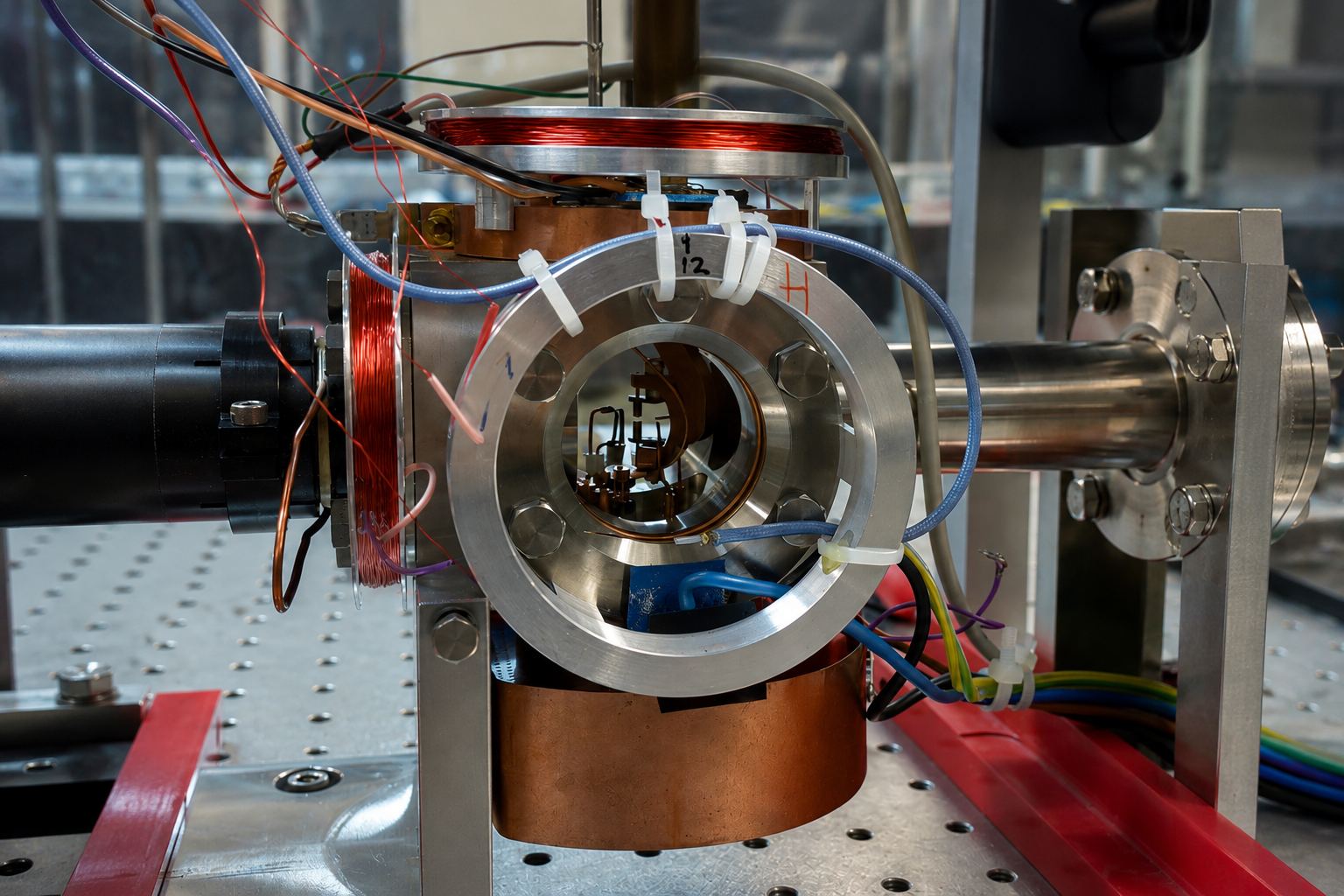
- The dark-web device. Perhaps the most consequential disclosure: Washington is reported to have acquired, via a dark-web purchase brought into the US in late 2024, a man-portable device firing non-thermal pulsed microwaves, sourced from what sources describe as a complex Russian illicit network. First reported by independent journalist Sasha Ingber and confirmed to The Guardian by two sources, the device is not believed to have been used in an actual incident — but animal testing is said to show it can produce AHI-like symptoms, which would establish that such a weapon is scientifically feasible.
- Older roots. The reporting reaches back further than Havana: Mike Beck, an NSA counter-intelligence officer who fell ill on a 1990s assignment, developed a rare form of Parkinson's at 45 and died this year. A declassified NSA statement noted 2012 intelligence associating the "hostile country" he visited — sources say Russia — with a high-powered microwave weapon able to "weaken, intimidate or kill an enemy, over time, and without leaving evidence".
Relman himself has moved further than he has before. To "any reasonable person" reviewing the evidence he was able to see, he now says, the record points toward the possibility of a cover-up — noting decades of Soviet and Russian research into exactly this kind of technology.
What the official record says now
The official American position has swung repeatedly. A 2022 scientific panel found the signs of the incidents "genuine and compelling" and said they "could be due to external stimuli". In 2023, the intelligence community assessed it was "very unlikely" a foreign adversary was involved. Late in the Biden administration, a tweaked version noted that one agency believed there was a roughly even chance a foreign actor had used "a novel weapon or prototype device" in some attacks. In summer 2026, Tulsi Gabbard, the outgoing director of national intelligence, rescinded both Biden-era assessments, citing "selective exclusion of evidence" and "mischaracterisation of sources" — without releasing new evidence or a revised assessment. Bill Burns, CIA director under Biden, denies any cover-up, describing the investigation as rigorous. Marc Polymeropoulos, the former CIA Europe-and-Eurasia operations chief who fell ill on a 2017 liaison trip to Moscow and later received compensation under the Havana Act, puts the victims' bitterness bluntly: he reserves his harshest words not for Moscow but for his own government.
Why it matters: the proliferation problem
Beyond blame, the Guardian's reporting raises a darker prospect. If a Havana syndrome-style device can be bought on the dark web, then proving the original attacks were feasible does not close the mystery — it opens it. There could be multiple perpetrators, state and otherwise, and a future in which such tools are cheap, deniable and widely available. That is the argument for treating the incidents not as an intelligence embarrassment to be filed away, but as a preview of a new class of weaponry that no treaty currently covers.
Key takeaways
- A Guardian investigation and a new book by two CBS 60 Minutes producers, out next week, argue Russia is behind at least some "anomalous health incidents" and allege parts of the US government covered up evidence.
- The US is reported to have acquired a man-portable pulsed-microwave device from a Russian illicit network via a dark-web purchase in late 2024; testing is said to show it can cause AHI-like symptoms.
- Leaked travel data is claimed to link at least four incidents to officers of GRU Unit 29155, Russia's sabotage unit.
- The official US record remains unsettled: a 2022 panel said the injuries could have external causes; a 2023 assessment said foreign involvement was "very unlikely"; in 2026 Tulsi Gabbard rescinded both assessments without issuing a replacement.
- The deeper concern is proliferation: if such devices are obtainable on the dark web, the era of deniable, non-lethal energy attacks may just be beginning.
Frequently Asked Questions
What is Havana syndrome?
"Havana syndrome" is the informal name for "anomalous health incidents" (AHIs): episodes reported by US diplomats, intelligence officers and officials involving unusual sounds, pressure or pain, followed by lasting symptoms such as brain fog, balance loss, tinnitus, chronic nerve pain and cognitive effects. The name comes from the first cluster among US embassy staff in Havana, Cuba, in 2016.
Does Russia stand accused?
A new book and recent reporting argue that Russia is behind at least some episodes, citing GRU travel data, the history of Soviet and Russian research into microwave effects, and a device acquired from a Russian illicit network. Russia denies any involvement, and no government has issued a definitive attribution.
What does US intelligence officially believe?
The official line has changed over time. A 2022 scientific panel said the injuries appeared genuine and could have external causes; a 2023 assessment said foreign-adversary involvement was "very unlikely"; and in summer 2026 the director of national intelligence rescinded both earlier assessments without replacing them. The record is currently unresolved.
Why should anyone outside the CIA care?
If man-portable pulsed-microwave devices that can cause these symptoms exist and can change hands on the dark web, the technology is no longer a state secret — it is a proliferation risk. The same hardware could target diplomats, executives or infrastructure anywhere, with attacks that are hard to detect, attribute or prove.
Sources
- The Guardian, 10 October 2026: "'Like a drill going into my eye': why the mystery over Havana syndrome refuses to die."
- Rey, Michael and Zill de Granados, Oriana: The Havana Syndrome — published 13 October 2026 (US), 15 October 2026 (UK, WH Allen).