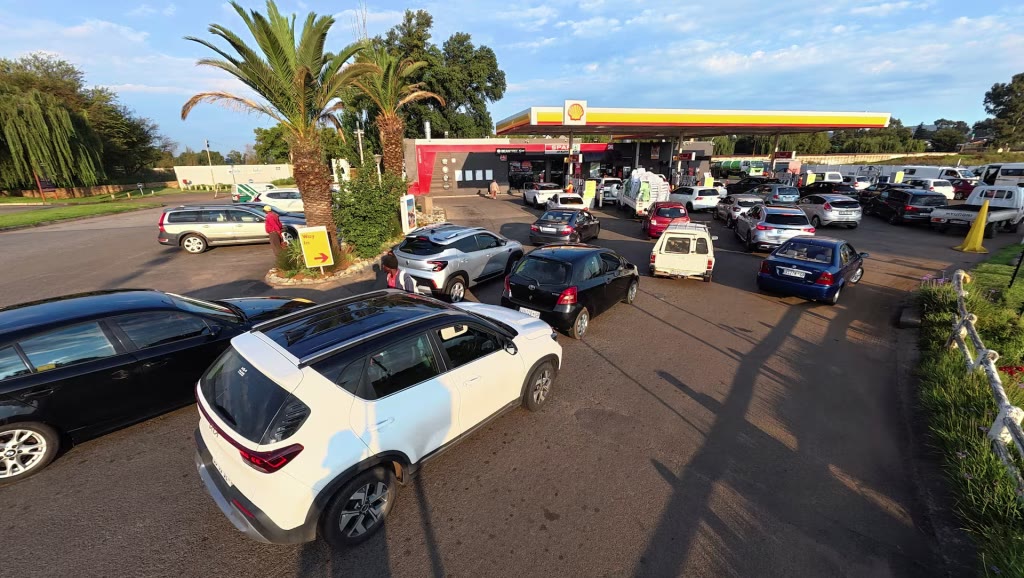
Malawi's fuel shortage has brought daily life in the capital Lilongwe to a halt, with motorists waiting up to three days for petrol and some sleeping in their cars to hold their place in line — the latest chapter of a crisis rooted in the country's acute foreign-exchange drought.
Businesses are losing customers as residents struggle to get to work and children to school, Al Jazeera reported on Saturday, as filling stations across the capital run dry and queues stretch around the block.
Table of Contents
- A city grinding to a halt
- Black market and border smuggling
- Consumer group accuses filling stations
- Dollar drought at the root
- A tanker convoy offers hope
- Key takeaways
- Frequently Asked Questions
- Sources
- Read more on Chronicle
A city grinding to a halt
The scenes are by now familiar to Malawians: long, snaking queues of cars and trucks at the handful of stations still holding fuel, drivers waiting for hours — and increasingly for days — for a turn at the pump. In recent weeks the pain has been concentrated on diesel, with filling stations in Lilongwe running out while petrol remained available just yards away. But the latest wave of shortages has hit both fuels, and there is no timeline for when supplies will normalize.
The fallout spreads well beyond drivers. Minibus fares have doubled on some routes almost overnight — from K4,000 to K6,000 between Area 25 and Lilongwe's Old Town, and from K6,000 to K11,000 toward Mponela in Dowa. Commuters are hitching rides on pickup trucks or walking rather than pay the fares. A fruit seller in Lilongwe, Brenda Tholo, told local outlet Nyasa Times her transport costs now eat K5,000 per return trip: "I have no option, but pass on the amount to the buyers."
Black market and border smuggling
As pumps run dry, the black market thrives. Motorbike taxi drivers report black-market petrol selling at a jaw-dropping K20,000 per litre — many times the official price. In a sign of the desperation, Zambian police this week arrested 19 Malawians accused of attempting to smuggle more than 5,400 litres of petrol across the border into Malawi.
Minibus operators say they are trapped in an impossible bind. Coaxley Kamange of the Minibus Owners Association said operators spend most of their time hunting for fuel and then need to recover the cost: "The minibus operators spend more time searching for fuel, once they get it, they want to recover the cost. That is why we are having unstable bus fares."
Consumer group accuses filling stations
The Consumers Association of Malawi (CAMA) has accused filling stations of making the crisis worse through corrupt practices, saying stations are making distribution "erratic and unpredictable" and demanding that the regulator publish stock levels daily, distribute fuel fairly across regions rather than to selected stations, and crack down on stations diverting or hoarding fuel for the black market.
The association called on the Ministry of Energy to brief Malawians on supply plans in the short, medium and long term, warning that small businesses are losing income and consumers are walking long distances to work for lack of public transport.
Dollar drought at the root
Behind the queues lies a structural problem: Malawi's state fuel importer, the National Oil Company of Malawi (NOCMA), blames a worsening dollar shortage for the mess. The country is struggling to secure letters of credit to pay for fuel imports, with a gap between forex earnings and the import needs for fuel and other essentials.
The Malawi Energy Regulatory Authority (MERA) has acknowledged the stock-outs, attributing them partly to foreign-exchange constraints and financing gaps as well as logistical difficulties — including chaos at ports in Tanzania and Mozambique that has choked off supplies to the landlocked country. An IMF mission noted in early October that diesel availability had fallen to about 30 percent in major urban areas, with some remote stations running completely dry.
The crisis is compounding other strains on households: power outages, rising transport costs, and an economy where diesel — the lifeblood of buses, trucks, farm machinery and generators — has become scarce.
A tanker convoy offers hope
There was a glimmer of hope this week: a convoy of around 119 fuel tankers was spotted loaded and heading into Malawi's major cities via the Karonga-Chiweta route. Exhausted motorists who have spent weeks in gruelling queues hope the sighting signals a coming easing.
Whether it marks a real turning point will depend on the deeper problem — the foreign currency to pay for fuel in the first place. The IMF said talks continue with the government on an Extended Credit Facility programme aimed at restoring macroeconomic stability, and consumer advocates warn that unless the supply is fixed, any gains in the country's economic recovery could go "several steps backward."
Key takeaways
- Motorists in Lilongwe are waiting up to three days for fuel as Malawi's shortage grinds daily life to a halt.
- The crisis stems from a dollar shortage: state importer NOCMA cannot secure letters of credit to pay for fuel.
- CAMA accuses filling stations of diverting fuel to the black market, where petrol sells for as much as K20,000 per litre.
- A 119-tanker convoy spotted heading in offers hope, but structural forex problems remain unresolved.
Frequently Asked Questions
Why is Malawi running out of fuel?
The root cause is a shortage of foreign currency. Malawi's state importer NOCMA says it cannot secure enough letters of credit to pay for fuel imports, creating a gap between the country's forex earnings and its import needs for fuel and other essentials. Logistical problems at ports in Tanzania and Mozambique have made it worse.
How long are people waiting for fuel?
In Lilongwe, motorists are waiting up to three days for petrol, with some sleeping in their cars to hold their place in queues. Diesel availability has fallen to around 30 percent in major urban areas, with some remote filling stations running completely dry.
What is the government doing about the crisis?
The Malawi Energy Regulatory Authority says fuel importation is continuing and that supply gaps are expected to gradually ease, though it has given no firm timeline. The Consumers Association of Malawi has demanded daily publication of stock levels, fairer distribution, and action against stations feeding the black market, while the IMF continues talks with the government on a reform package to restore macroeconomic stability.
Sources
- Al Jazeera English — Malawi motorists queue for days as fuel shortage bites
- Nyasa Times — CAMA accuses filling stations of fuelling black market
- Nyasa Times — Bus fares rocket as fuel crisis bites
- Africa Brief — IMF sees progress on Malawi reform package