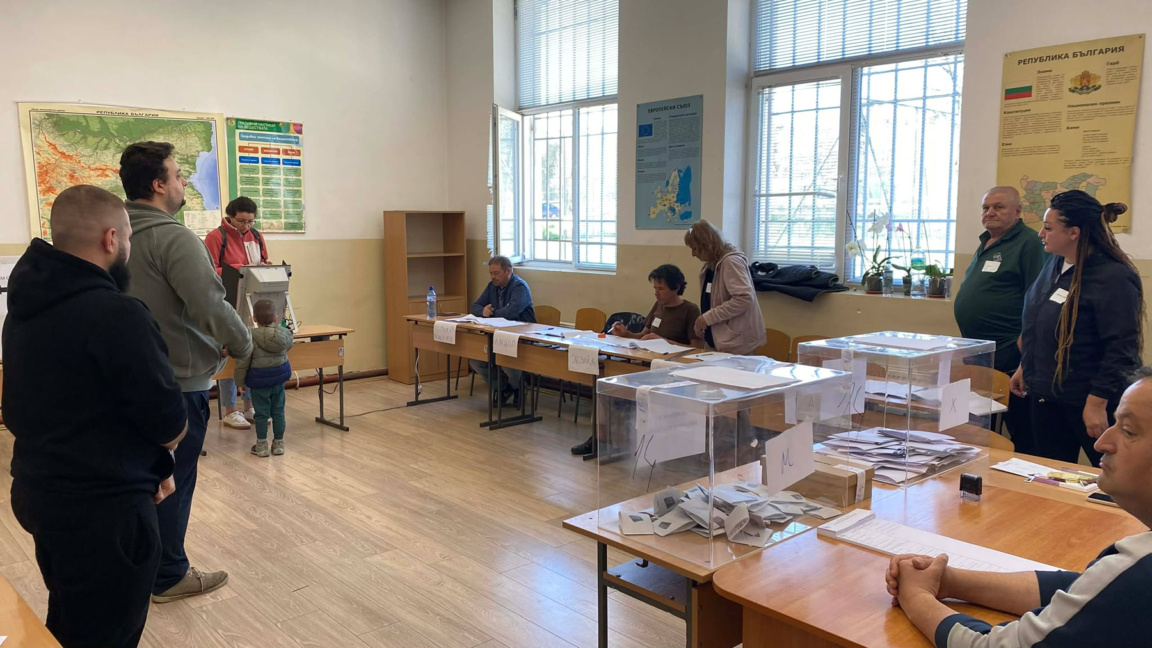
Bulgarians went to the polls on Sunday, 1 November 2026, for a presidential runoff that has turned into a referendum on the country's direction: stick with dialogue towards Moscow, or anchor itself more firmly to the West. Acting President Iliana Iotova, who presents herself as a "president of peace" and opposes further military aid to Ukraine, faces Andrey Gyurov, a former caretaker prime minister backed by the pro-Western opposition, in a contest that was far closer than opinion polls had predicted.
Polling stations opened at 7 a.m. local time and were due to close at 8 p.m., with voting extended until 9 p.m. wherever voters were still queueing. First exit polls were expected soon after polls closed, with the Central Election Commission required to announce final results within three days. The winner takes office when the current presidential term ends on 22 January 2027.
Table of Contents
- A runoff nobody expected to be this close
- Iotova: continuity and a "president of peace"
- Gyurov: the pro-Western challenger
- The Black Sea attacks that reshaped the race
- What the presidency can — and cannot — do
- Key takeaways
- Frequently Asked Questions
- Sources
- Related reading from Chronicle
A runoff nobody expected to be this close
The runoff follows a first round on 25 October in which neither ticket came close to the constitutional threshold for an outright win — more than half of the valid votes, with turnout above 50 per cent. Iotova and her running mate Kiril Valchev led with 34.76 per cent, or 528,951 votes, while Gyurov and Georgi Kandev finished second with 31.95 per cent, or 486,232 votes — a gap of fewer than 43,000 ballots out of a field of 27 tickets, according to figures published by Election Tracker.
The most striking number of the first round was not the margin but the turnout: just 22.98 per cent of the 6.58 million eligible voters cast a ballot, among the lowest in Bulgaria's electoral history. The result was also a polling upset. Surveys before the first round had given Iotova leads of up to 20 points; the actual gap was barely three. Analysts read that as a warning to the incumbent camp. Political analyst Teodor Slavev told Agence France-Presse that voters were delivering a verdict on what he called "Iotova's unconvincing response regarding Russian threats in the Black Sea".
The overseas vote told a different story again: Bulgarians voting abroad backed Gyurov and Kandev with 45.79 per cent, against 22.79 per cent for Iotova and Valchev — a reminder of how sharply the diaspora and the domestic electorate can diverge.
Iotova: continuity and a "president of peace"
Iotova, 62, a former journalist and member of the European Parliament, became Bulgaria's first woman president in January 2026, having served as vice-president since 2017. She stepped up when Rumen Radev resigned the presidency to lead his Progressive Bulgaria movement into parliamentary elections, and she now runs with that movement's backing, alongside the Bulgarian Socialist Party. Her running mate, Kiril Valchev, heads the Bulgarian News Agency.
She supports Bulgaria's membership of the European Union and NATO, but her campaign has leaned hard into diplomacy. She has argued that the war in Ukraine must end at the negotiating table, opposed further military assistance to Kyiv, and, in her final campaign rally, dismissed her critics as advocates of a "war of attrition" while, she said, "the truth is that we are all the most exhausted". If she wins the runoff, she becomes the first woman ever elected president of Bulgaria, a country of about 6.4 million people.
Her candidacy is also the first major electoral test for Radev's Moscow-friendly Progressive Bulgaria movement, which has endorsed her. That makes Sunday's vote about more than one office: it is a measure of how far Radev's political project carries beyond parliament.
Gyurov: the pro-Western challenger
Gyurov, 50, is an economist, a former deputy governor of the Bulgarian National Bank and caretaker prime minister from February to May 2026. He announced his candidacy on 1 September and is backed by the pro-Western reformist opposition, including the Continue the Change and Democratic Bulgaria parties. His running mate is Georgi Kandev.
Where Iotova speaks of negotiation, Gyurov speaks of deterrence and alliance. He has sharply criticised Radev's foreign policy, strongly supports Bulgaria's Euro-Atlantic ties, and is among the most vocal supporters of Ukraine in Bulgarian politics — during his caretaker government he signed a security cooperation agreement with Kyiv. His pitch to voters, delivered at his own closing rally, was for Bulgaria to have "its own voice in Europe: a reliable ally in NATO that defends its interests with preparedness, strong diplomacy and a clear position".
The contrast is the election in miniature: two candidates, both formally committed to EU and NATO membership, offering opposite answers to the same question — whether Bulgaria's security is best served by talking to Moscow or by standing more firmly with Kyiv and its Western allies.
The Black Sea attacks that reshaped the race
What gave this otherwise low-key presidential contest its exceptional weight was a series of drone attacks on commercial vessels off Bulgaria's Black Sea coast in the run-up to the first round, which killed close to two dozen sailors of various nationalities and drew international condemnation. The government in Sofia has not directly blamed Russia, but Prime Minister Radev has said the attacks appeared to serve Russian interests and summoned Moscow's ambassador, while asking allies for help in strengthening maritime security.
Both candidates condemned the attacks, but they drew opposite lessons from them. For Iotova's camp, the bloodshed proved the urgency of a diplomatic settlement. For Gyurov's, it proved that only a firmly Western-aligned Bulgaria, backed by NATO, can protect its coastline. The runoff campaign, including the candidates' only televised debate on 29 October, kept returning to that fault line — along with the cost of living, prices and the budget, the domestic worries that have driven voters' discontent.
What the presidency can — and cannot — do
Bulgaria's president is head of state and commander-in-chief of the armed forces, with powers over foreign and security policy, the appointment of senior officials and a veto over legislation that parliament can override. The prime minister runs the government day to day. That division matters for interpreting Sunday's result: the president cannot single-handedly reorient Bulgaria's foreign policy, but the office carries real weight in security debates, in appointing ambassadors and military chiefs, and in setting the tone of the country's external voice.
It also matters for NATO and the EU. Bulgaria sits on the alliance's south-eastern flank, borders the Black Sea, and hosts allied facilities. A president who questions military aid to Ukraine sends a different signal to Brussels and Washington than one who champions it — even within the same formal commitments to membership.
Turnout will be watched as closely as the result. A second record-low showing would underline the disengagement that defined the first round; a surge would suggest the runoff's sharper choice finally mobilised voters who stayed home a week ago. Either way, the Central Election Commission has three days to certify the outcome, and the country will not have a declared winner until the count is verified.
Key takeaways
- Bulgarians voted on 1 November 2026 in a presidential runoff between acting President Iliana Iotova and former caretaker prime minister Andrey Gyurov.
- Iotova led the first round on 25 October with 34.76 per cent against Gyurov's 31.95 per cent, a gap of under 43,000 votes, with turnout at a record-low 22.98 per cent.
- The central divide is foreign policy: Iotova favours negotiations with Moscow and opposes further military aid to Ukraine; Gyurov champions Bulgaria's Euro-Atlantic ties and support for Kyiv.
- Deadly drone attacks on Black Sea shipping reshaped the campaign and put security at the top of the agenda.
- If elected, Iotova would become Bulgaria's first woman elected president; the winner takes office on 22 January 2027.
Frequently Asked Questions
Who won the first round of Bulgaria's presidential election?
Neither candidate won outright on 25 October. Iliana Iotova and Kiril Valchev finished first with 34.76 per cent of the vote, ahead of Andrey Gyurov and Georgi Kandev on 31.95 per cent. Because no ticket won more than half of the valid votes with turnout above 50 per cent, the top two tickets advanced to the 1 November runoff.
What are the main differences between Iotova and Gyurov?
Both support Bulgaria's EU and NATO membership, but they differ sharply on Russia and Ukraine. Iotova calls herself a "president of peace", favours dialogue with Moscow and opposes further military aid to Ukraine. Gyurov criticises that approach, strongly supports Bulgaria's Western alliances and backs continued support for Kyiv.
Why was turnout so low in the first round?
Only 22.98 per cent of eligible voters cast ballots on 25 October, among the lowest turnouts in Bulgarian electoral history. Analysts point to voter fatigue after years of political instability, disillusionment with the main parties and a campaign that many voters found uninspiring until the Black Sea attacks sharpened the stakes.
When will the runoff result be known?
Polls closed at 8 p.m. local time on 1 November, with first exit polls expected that evening. The Central Election Commission must announce the final, certified results within three days of the vote, and the winner takes office when the current term ends on 22 January 2027.
Sources
- Agence France-Presse via Free Malaysia Today — "Divided Bulgaria votes in tense presidential runoff"
- Firstpost — "Bulgaria votes in tight presidential runoff as Russia, Ukraine war divide voters"
- The New Indian Express (AP) — "Bulgarians vote in a presidential runoff marked by regional security threats"
- Election Tracker — Bulgaria 2026 presidential election results and runoff details
- Al Jazeera — "Bulgarians vote in presidential run-off amid Black Sea tensions"