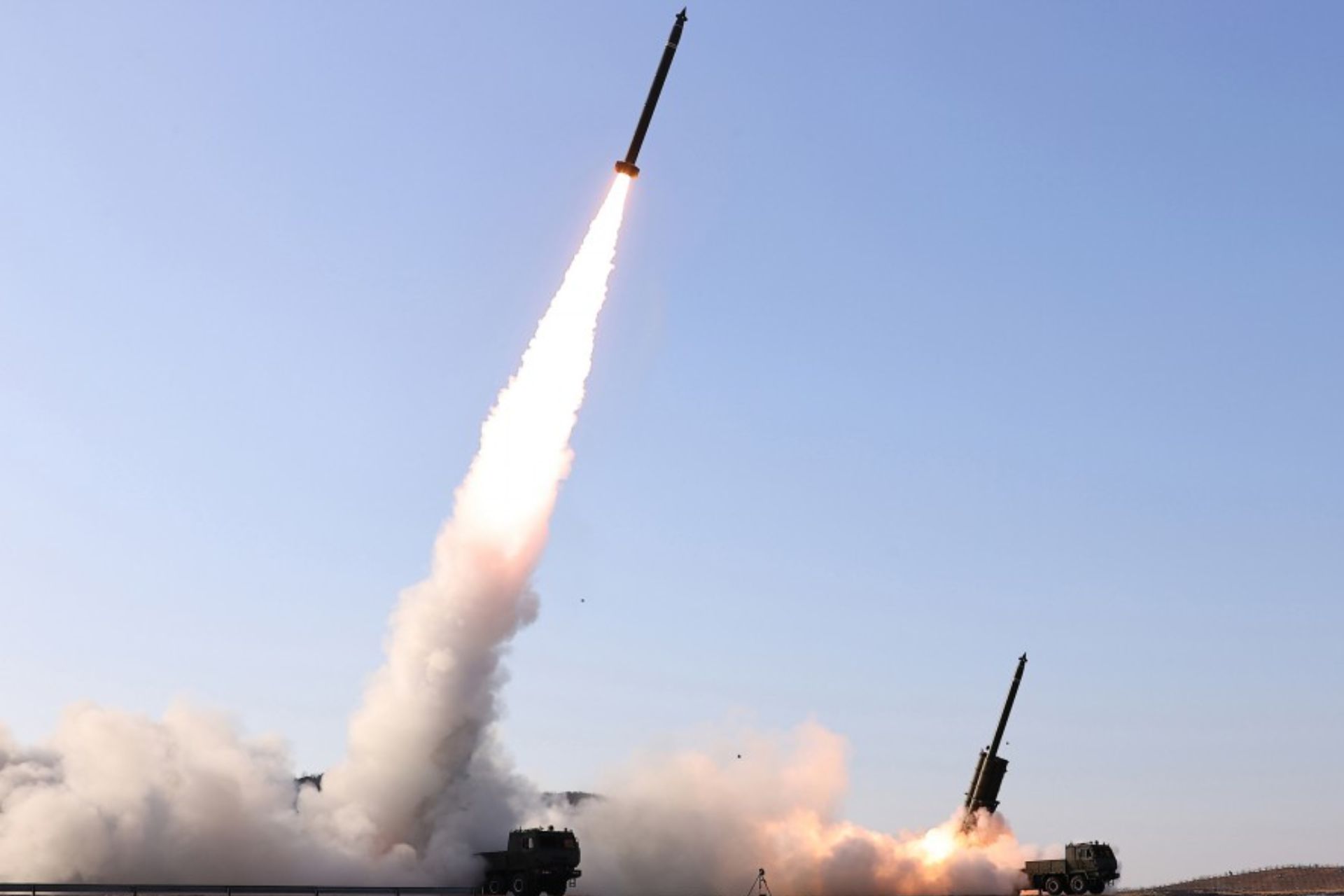
North Korea has tested a cluster-bomb warhead designed to be carried by tactical ballistic missiles and promised to put four types of such warheads into service before the end of the year, its state media reported on Sunday. The test, carried out on Saturday, is the latest in a rapid run of weapons trials by Pyongyang, and it sharpens a threat that South Korea's military takes seriously: a single short-range missile that can scatter destruction across an area the size of about 18 football pitches.
Table of Contents
- What Pyongyang says it tested
- What South Korea detected
- Why cluster munitions matter on the peninsula
- A familiar pattern, with a new edge
- The international problem with cluster weapons
- What to watch next
- Frequently Asked Questions
What Pyongyang says it tested
According to the Korean Central News Agency (KCNA), the North's Missile Administration conducted the test on Saturday to assess the combat adaptability and destructive power of a cluster-bomb warhead for tactical ballistic missiles. Yonhap News Agency reported that research institutes under the administration concluded the "Standard Type 2" warhead could turn a target area of 12 to 13 hectares to ashes at its highest-density power.
The general director of the Missile Administration said cluster-bomb warheads are divided into four categories depending on their purpose, and pledged that units would be able to select and use all of them according to operational aims and the features of their targets within this year. KCNA released photographs showing a projectile firing from a mobile launcher and multiple impacts on an island target, according to Malay Mail.
Two details in the reporting are worth noting. First, leader Kim Jong Un was not reported to have attended this test, unlike the April trial of a cluster warhead, which he watched alongside his daughter. Second, the state newspaper read by ordinary North Koreans did not carry the report, a reminder that Pyongyang's weapons announcements are aimed as much at foreign capitals as at its own public.
As with all of Pyongyang's weapons claims, the performance figures come only from North Korea itself and have not been independently verified. The 12-to-13-hectare figure should therefore be read as a claim about intent and design, not as a confirmed capability.
What South Korea detected
South Korea's military said it had been monitoring the launch, which was fired from around the north-western county of Chongju towards the Yellow Sea, also known as the West Sea. Seoul did not disclose the launch on the day it happened, announcing its detection only the following day after analysing flight distance, altitude and other parameters — a cautious approach it has used before when it wants to avoid handing Pyongyang a propaganda win in real time.
Shin Jong-woo, secretary-general of the Seoul-based Korea Defense and Security Forum, assessed that the missile appeared to be the Hwasong-11 Ra, a short-range system often described as North Korea's counterpart to the US Army Tactical Missile System. That identification matters: the Hwasong-11 family is a battlefield weapon, designed for use against targets in South Korea rather than for long-range deterrence, which makes a cluster warhead for it a direct concern for Seoul's planners.
Why cluster munitions matter on the peninsula
A cluster munition works by opening over its target and releasing dozens or even hundreds of smaller submunitions across a wide area. Where a conventional warhead strikes a point, a cluster warhead strikes a zone — hitting personnel, vehicles, equipment and infrastructure simultaneously. For a military facing a better-equipped opponent, that area effect is the attraction: one missile can threaten a dispersed target set that would otherwise require many precise strikes.
On the Korean peninsula, that logic cuts both ways. The peninsula is one of the most densely militarised places on earth, with forces massed close to the Demilitarized Zone and warning times measured in minutes. A weapon that spreads its effect over hectares rather than metres changes the defensive calculation: air defences must intercept the missile itself, because once the warhead opens, there is nothing left to shoot down.
Cluster munitions also carry a grim afterlife. Submunitions that fail to explode on impact remain on the ground as de facto landmines, dangerous to civilians long after a conflict ends. That is why more than 100 countries have joined the Convention on Cluster Munitions, which bans their use, production and stockpiling. Neither North Korea, South Korea nor the United States is a party to that treaty.
A familiar pattern, with a new edge
Saturday's test did not come out of nowhere. It follows a string of recent North Korean weapons trials, including attack drones, a precision-guided torpedo system and an intermediate-range hypersonic missile. We previously reported on North Korea's October test of attack drones, at which Kim called for "absolute superiority" in drones and artificial intelligence, and on the dozen short-range missiles fired from Wonsan in the same month.
What is new here is the move from testing a weapon to promising a family of weapons in service. The April trial established that North Korea could fit a cluster warhead to the Hwasong-11 Ra; the latest announcement claims the programme has matured into four operational variants, to be fielded by units before the year is out. If that timetable holds, it would mark a shift from demonstration to deployment — from a weapon North Korea can show off to one its commanders can choose from an arsenal.
It also fits a pattern in which Pyongyang tests conventional and "grey zone" systems that fall short of the nuclear and long-range missile tests that draw the sharpest international response, while still signalling resolve. A cluster warhead on a short-range missile is threatening enough to demand attention in Seoul, Tokyo and Washington, without necessarily triggering the same level of condemnation as an intercontinental ballistic missile launch.
The international problem with cluster weapons
The humanitarian case against cluster munitions is well established and does not depend on who fires them. Because they scatter submunitions over a wide area, they cannot be aimed precisely at a military target without endangering whatever else lies in the footprint. And because a proportion of submunitions typically fail to detonate, they leave behind unexploded ordnance that kills and maims civilians — often children — years later. Clearance efforts in Laos, Lebanon and elsewhere are still dealing with the consequences of cluster weapons used decades ago.
That record is why the announcement drew attention beyond the peninsula. For South Korea, the immediate question is defensive: how to detect, track and intercept short-range missiles earlier, and how to harden and disperse the forces a cluster warhead would target. For the wider region, the question is whether North Korea's conventional arsenal is advancing faster than diplomacy can keep up — and whether the current lull in serious negotiations is simply giving Pyongyang time to build.
What to watch next
Three things will show whether this announcement is bluster or a genuine capability milestone. The first is whether South Korea or the United States publicly confirms details of the test, such as flight data consistent with a cluster payload. The second is whether North Korea conducts follow-up trials of the other three warhead types it says it will field. The third is whether the weapons appear in military parades or unit exercises, which would suggest they have genuinely entered service rather than remaining laboratory projects.
For now, the test is best understood as both a technical claim and a political signal. Technically, Pyongyang says it has a battlefield weapon that can devastate a wide area from a single missile. Politically, it is telling its neighbours — and Washington, days before the US midterm elections — that its weapons programmes are advancing on multiple fronts at once, and that it intends to keep them advancing regardless of sanctions, condemnation or the absence of talks.
The peninsula has heard such signals many times before. What makes this one harder to dismiss is the specificity: a named warhead type, a claimed area of effect, a four-variant family and a deadline of year's end. Those are claims that can be tested against what happens next — and that, for analysts in Seoul and beyond, is precisely the point of watching.
Frequently Asked Questions
What did North Korea test on Saturday?
According to KCNA, the Missile Administration tested a cluster-bomb warhead for tactical ballistic missiles, to assess its combat adaptability and destructive power. South Korea's military detected a missile fired from the Chongju area towards the Yellow Sea.
How large an area does North Korea claim the warhead can destroy?
Pyongyang claims its Standard Type 2 cluster warhead can devastate a target area of 12 to 13 hectares — roughly 17 to 18 football pitches — at its highest-density power. That figure has not been independently verified.
How many types of cluster warhead does North Korea say it will field?
Four, divided by purpose. The Missile Administration's general director said units would be able to select and use all four types according to operational aims and target characteristics before the end of the year.
Which missile carried the warhead?
South Korean analysts assess it was likely the Hwasong-11 Ra, a short-range tactical ballistic missile. North Korea previously tested a cluster warhead on the Hwasong-11 Ra in April, in a trial attended by Kim Jong Un.
Are cluster munitions banned internationally?
More than 100 countries have joined the Convention on Cluster Munitions, which bans their use, production and stockpiling. North Korea, South Korea and the United States are not parties to the treaty.
Why does this test matter for South Korea?
Because the Hwasong-11 family is a battlefield weapon aimed at targets in South Korea, a cluster warhead for it would let a single missile threaten a wide area of troops, vehicles and infrastructure — and would leave unexploded submunitions dangerous to civilians afterwards.
Coverage based on reporting by Yonhap News Agency, Malay Mail and The Tribune. For earlier North Korean weapons tests, see our coverage of the attack-drone trials and the AI-guided missile test.