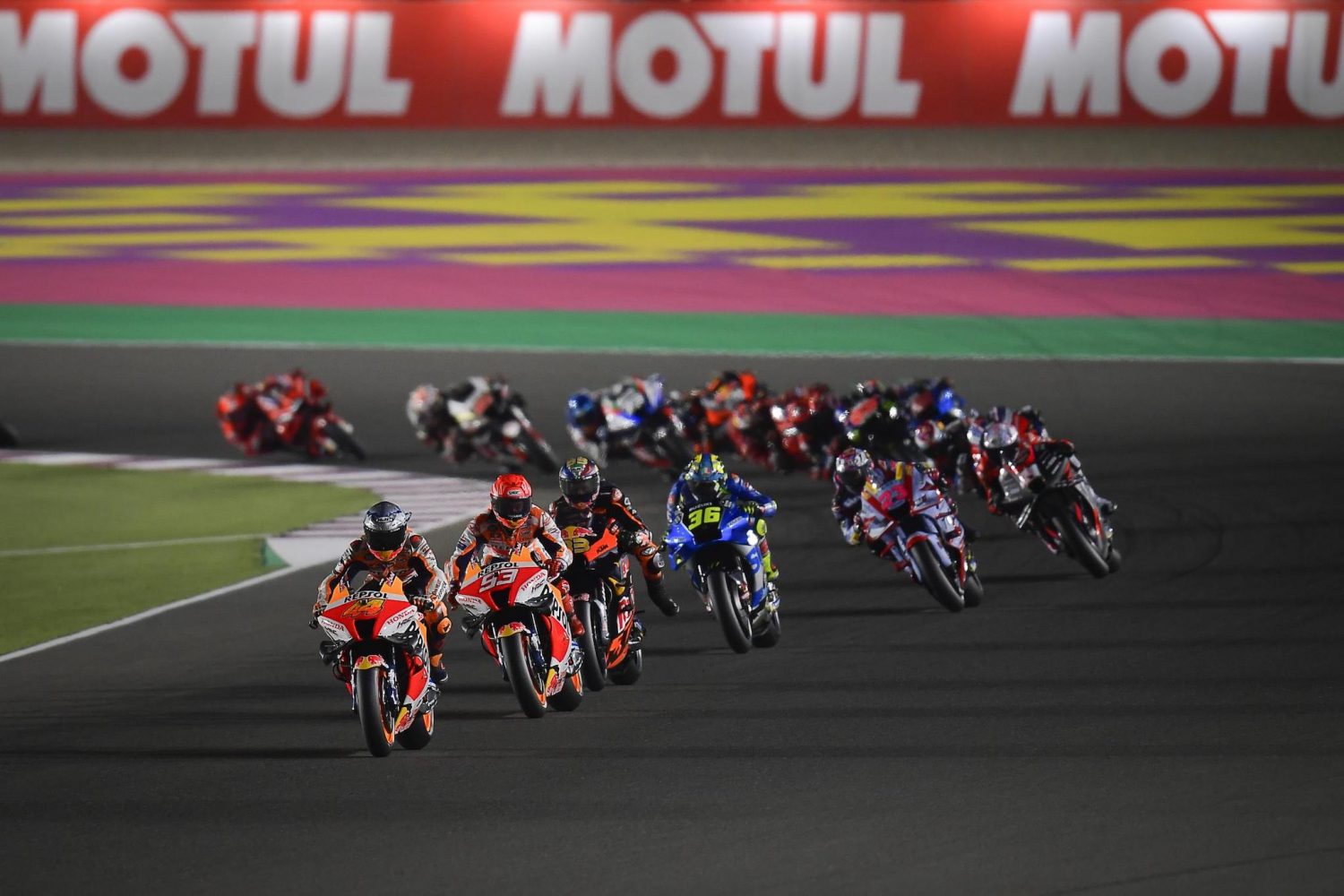
Yamaha has withdrawn its factory team from next weekend's Qatar Grand Prix, pointing to the security situation in the Middle East and to travel restrictions that apply across the Japanese manufacturer as a whole. The decision, announced shortly after Sunday's Malaysian Grand Prix, means that Fabio Quartararo and Alex Rins will not line up at Lusail — and it has set the championship's organisers against one of the sport's historic manufacturers in unusually public terms.
The Qatar round, scheduled from Friday to 8 November at the Lusail International Circuit outside Doha, is the third-to-last race of the season. With the title fight reaching its climax, the absence of a full factory team is more than a footnote: it removes two riders from the grid, reshuffles the competitive order, and raises an awkward question for every international event staged in a region under strain — who decides when it is safe to race?
Table of Contents
- What Yamaha announced — and why
- MotoGP's reply: disappointment and a warning
- What it means for Quartararo and Rins
- A title that could still be decided in Doha
- Why Qatar is under the spotlight
- Key takeaways
- Frequently Asked Questions
- Sources
- Related reading from Chronicle
What Yamaha announced — and why
Yamaha's statement was short and framed in corporate rather than sporting language. The manufacturer said it had "not identified sufficient grounds to change its existing company-wide travel restrictions", according to Al Jazeera. In other words, the decision was not presented as a judgement on the Lusail circuit itself, or on any specific threat to the race weekend, but as the consequence of a blanket company policy that the team could not set aside for one event.
That distinction matters. It allows Yamaha to say it is following a duty-of-care rule applied to all of its employees, not singling out Qatar. But it also leaves the championship with little room to negotiate: if the policy is company-wide, assurances about one circuit, however detailed, cannot by themselves overturn it.
The timing added to the drama. The announcement came immediately after the Malaysian Grand Prix at Sepang, as teams were preparing to move to the Gulf. Riders and crews learned of the withdrawal at the moment the season's endgame was coming into focus, with only three races remaining.
MotoGP's reply: disappointment and a warning
The sport's governing body, the MotoGP Group, did not hide its frustration. It said it was "disappointed" by Yamaha's decision and added that "Yamaha's non-participation also carries sporting implications" — a phrase that stops short of spelling out sanctions but clearly signals that skipping a round is not cost-free.
MotoGP argued that its position rested on direct consultation. Talks with the organisers in Qatar and with safety advisers had not identified any reason to change plans for the event, it said, and that assessment — together with the latest available information — had been communicated to all manufacturers and teams. The rest of the grid, MotoGP added, had confirmed it would compete in Qatar, and it thanked those teams for their commitment.
The exchange exposes a fault line that runs through modern motorsport. Championships increasingly stage races in regions where geopolitics can shift quickly, and they rely on detailed security advice to keep the calendar intact. Manufacturers, meanwhile, answer to their own boards, insurers and employees, and their risk appetite may differ from that of a promoter whose business depends on the show going on. When those two judgements diverge, as they have here, there is no neutral referee — only competing assurances, and a grid with a gap in it.
What it means for Quartararo and Rins
For the riders, the consequences are immediate and personal. Quartararo, the Frenchman who won the world title with Yamaha in 2021, and his Spanish team-mate Rins will simply not race in Qatar. They lose the chance to score points, to test themselves against the field on a circuit where Yamaha has historically been competitive under lights, and to build momentum into the final two rounds.
There is also a longer shadow. A manufacturer that withdraws from a race on safety grounds invites scrutiny of its relationship with the championship: will the same policy affect future rounds in the region, and how will the points, contracts and commercial obligations be handled? MotoGP's reference to "sporting implications" suggests those conversations have already begun, even if their outcome is not yet public.
For Yamaha's rivals, the practical effect is a thinner field. Two fewer factory bikes changes the dynamics of qualifying, of the sprint and of the main race — fewer riders to overtake, fewer variables in strategy, and one less manufacturer fighting for the podium places that decide constructors' honours.
A title that could still be decided in Doha
The championship itself goes on, and the headline contest is unaffected in its broad shape. Marc Marquez, Ducati's seven-time world champion, won at Sepang and arrives in Qatar with the chance to seal the title in Doha. That prospect gives the Qatar weekend a significance that Yamaha's absence cannot erase: a coronation under the Lusail floodlights remains the most likely story of the weekend.
Yet the context has changed. A title decided in a race from which a major manufacturer has withdrawn will inevitably carry an asterisk in the telling, however unfair that may be to the winner. Marquez and Ducati can only beat the riders who line up; they cannot control who stays away. Still, the sport will want the on-track contest, not the off-track dispute, to dominate the headlines by Sunday night.
Why Qatar is under the spotlight
Qatar's position at the centre of this dispute is inseparable from the wider regional crisis. The country came under Iranian attack between February and April, after the United States and Israel began a war on Iran, and in September 2025 Israel carried out an air strike on Doha that killed and injured Hamas leaders. Then, on Friday, a Qatari liquefied natural gas tanker was struck by unidentified objects in the Gulf — the latest incident to feed corporate caution about travel to the region.
None of that, on its own, proves that a race weekend at Lusail would be unsafe; MotoGP's point is precisely that its own safety advice says otherwise. But risk is judged differently in a boardroom than in a paddock. For a company sending hundreds of staff, families and freight across the world, the accumulation of incidents — a war, a strike on the host capital, a tanker attacked days before the race — can be enough to trigger a policy that no single reassurance can switch off.
That is why this story is likely to outlast the Qatar weekend. Other championships, other manufacturers and other host cities will watch how MotoGP handles Yamaha's absence, and whether the sport can keep its calendar credible when its participants disagree about safety. The answer will shape not just the final races of 2026, but the willingness of teams to commit to the region in seasons to come.
Key takeaways
- Yamaha has withdrawn its factory MotoGP team from the Qatar Grand Prix, citing company-wide travel restrictions linked to the situation in the Middle East.
- Fabio Quartararo and Alex Rins will therefore not race at Lusail from Friday to 8 November.
- MotoGP said it was "disappointed" and warned that non-participation "carries sporting implications", while insisting safety advice gave no reason to change plans.
- The rest of the grid has confirmed it will compete in Qatar, according to MotoGP.
- Marc Marquez, who won at Sepang, could clinch the world title in Doha.
- The withdrawal follows months of regional tension, including Iranian attacks on Qatar earlier in 2026, a September 2025 strike on Doha, and a Qatari gas tanker being struck in the Gulf on Friday.
Frequently Asked Questions
Why has Yamaha withdrawn from the Qatar MotoGP?
Yamaha said it had not identified sufficient grounds to change its existing company-wide travel restrictions, citing the situation in the Middle East. The decision applies to the factory MotoGP team for the Qatar round and was announced shortly after the Malaysian Grand Prix.
Which Yamaha riders are affected?
Fabio Quartararo of France, the 2021 world champion, and Alex Rins of Spain — the two riders on Yamaha's factory MotoGP team. Neither will take part in the Qatar Grand Prix.
Will the Qatar Grand Prix still go ahead?
Yes, according to MotoGP. The event is scheduled from Friday to 8 November at the Lusail International Circuit outside Doha, and MotoGP says the remainder of the grid has confirmed it will compete.
What has MotoGP said about the decision?
The MotoGP Group said it was "disappointed" by Yamaha's withdrawal and that non-participation "carries sporting implications". It added that talks with Qatar's organisers and safety advisers had not flagged any reason to change plans for the event.
Could the title be decided in Qatar?
Yes. Marc Marquez won the Malaysian Grand Prix at Sepang and could clinch the championship in Doha, with three races of the season remaining at the time of Yamaha's announcement.
Sources
- Al Jazeera — "Yamaha pulls out of Qatar MotoGP over 'situation in the Middle East'"
- Al Jazeera — Yamaha pulls out of Qatar MotoGP; fire engulfs hotel in Nepal along Everest Base Camp route