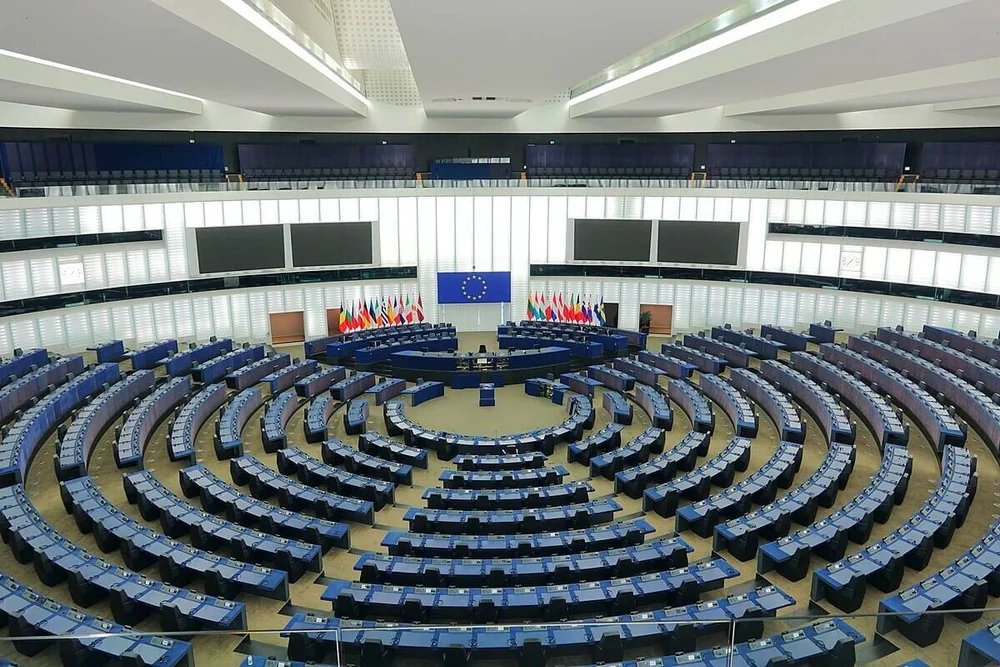
The European Parliament has thrown its weight behind Taiwan's place in the world, adopting a sweeping recommendation on EU-China political relations that rejects Beijing's attempts to squeeze the island out of international organisations and calls for closer economic, technological and security ties between Brussels and Taipei. The text passed on Wednesday, October 7, with 454 votes in favour, 86 against and 110 abstentions.
The recommendation, addressed to the European Council, the European Commission and EU foreign policy chief Kaja Kallas, sets out Parliament's position on an increasingly fraught relationship with Beijing. While not legally binding, its breadth — and the size of the majority — gives Brussels political cover as it weighs tougher measures on trade, technology and security toward China.
The core message: Taiwan's international space must not be restricted
At the heart of the document is a clear rejection of Chinese pressure. The Parliament "rejects China's attempts to coerce international organizations, third countries and other actors into restricting Taiwan's international participation and contacts," describing Taiwan as a valuable partner in trade and technology, Focus Taiwan reported.
The text also calls on the United Nations to resist Chinese demands and grant holders of Republic of China passports — including tourists, journalists, NGO workers and political activists — access to tours and events at the UN, according to the Taipei Times.
Specific examples of pressure are named: China's objection to Taiwanese Vice President Hsiao Bi-khim's participation in the European Conference of Ventotene for Freedom and Democracy, organised by the European Parliament last month, and Beijing's investigation of Taiwanese legislator Puma Shen under a 2024 judiciary guideline accusing him of leading the "pro-independence separatist organisation" Kuma Academy — a nonprofit that trains civilians in civil defence.
"One China policy" vs "one China principle": a deliberate distinction
In a nuance that will not have gone unnoticed in Beijing, the recommendation reaffirms that the EU's "One China policy" — which acknowledges China's claim to Taiwan but does not endorse it — guides the bloc's approach, and stresses that the EU has never endorsed China's "One China principle," which asserts that Taiwan is part of China.
The text opposes any unilateral attempt to change the status quo by force or coercion, or any change against the will of the Taiwanese people. It calls on the European Commission to make good on its pledge to Parliament to work toward deterring China from provoking or escalating tensions with Taiwan, while continuing to develop EU-Taiwan relations and encouraging dialogue across the Taiwan Strait.
Security coordination and a continuous naval presence
The Parliament went further on hard security than in past statements. The recommendation calls on the EU and its member states to work with other democratic partners in the region on closer security coordination, including a continuous naval presence and joint exercises, to reinforce regional stability.
That language comes just days after Taiwan received the first two of its long-delayed new F-16V fighter jets from the United States — a reminder of how quickly the island's defence picture is moving. As Chronicle reported earlier, the delivery ends a seven-year wait and significantly upgrades Taipei's air force at a moment of sustained Chinese military pressure.
The broader China critique: trade, Russia, and human rights
Taiwan was only one pillar of a much broader rebuke. The report, prepared by Belgian MEP Hilde Vautmans of Renew Europe, links Europe's worsening trade imbalance with China to Beijing's support for Russia's war in Ukraine and its growing military pressure on Taiwan, EU Today reported.
On the economy, MEPs rejected unfair trade practices and demanded a more reciprocal relationship, backing the Commission as Trade Commissioner Maroš Šefčovič negotiates with Chinese officials. On Russia, the text calls on China to stop supporting Moscow's war machine — including acting against Chinese companies that supply it.
On human rights, the recommendation calls for condemning violations of Uyghur rights and repression in Tibet, Hong Kong and Macau, alongside reinforced dialogue on forced labour. Vautmans said ahead of the debate that Europe must "protect critical infrastructure against espionage and foreign interference" and be clear that "peace and stability in the Taiwan Strait are of our direct European interest."
Taipei's response and what comes next
Taiwan's Ministry of Foreign Affairs swiftly thanked the European Parliament, saying the recommendation affirms the shared democratic values and economic, trade and technological ties between Taiwan and the EU, and supports peace and stability across the Taiwan Strait.
The recommendation now goes to the Council, the Commission and Kaja Kallas as guidance. Its practical effect will be tested in the coming months: Parliament has already scheduled trade committee engagement with China in late October, and Brussels is weighing new measures against Chinese imports and restrictions on sensitive technology exports. Beijing's response — likely sharp, given past reactions to European statements on Taiwan — will be another signal of where the relationship is heading.
For context on the wider regional picture, read our earlier reporting on North Korea's warning over US-Taiwan military cooperation.
Key takeaways
- The European Parliament adopted a recommendation on EU-China relations on October 7 by 454 votes to 86, with 110 abstentions.
- It rejects China's efforts to restrict Taiwan's participation in international organisations and exchanges, and names specific cases of pressure on Taiwanese officials.
- The text distinguishes the EU's "one China policy" from Beijing's "one China principle," which the EU says it has never endorsed.
- MEPs called for continuous naval presence and joint exercises with democratic partners in the Indo-Pacific.
- The document also targets unfair trade practices, China's support for Russia's war in Ukraine, and human rights abuses in Xinjiang, Tibet, Hong Kong and Macau.
Frequently Asked Questions
What exactly did the European Parliament adopt?
A recommendation on EU-China political relations — Parliament's non-binding but politically significant position paper, addressed to the European Council, the European Commission and EU foreign policy chief Kaja Kallas.
Is the recommendation legally binding?
No. Recommendations guide EU policy but do not create law. Their influence comes from the political weight of the majority — here, a substantial one — and the signal they send to the Commission, member states and Beijing.
What is the difference between the "one China policy" and the "one China principle"?
The EU's "one China policy" acknowledges China's claim to Taiwan without endorsing it, serving as a framework for EU-Taiwan engagement. Beijing's "one China principle" asserts outright that Taiwan is part of China. The Parliament stressed the EU has never endorsed the latter.
Why does this matter for Taiwan?
The text pushes back against Beijing's campaign to isolate Taiwan internationally, calls for deeper EU-Taiwan ties, urges closer security coordination including naval presence, and asks the UN to grant Taiwanese passport holders access to its events.
How did Taiwan react?
Taiwan's Ministry of Foreign Affairs publicly thanked the Parliament, saying the recommendation affirms shared democratic values and supports peace and stability across the Taiwan Strait.
Sources
- Focus Taiwan (CNA) — "EU lawmakers vote to reject Chinese pressure on Taiwan's global role"
- Taipei Times — "EU lawmakers reject China's pressure on Taiwan"
- EU Today — "European Parliament Demands Tougher China Policy Over Trade, Taiwan and Russia"