TEHRAN — Iran's top security official has accused the Trump administration of running a clandestine oil-smuggling operation through Oman's coastal waters, escalating the war of words over the contested Strait of Hormuz just as diplomatic channels between Washington and Tehran appear to be narrowing.
In a televised interview aired over the weekend, Major General Mohsen Rezaei, secretary of Iran's Supreme National Security Council, claimed that Washington had recruited "thugs" and "outlaws" to move oil through the shallows off Oman, alleging the operation was personally directed by the commander of US Central Command (CENTCOM) with the assistance of the United Arab Emirates military (ISNA).
The accusations arrive at one of the most volatile moments yet for the world's most important oil chokepoint, where repeated attacks on tankers and Iranian enforcement of strict passage conditions have already sent oil prices surging.
Table of Contents
- What Rezaei alleged
- The smuggling mechanism he described
- "The strait is under our control"
- Diplomatic channels go quiet
- A region on edge
- Frequently Asked Questions
What Rezaei alleged
Rezaei used the interview, carried by state-linked ISNA and broadcast on Press TV, to challenge Washington's repeated public claim that the Strait of Hormuz remains open to international commerce. Addressing US President Donald Trump directly, he said: "You are engaging in smuggling, but the strait is under Iran's control, and we are managing it."
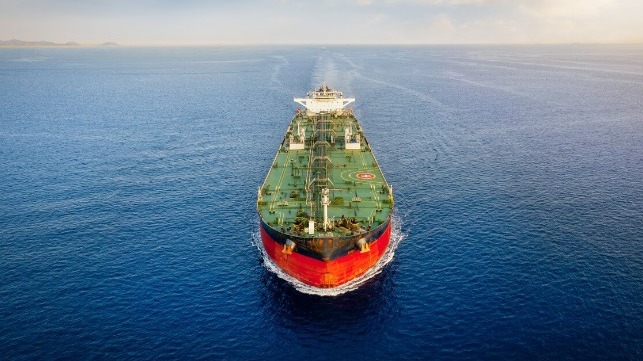
According to the Iranian security chief, the operation involves five or six small, highly maneuverable vessels that shuttle petroleum products through Oman's shallow coastal waters before transferring the fuel to large international tankers waiting farther offshore. Rezaei added that Iranian naval forces actively target these vessels, claiming Tehran strikes "five or six of them every night" (Al Mayadeen).
He notably pointed out that valuable American assets in the UAE and around Hormuz remained outside Iran's target list — a remark analysts read as a calibrated signal that Tehran retains further escalation options while choosing, for now, to publicize rather than act on them.
No independent verification of the smuggling claims has been published, and neither Washington nor Abu Dhabi had issued a response at the time of writing. Rezaei's framing turns the US narrative on its head: where the Trump administration presents the strait as open and normal, Tehran insists the waterway is effectively Iranian-controlled and that US commercial traffic is only moving through clandestine workarounds.
The smuggling mechanism he described
The alleged method — small-vessel ship-to-ship transfers in shallow coastal zones — is a tactic long associated with sanctions evasion in the Gulf. Over the past year, shadow tanker fleets have routinely used ship-to-ship transfers off Oman to obscure the origins of sanctioned crude.
What makes Rezaei's version unusual is the inversion of roles: instead of Iran dodging sanctions, he accuses the United States itself of resorting to the same shadow logistics to bypass Iranian interdiction. Whether the claim has substance or serves as information warfare, it reflects how completely the strait's normal commercial order has broken down — with both sides now trading accusations about who is violating the rules of the sea.
Shipping data cited alongside the interview suggests vessel traffic through Hormuz has fallen to its lowest level in more than two months, following a fresh wave of attacks on tankers deemed to be violating Iranian rules.
"The strait is under our control"
The accusation sharpens a message Tehran has been repeating for weeks: that the strait is not merely contested but administered by Iran. Parliamentary speaker Mohammad Bagher Ghalibaf has insisted Hormuz will stay effectively closed to normal traffic until Washington meets seven Iranian conditions set out in a June memorandum brokered via Pakistan (Chronicle).
That posture has already reshaped global energy logistics. Insurers have repriced Gulf war-risk premiums, some tanker operators are rerouting or demanding bonuses for Gulf transits, and crude benchmarks have reacted to every new incident along the waterway.
Diplomatic channels go quiet
Alongside the smuggling charge came a sign that back-channel diplomacy may be stalling. Iranian officials indicated Tehran is "no longer replying to the US" after judging Washington's response — delivered through Qatari intermediaries — to Iran's Hormuz reopening proposal as "insufficient." The Iranian proposal, presented during the UN General Assembly, reportedly offered to restore normal maritime passage within seven days if its conditions were met (ET Now).
Yet other channels remain open. Saudi Foreign Minister Prince Faisal bin Farhan spoke by phone on Sunday with his Iranian counterpart Abbas Araghchi about de-escalation, according to the Saudi Foreign Ministry — a notable contact between the two Gulf rivals as regional tensions run high.
US Treasury Secretary Scott Bessent, meanwhile, said American economic pressure had disrupted Iran's oil exports and international airline services, leaving Tehran facing negative cash flow — though he added that President Trump did not expect to resume military strikes against Iran before the November 3 midterm elections.
A region on edge
The weekend underlined how far the crisis has spread beyond the strait itself:
- The US Federal Aviation Administration told American airlines on Sunday to exercise caution when flying to or over Saudi Arabia, citing safety threats tied to ongoing military activity and navigation-system interference.
- SriLankan Airlines suspended all flights between Riyadh and Colombo until October 18.
- Yemen's government forces said they carried out eight air strikes on Houthi-linked sites around Taiz.
- Saudi civil defense said Monday the potential danger had passed in Abha after emergency alerts, while a Saudi-led coalition said it intercepted a Houthi ballistic missile aimed at Khamis Mushait.
With diplomacy stalled and both sides accusing each other of breaking the rules — whether through sanctions evasion or, as Tehran now charges, American smuggling — the Hormuz crisis is entering a phase where the risk is less a single dramatic incident than the slow hardening of two incompatible realities on the same waterway.
Frequently Asked Questions
Who made the oil-smuggling accusation against the US?
Mohsen Rezaei, secretary of Iran's Supreme National Security Council, made the claim in a televised interview aired over the weekend, carried by Iran's state-linked ISNA agency and Press TV.
What exactly did Rezaei claim?
He alleged that the Trump administration hired "thugs" to smuggle oil through Oman's coastal waters, that the operation was led by the commander of US Central Command with UAE military assistance, and that Iran attacks five or six of the small transfer vessels every night.
Has the US responded?
No public response from Washington or Abu Dhabi had been issued at the time of writing, and no independent verification of the claims has been published.
Why does the Strait of Hormuz matter so much?
About a fifth of the world's seaborne oil trade passes through the narrow waterway between Iran and Oman. Any disruption there ripples directly into global energy prices and shipping insurance costs.
What happened to Iran's proposal to reopen the strait?
Iran says it presented a plan at the UN General Assembly that could restore normal passage within seven days if Washington accepted its terms, but now calls the US reply — relayed via Qatar — "insufficient" and says it is no longer responding.