Four years after a series of underwater explosions tore through the Nord Stream gas pipelines in the Baltic Sea, a German court in Hamburg is set to hear the first criminal trial over one of the most consequential acts of sabotage in modern European history. The defendant is a former Ukrainian army officer, identified in court only as Serhii K., who prosecutors allege led a seven-person team that planted the explosives — and who they say acted on behalf of Ukrainian state authorities.
The case, before the Hanseatic Higher Regional Court in Hamburg, is the first time the competing theories about the blasts will be tested in open court, under oath, with evidence subject to challenge. For four years the explosions have been a magnet for speculation, anonymous briefings and rival accusations. The trial promises something the affair has so far lacked: a public, judicial reckoning with what actually happened on the seabed in September 2022.
The charges
According to Associated Press reporting, Serhii K. faces charges of causing an explosion, damaging property and disrupting public services. Most strikingly, he is also charged with being an accomplice to war crimes, on the grounds that the attack struck civilian infrastructure.
That classification has already proved controversial. It elevates an act of sabotage against energy infrastructure into the framework of the laws of war — a framing that, if it survives judicial scrutiny, could shape how similar attacks are prosecuted in future conflicts. The defendant, who was publicly named as Serhii Kuznetsov during extradition proceedings in Italy, denies the charges and says he is innocent.
German prosecutors have raised the stakes further still. They allege that the suspects were operating "on behalf of state authorities in Ukraine" — a claim that, if proven, would transform the case from the work of a rogue group into an act attributable to a state, and one directed against the energy infrastructure of a country that is among Ukraine's most important military backers.
The alleged plot
The prosecution's account, as outlined in the indictment, reads like a covert operation assembled from ordinary parts. A small team of Ukrainian divers, prosecutors say, hired a sailing yacht from a German company using forged identity documents and intermediaries. The yacht set off from the German port of Rostock. From it, the divers allegedly descended to the pipelines on the Baltic seabed and attached explosive charges.
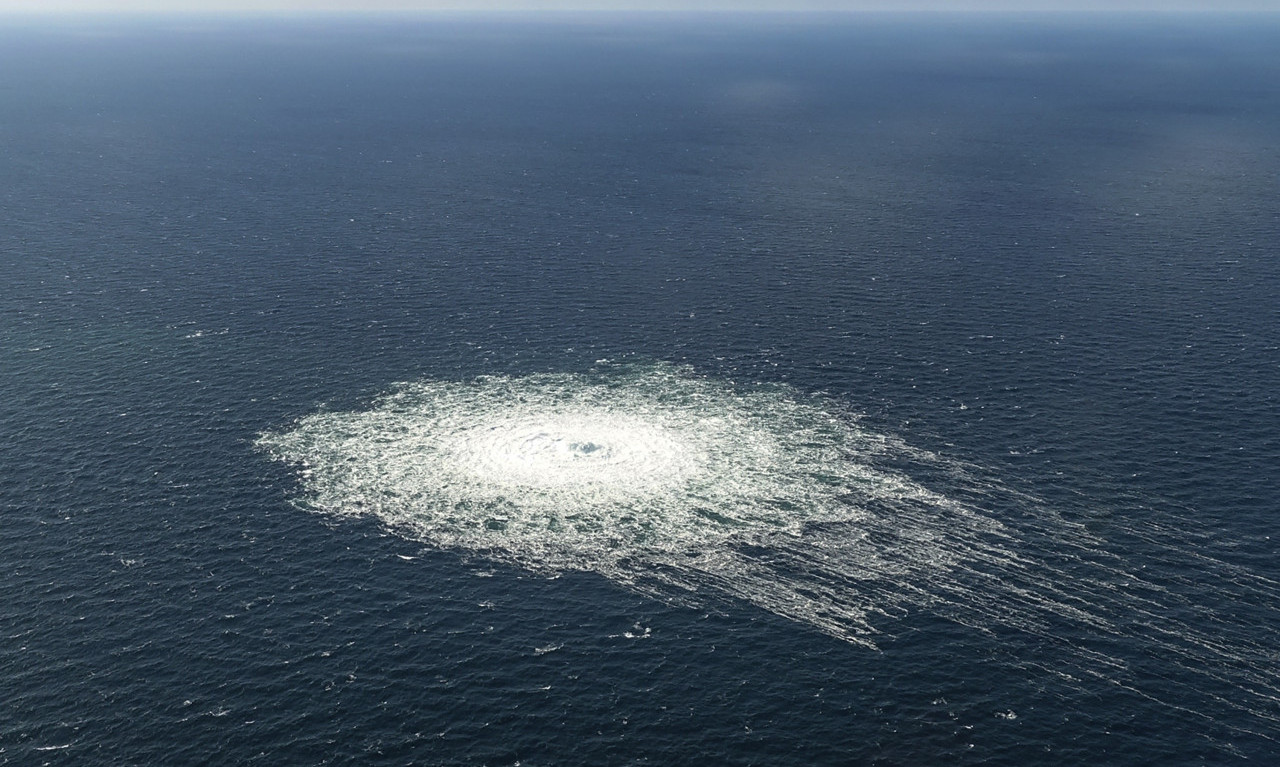
On 26 September 2022, three explosions ripped through the Nord Stream 1 and Nord Stream 2 pipelines, which had been built to carry Russian natural gas directly to Germany beneath the Baltic Sea. Only one of the four pipeline strands survived intact; the rest were rendered inoperable, and vast quantities of gas bubbled to the surface in leaks visible from the air.
Prosecutors say the aim was to permanently disrupt gas deliveries and to prevent Russia from using gas revenues to finance its military operations. At the time, European countries were scrambling to wean themselves off Russian energy following the Kremlin's full-scale invasion of Ukraine in February 2022 — an invasion that had already upended Europe's energy map and was reshaping the continent's confrontation with Moscow over energy and sanctions.
Nord Stream was majority-owned by Russia's state-controlled Gazprom and co-financed by major European energy companies. It had long been politically divisive: built to deliver Russian gas directly to Germany, it bypassed transit states such as Ukraine and Poland, both of which had tense relations with Moscow and stood to lose transit revenues and leverage.
Kyiv denies any role
Ukraine has consistently and firmly denied any involvement in the attack. Its Prosecutor General's Office said in July that investigators had found no evidence linking Ukraine, its government agencies or its officials to the explosions. That denial now sits in direct tension with the German prosecution's claim of a state link — a contradiction the Hamburg proceedings may begin to test.
The political sensitivity is acute. Germany is one of Ukraine's closest allies and a central supplier of military aid. The allegation that Ukrainian state-linked operatives sabotaged infrastructure serving Germany — even infrastructure owned substantially by Russia — raises uncomfortable questions about the conduct of a war in which the Western alliance has invested heavily, both materially and politically.
At the same time, the case arrives amid a wider contest over accountability for wartime attacks on energy infrastructure. Ukraine and Russia have traded accusations over strikes on power grids, refineries and pipelines, with Kyiv recently accusing Moscow of violating a purported energy ceasefire. The Hamburg trial will be watched as a test of whether courts, rather than governments, can establish facts in that fog.
One defendant, six more suspects
Only one of the seven suspects identified by German prosecutors is in the dock. In August 2025, German investigators issued arrest warrants for six Ukrainian citizens. Serhii K. himself was detained in Italy that summer and extradited to Germany in the autumn; he was formally charged in July 2026.
Another suspect, Volodymyr Zhuravliov, was detained in Poland in 2025, but a Warsaw court rejected Germany's extradition request and ordered his release. He was later detained in Croatia and has sought political asylum there, according to The New Voice of Ukraine. German investigators allege he was one of the divers who planted explosives on the pipelines.
The remaining suspects are not in custody, and their cases will not be heard in Hamburg. That means the trial, for all its significance, will necessarily tell only part of the story — the part that can be proved against one man.
Why the trial matters beyond Germany
The Nord Stream explosions did not merely damage steel and concrete on the seabed. They laid bare Europe's dependence on Russian energy, accelerated the continent's painful break from Russian gas, and became one of the defining mysteries of the war in Ukraine. In the first weeks after the blasts, Western governments largely blamed Moscow; the German investigation's turn towards a Ukrainian group was a slow, contested shift that many found hard to credit.
A trial changes the register. Evidence presented in court is tested by defence lawyers, weighed by judges, and reported in public — a different discipline from intelligence leaks and anonymous sourcing. Whatever the verdict, the proceedings will produce a record: of what German investigators say they can prove, of what they cannot, and of how a democratic court handles a sabotage case entangled with an ongoing war, alliance politics and the laws of armed conflict.
For Germany, the trial is also a statement of institutional principle: that even the most politically explosive allegations are handled by prosecutors and judges, not by governments trading favours. For Ukraine, it is a reputational risk it has sought to contain. And for the wider debate about international law in wartime, the war-crimes framing will be watched closely by lawyers far beyond Hamburg.
The proceedings are expected to run for months. The verdict, when it comes, will not settle every question about Nord Stream — but it may finally replace four years of speculation with findings of fact.
Frequently Asked Questions
Who is on trial in Hamburg?
A former Ukrainian army officer, identified in court only as Serhii K. under German privacy rules. He was publicly named as Serhii Kuznetsov during extradition proceedings in Italy. Prosecutors allege he led a seven-person team that blew up the pipelines. He denies the charges.
What is he charged with?
Causing an explosion, damaging property, disrupting public services, and being an accomplice to war crimes by attacking civilian infrastructure.
What do prosecutors say happened?
They allege a seven-person group hired a yacht from a German company using forged IDs, sailed from the port of Rostock, and planted explosives on the Nord Stream pipelines on the Baltic seabed. They say the aim was to permanently disrupt gas deliveries and stop Russia using gas revenues to fund its war, and that the group acted on behalf of Ukrainian state authorities.
What does Ukraine say?
Kyiv has always denied any involvement. Ukraine's Prosecutor General's Office said in July that investigators found no evidence linking Ukraine, its government agencies or officials to the explosions.
When did the Nord Stream explosions happen?
On 26 September 2022, three explosions damaged the Nord Stream 1 and Nord Stream 2 pipelines in the Baltic Sea. Only one of the four pipeline strands remained intact.
Are there other suspects?
Yes. German investigators issued arrest warrants for six Ukrainian citizens in August 2025. One, Volodymyr Zhuravliov, was detained in Poland, where a court rejected extradition, and later detained in Croatia, where he has sought political asylum. The others are not in custody.
Where can I read the original reporting?
The Associated Press explainer on the trial is available via Bastille Post, and The New Voice of Ukraine has covered the parallel case of suspect Volodymyr Zhuravliov.