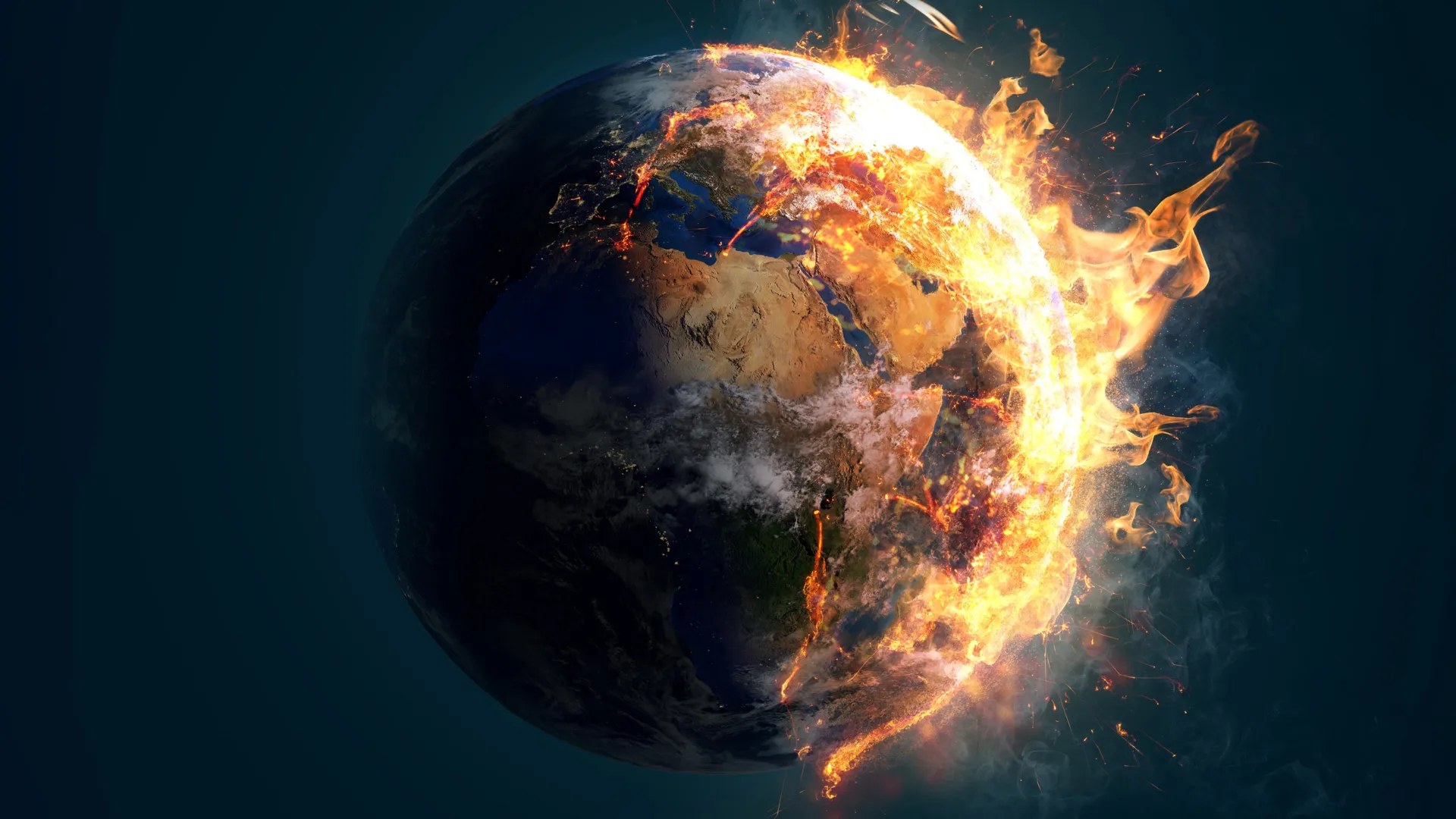
The United Nations has formally conceded what climate scientists have feared for years: the fight to hold global warming to 1.5°C is over. In its annual Emissions Gap Report released on Wednesday, the UN Environment Programme (UNEP) warned that global commitments to cut planet-heating emissions fall so far short of the Paris Agreement goals that the world is on course for 2.6°C of warming this century — even if every national pledge on the table is delivered in full.
Contents
- A target abandoned
- Emissions stuck at record levels
- Guterres: "dangerously short"
- COP31 now carries the burden
- Frequently Asked Questions
A target abandoned
The report's central verdict is stark: any chance of keeping to the historic 1.5°C limit, the aspiration agreed in Paris a decade ago, has been "lost" after decades of insufficient climate action. The Paris pact called for keeping warming "well below" 2°C while striving for 1.5°C — a threshold beyond which scientists expect significantly more severe floods, droughts, heatwaves and sea-level rise.
According to the UNEP analysis, the pledges governments have submitted so far — the national climate plans known as NDCs — would still leave the world heading for roughly 2.6°C of warming above pre-industrial levels by 2100. Sticking only with policies already in force, without new action, would be worse still: about 2.8°C, the report found. The coverage, reported by the Malay Mail from Paris, lays bare what UNEP calls the chasm between rhetoric and action.
The finding reframes a decade of climate diplomacy. The 1.5°C goal had survived successive summits as a moral compass and legal anchor; declaring its attainment impossible marks a psychological as well as a scientific turning point. Attention now shifts to how much overshoot can be limited — and how fast emissions can be brought down from their peak.
Emissions stuck at record levels
The report underlines how little the trajectory has moved. Overall global greenhouse gas emissions in 2025 were broadly on a par with the record levels of 2024, with the difference between the two years too small to call. Carbon dioxide from burning coal, oil and gas — the main driver of climate change — rose slightly in 2025 compared with the previous year.
That plateau at the top matters because cumulative emissions, not annual rates alone, determine how far temperatures climb. Every year of record-level pollution narrows the remaining carbon budget, making steeper cuts unavoidable later. The G20 group of major economies accounts for roughly three-quarters of global emissions, concentrating responsibility — and leverage — in a small number of capitals.
Guterres: "dangerously short"
UN Secretary-General Antonio Guterres did not soften the message in his statement launching the report. "The world can no longer avoid overshooting the 1.5-degree limit, and the consequences are already devastating," he said. "Deadly floods, brutal heatwaves, raging wildfires, lost lives, crippled economies, deepening inequalities, and those least responsible are suffering first and worst."
He warned that while deep and immediate cuts are needed to protect humanity from worsening impacts, "emissions remain at record levels. And national climate plans and current policies fall dangerously short" — a verdict echoed across coverage of the report.
The inequality dimension runs through the entire document: the countries and communities least responsible for the crisis are absorbing its harshest blows, from crop failure to displacement, even as the biggest emitters lag on their own targets.
COP31 now carries the burden
Timing gives the report unusual political weight. It arrives just weeks before November's COP31 climate summit, setting the benchmark against which every announcement there will be judged. The summit will now be framed not as a rescue mission for 1.5°C but as an emergency effort to contain the overshoot — to keep the eventual peak as low as possible and return temperatures to safer levels over time.
Europe is already moving on parallel tracks: Brussels is preparing a mitigation package for the summit, climate marchers took to the streets of the Belgian capital demanding stronger action, and France and Germany struck a deal on car emissions that could shape the bloc's negotiating hand. Whether those moves scale into the global course correction UNEP demands is now the central question of COP31 — one the Economic Times notes will test political leaders directly.
The science is no longer asking whether the 1.5°C ceiling will be breached. It is asking how far past it humanity goes — and how quickly it comes back.
Frequently Asked Questions
What is the Emissions Gap Report?
It is an annual assessment published by the UN Environment Programme measuring the gap between what countries' climate pledges would deliver and what is needed to meet the Paris Agreement temperature goals. The 2026 edition was released on 21 October.
Why is 1.5°C considered lost?
Because cumulative emissions have kept rising to record levels while national plans remain far short of the required cuts, UNEP concludes there is no longer any plausible pathway to hold warming to 1.5°C — the goal is described as "lost" due to decades of insufficient action.
What does 2.6°C of warming mean in practice?
It is well beyond the "well below 2°C" Paris ceiling and implies significantly more severe heatwaves, floods, droughts, wildfires and sea-level rise than a 1.5°C world. Current policies alone would lead to around 2.8°C, according to the report.
Which countries emit the most?
The G20 accounts for about three-quarters of global emissions. Secretary-General Guterres singled out the biggest emitters, saying all countries — especially the largest polluters — must do more.
What happens at COP31?
The climate summit in November will now focus on limiting the overshoot: strengthening national pledges, accelerating emissions cuts, and scaling up finance and adaptation for the most vulnerable countries.
Does overshooting 1.5°C mean climate action no longer matters?
No. Every fraction of a degree matters: faster, deeper cuts still reduce the scale of impacts, lower the eventual temperature peak, and improve the odds of returning below dangerous thresholds later this century.