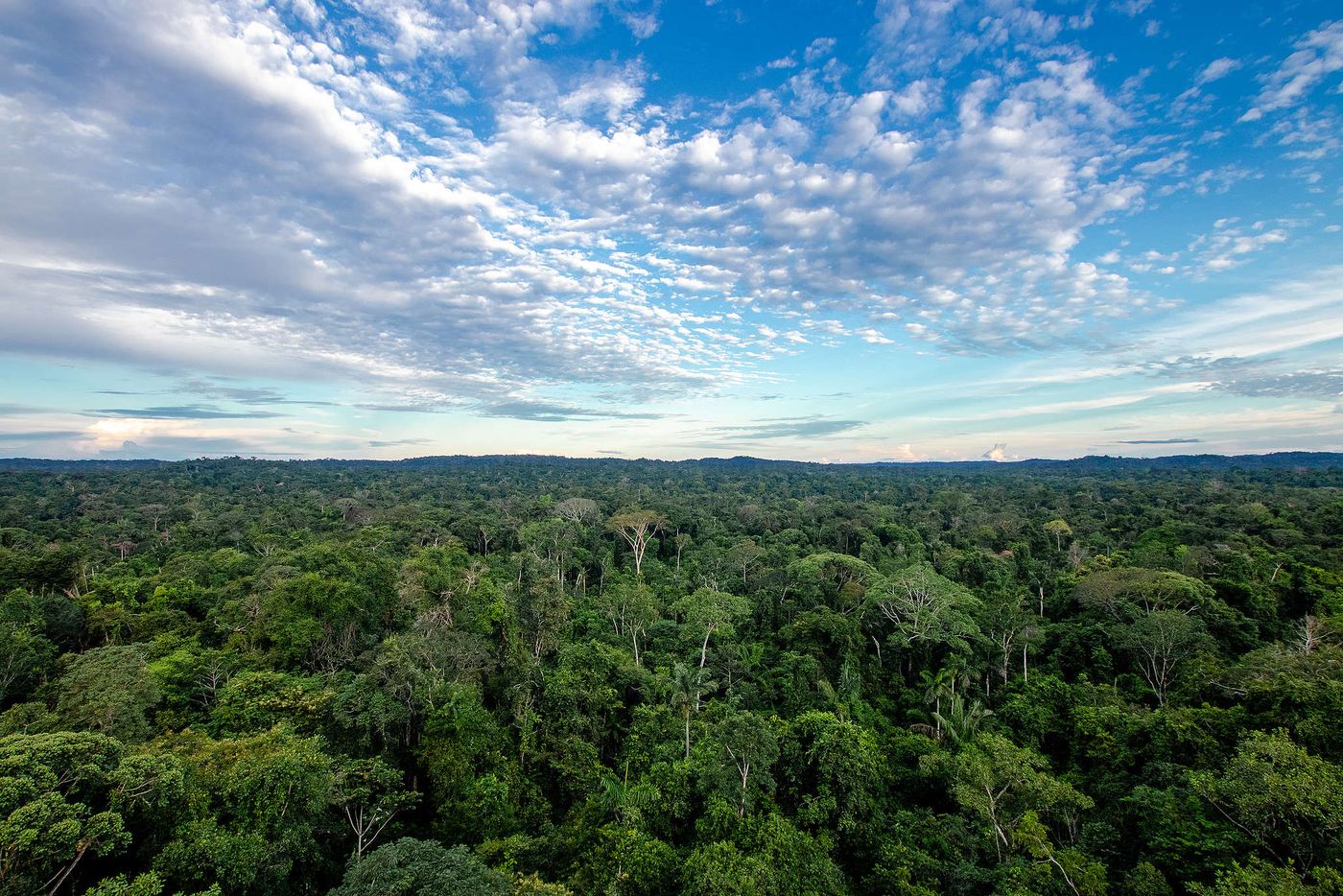
Brazil's Amazon lost just 3,335 square kilometres of forest between August 2025 and July 2026, a drop of nearly 42% from the previous year and the lowest annual deforestation rate since satellite monitoring began in 1988, according to official figures released on Friday. Environment Minister João Paulo Capobianco hailed what he called "an absolutely stratospheric drop" at a press conference in Brasília, calling the result "like a dream" as the government published its annual Prodes satellite data.
The milestone lands days before Brazil's presidential runoff on 25 October, in which incumbent Luiz Inácio Lula da Silva is polling neck-and-neck with conservative senator Flávio Bolsonaro. Deforestation in the Amazon has now fallen for four consecutive years — a cumulative decline of 71.2% since Lula returned to office, reversing a surge that defined his predecessor's tenure.
The Numbers Behind the Turnaround
The headline figure — 3,335 sq km, roughly the size of a small European country — compares with 5,731 sq km cleared in the previous twelve-month period. The official annual rate is measured by the Prodes satellite system, operated by Brazil's National Institute for Space Research (INPE), covering the standard August-to-July monitoring year. The series stretches back to 1988, making this year's reading the lowest on record, DW and regional outlets including the Peninsula and AsiaOne reported.
Officials attribute the decline to tighter satellite monitoring, more frequent enforcement operations, and stiffer penalties for illegal logging, land-grabbing and wildcat mining — the activities that have historically driven most forest clearance. Brazil is home to roughly 60% of the world's largest tropical rainforest, whose trees absorb vast quantities of the greenhouse gases driving global warming. The government's broader anti-deforestation efforts have made international headlines before: last year's global deforestation report showed a 15% fall worldwide, though the Congo Basin moved in the opposite direction.
The contrast with the previous administration is stark. Under far-right president Jair Bolsonaro, the father of Lula's runoff rival, Amazon deforestation surged roughly 60% between 2019 and 2022, with more than 45,000 sq km cleared over the four-year term, per official figures — a legacy that stripped Brazil of much of its credibility in international climate negotiations.
A Political Boost Days Before the Runoff
Lula wasted no time seizing on the numbers. "Our goal is to achieve zero illegal deforestation by 2030," he reiterated on X on Friday, framing the data as validation of the promise that carried him back to office. With polls showing the incumbent locked in a dead heat with Flávio Bolsonaro, the record-low figure hands Lula his strongest possible campaign argument on the environment — a domain where his predecessor's record is a liability the Bolsonaro camp has struggled to answer.
The turnaround is closely tied to policy decisions Lula took within weeks of returning to the presidency. One of his first moves was to revive the Action Plan for the Prevention and Control of Deforestation in the Legal Amazon — PPCDAm, its Portuguese acronym — a blueprint first launched during his earlier administration in 2004 that had been shelved under Bolsonaro. He also brought back the environmental officials who had designed the original plan two decades earlier, appointing champion Marina Silva to lead the Environment Ministry. Silva resigned in April to run for Congress, but her former deputy, Capobianco, has carried the programme through to these results.
The timing also matters for Brazil's climate diplomacy. While the runoff dominates domestic attention, the deforestation figures are the currency in which Brazil buys influence in global climate talks — and the country's courts have shown the same direction of travel, as seen in this month's landmark $108 million climate lawsuit against Shell.
Why It Matters — and What Could Undo It
For climate science, the trend is genuinely significant. The Amazon is not just a carbon store but a system under mounting stress from heat, drought and fire, and scientists have long warned of a tipping point at which large areas flip from rainforest to savanna. Slowing the chainsaws buys the ecosystem time — but monitoring data is a lagging indicator of cleared forest, not a guarantee about what happens next.
The greatest vulnerability is political. Brazil's environmental enforcement has swung violently with elections before: the record set in 2026 could be undone if enforcement budgets are cut or penalties weakened after the vote. A Flávio Bolsonaro victory would echo the ideology that fuelled the 2019–2022 surge, though the candidate has been careful to court moderates and has largely avoided his father's open hostility to environmental regulation. Lula's side will argue that only continuity preserves the gains; his opponents will counter that the deforestation figures are the fruit of a commodities slowdown as much as enforcement.
Either way, Friday's data changes the baseline. A 71.2% cumulative drop over four years means the Amazon debate in Brazil is no longer about whether restoration is possible — the question is whether it survives the next government.
Frequently Asked Questions
How much Amazon forest was cleared this year?
Between August 2025 and July 2026, 3,335 square kilometres of forest were cleared — a decline of nearly 42% from the previous year's 5,731 sq km, and the lowest annual rate since Brazil began monitoring deforestation by satellite in 1988.
How is the deforestation rate measured?
Brazil's official rate is measured by the Prodes satellite system, operated by the National Institute for Space Research (INPE). The annual figure covers the period from August to the following July, which accounts for seasonal cloud cover.
What is Brazil's zero-deforestation goal?
President Lula has pledged to achieve zero illegal deforestation by 2030. The current policy framework, PPCDAm, was relaunched in 2023 after being shelved under the previous government.
Why is this politically significant now?
The figures were released just over a week before Brazil's 25 October presidential runoff, in which Lula is polling neck-and-neck with Flávio Bolsonaro. Deforestation policy is a major dividing line: forest clearance surged under the far-right government of Jair Bolsonaro, the challenger's father.
Where can I read the original reporting?
DW English covered the release, with syndicated reporting via outlets including Free Malaysia Today, the Peninsula, and AsiaOne.