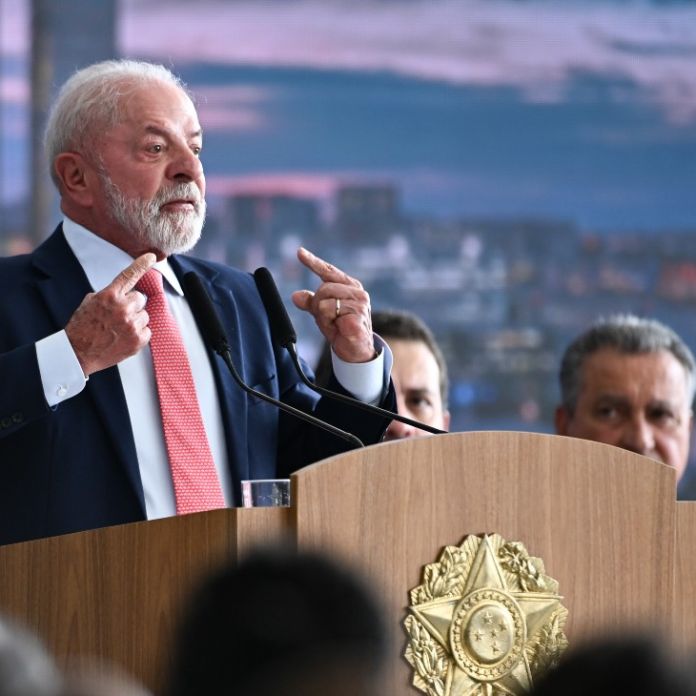
Brazil's president has broken with decades of his own party's doctrine on criminal justice. In a Thursday night interview with TV Globo, Luiz Inácio Lula da Silva said he now supports lowering the age of criminal responsibility from 18 to 16 for so-called heinous crimes — a sharp reversal of a position he and his Workers' Party have defended for years (The Guardian).
The timing is impossible to ignore. With the presidential runoff just over a week away, Lula is fighting to close the gap on far-right senator Flávio Bolsonaro, who won the first round and remains slightly ahead in the polls. Political analysts across Brazil immediately read the announcement as an electoral gambit: an attempt to neutralise the law-and-order terrain on which Bolsonaro has built his campaign.
Table of Contents
- What Lula announced
- The electoral calculus
- Brazil's legal landscape for young offenders
- A debate that has run for decades
- What happens next
- Frequently Asked Questions
What Lula announced
Speaking on TV Globo, Brazil's most-watched broadcaster, Lula said 16- and 17-year-olds accused of heinous crimes — a legal category in Brazil that includes murder, rape and kidnapping — should face adult criminal prosecution rather than the juvenile system. Under his proposal, the age threshold would drop from 18 to 16, but only for the gravest offences.
The shift is striking because it overturns one of the clearest policy lines of Lula's political career. For decades, the Workers' Party has argued that Brazil's problem is not lenient punishment of teenagers but an overcrowded, violent prison system that already leads the world in mass incarceration. Child-rights advocates, longstanding Lula allies, have historically been among the fiercest opponents of any reduction in the age of criminal responsibility. Their reaction to the president's reversal will be one of the first tests of how far the party faithful are willing to follow him in the runoff stretch.
The electoral calculus
The announcement lands in a campaign where Lula is on the defensive. After Flávio Bolsonaro's first-round victory and with runoff polling showing the senator slightly ahead, the incumbent needs to peel away voters who lean right on public security — arguably the single most potent issue in Brazilian politics today.
Crime consistently ranks at or near the top of voter concerns in Brazil, a country with one of the highest homicide rates in the world. Bolsonaro's campaign has hammered Lula on the issue, framing the president's government as soft on criminals. By adopting one of the right's signature proposals, Lula appears to be trying to deny Bolsonaro a monopoly on the security debate — at the cost of alienating parts of his own base.
It is a classic runoff manoeuvre: the candidate who trails on the most salient issue tries to blur the distinction rather than win the argument. Whether voters reward the flexibility or punish the inconsistency is the gamble.
Brazil's legal landscape for young offenders
Brazil's 1988 Constitution sets the age of criminal responsibility at 18, and adolescents between 12 and 17 are handled under the Statute of the Child and Adolescent (ECA), which emphasises socio-educational measures — rehabilitation programmes, community service and, in the most serious cases, detention in juvenile facilities — rather than prison sentences.
Lowering the age would require a constitutional amendment, a heavy lift in any legislature. Amendments to Brazil's Constitution need the approval of three-fifths of both the Chamber of Deputies and the Senate, in two rounds of voting in each house. Even with presidential backing, there is no guarantee Congress would deliver the votes — and any attempt to push the change through in the dying days of an election would immediately face legal and procedural challenges.
Supporters of the change argue that organised crime increasingly exploits teenagers precisely because they know the legal protections of the ECA, pointing to gang recruitment of adolescents in Rio de Janeiro, São Paulo and the Amazon. Opponents counter that the juvenile system is itself underfunded and that Brazil's adult prisons — notoriously overcrowded and dominated by gang factions — would be worse schools for young offenders, not better ones.
A debate that has run for decades
Lula's reversal is not happening in a vacuum. Proposals to reduce the age of criminal responsibility have circulated in Brazil's Congress for more than three decades. The best-known effort, a 1993 constitutional amendment proposal, was approved by the Chamber of Deputies in 2015 amid public outrage over high-profile crimes committed by minors — but stalled in the Senate and never became law.
Each new wave of the debate has followed the same pattern: a shocking crime involving teenagers triggers public fury, politicians reach for the constitutional lever, and the proposal eventually dies in committee or on the Senate floor. International human rights bodies, including UNICEF, have consistently opposed the change, arguing that evidence from other countries shows harsher penalties for young offenders do not reliably reduce crime.
What is genuinely new this time is not the idea but its champion. A proposal that for thirty years has belonged to the political right is now being carried by the man the right is trying to defeat. If Lula wins the runoff, he will own the consequences of a policy his own movement has spent a generation opposing.
What happens next
The practical effects of the announcement are, for now, limited. Lula cannot change the Constitution by interview; the question is whether the pledge survives the election and what legislation, if any, follows. Three things are worth watching:
First, whether Bolsonaro's campaign treats the reversal as validation or flip-flopping — expect both, depending on the audience. Second, how Lula's own party and its allies in the human-rights community respond; a public split could cost him more votes on the left than the announcement gains him in the centre. Third, whether the pledge moves polling at all in the final stretch, when undecided voters in Lula's bid for a fourth term may matter more than ideological purists.
What is already clear is that Brazilian politics has entered its most transactional phase of the campaign. With days to go, the president has put a core conviction on the table — and bet that security-minded voters will take the offer.
Frequently Asked Questions
What did Lula announce about the age of criminal responsibility?
In a TV Globo interview on Thursday night, Brazil's president said he now supports lowering the age of criminal responsibility from 18 to 16 for "heinous" crimes such as murder, rape and kidnapping, reversing a longstanding position.
Why is the timing significant?
The announcement comes with the presidential runoff just over a week away. Lula trails far-right senator Flávio Bolsonaro, who won the first round and leads in the polls, and is trying to neutralise the law-and-order issue that favours his opponent.
Would this require changing Brazil's Constitution?
Yes. The 1988 Constitution sets the age of criminal responsibility at 18. Lowering it requires a constitutional amendment approved by three-fifths of both houses of Congress in two rounds of voting each — a high bar.
What happens to young offenders under current Brazilian law?
Adolescents aged 12 to 17 are handled under the Statute of the Child and Adolescent (ECA), which uses socio-educational measures — rehabilitation programmes, community service, and juvenile detention for serious cases — instead of adult prison sentences.
Has Brazil tried to lower the age before?
Yes. A constitutional amendment proposed in 1993 was approved by the Chamber of Deputies in 2015 but stalled in the Senate. Similar proposals have been revived repeatedly after high-profile crimes but never became law.