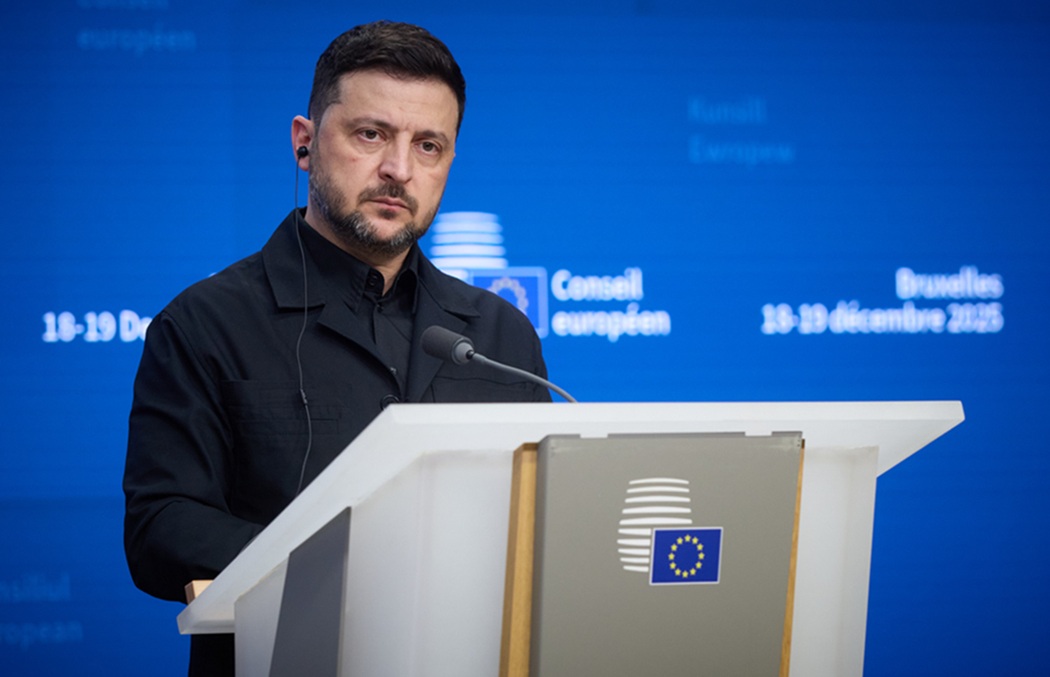
European Union leaders gathered in Brussels on Friday to show united backing for Volodymyr Zelensky, as the Ukrainian president's relationship with Donald Trump deteriorated into open confrontation over Kyiv's strikes on Russian oil refineries. The summit unfolded just hours after Trump called Ukraine's attacks on the refineries "a disgrace" and days after Zelensky tore up the energy ceasefire the US president had announced with fanfare (Reuters).
Arriving at the summit, Zelensky framed the gathering as a survival strategy. "We want to end this war as quick as possible. We don't see now signals from the Russian side that they are ready for this, to end this war, that's why we have to prepare for the winter," he said. The "winter package" he is seeking covers energy supplies, air defences and funding for the rest of this year and for 2027 — a recognition that the war shows no sign of ending through negotiation.
Table of Contents
- The rupture with Washington
- Trump's midterm calculus
- Europe steps into the gap
- The funding cliff
- Moscow hits back on two fronts
- What happens next
- Frequently Asked Questions
The rupture with Washington
The row began when Trump blindsided Zelensky last weekend by announcing that Ukraine and Russia had agreed to stop targeting each other's energy infrastructure. Kyiv never embraced the deal, and Zelensky has now formally abandoned it — ordering fresh strikes, including one on an oil refinery southeast of Moscow that supplies the Russian capital. Trump responded in a Newsmax interview: "All he's doing is making the world oil price higher. Well, I think that's a disgrace."
The episode marks the sharpest break yet between the two presidents since Trump returned to office. Kyiv fears that Washington could now pull back intelligence sharing and weapons support — the backbone of Ukraine's defence since 2022. The White House has even weighed easing sanctions on the so-called shadow fleet of vessels that transport oil from Russia, a move that would undercut one of the West's main instruments of economic pressure on Moscow.
Ukraine had already been alarmed by the diesel supply deal between Washington and Moscow that EU leaders criticised on the summit's first day — another sign that Trump is willing to strike energy bargains with the Kremlin over Kyiv's head.
Trump's midterm calculus
Trump's hostility to the refinery strikes is inseparable from American domestic politics. With the November midterm elections approaching, the president has blamed Ukrainian attacks on Russian refineries for pushing up global energy prices — prices that, he argues, could cost his party at the ballot box. Surging oil prices since the Iran war have already made energy affordability one of the most potent issues in the campaign.
Zelensky, for his part, has shown little patience with that framing. Speaking after he abandoned the energy ceasefire, the Ukrainian president criticised Trump's willingness to cut deals with Moscow — deals Kyiv sees as sacrificing Ukrainian leverage for American electoral convenience.
The result is a standoff in which Washington's electoral timeline and Kyiv's war timeline are moving in opposite directions. Trump wants calm energy markets now; Ukraine believes pressure on Russia's fuel infrastructure is one of the few asymmetric tools it has.
Europe steps into the gap
Into that vacuum has stepped Brussels. EU leaders hosted Zelensky at what Dutch Prime Minister Rob Jetten described as a moment for frank talk "about how to deal with the complex diplomatic situation that has arisen and how to survive the winter." Asked about Trump's "disgrace" remark, Jetten answered: "This is not the right language. It is also in the interest of Trump to defend Ukraine in this war."
The summit exposed both solidarity and strain. EU leaders united in rejecting Trump's diesel deal with Russia, but soaring energy prices since the Iran war have revealed real divisions between member states on how far Europe can go. Belgian Prime Minister Bart De Wever voiced the hard question aloud: Zelensky would likely "look everybody straight in the eye" and say the €90 billion already pledged is running out — "because a war is a very costly thing" — and ask whether Europe is "still willing, ready and able to put your money where your mouths are."
Several countries are expected to announce fresh military pledges, and Jetten said "several countries" would pledge more military support soon, even as he admitted disappointment at how few had offered new financial commitments.
The funding cliff
The numbers hanging over the summit are stark. Zelensky told Reuters earlier this month that Ukraine had agreed a plan with European partners to close a $27 billion shortfall in this year's military spending, allowing Kyiv to order the drones needed to keep fighting into early 2027. But Finance Minister Sergii Marchenko has warned that next year's budget still has an unfunded gap of $32.6 billion — and that figure does not include an estimated $40 billion in direct military supplies from allies.
With US support in question, the entire weight of covering those gaps increasingly falls on Europe. Germany has already signalled continued engagement, but turning summit solidarity into signed cheques will be the test of the coming weeks.
Moscow hits back on two fronts
Russia, meanwhile, is squeezing from both the battlefield and the economy. On the eve of Zelensky's summit appearance, Moscow moved to place the local assets of French, German, Swedish and Dutch companies under temporary management — retaliation for the EU's support for Ukraine.
On the battlefield, Russian drone strikes on Kharkiv killed three people, according to local authorities, while attacks on the Volyn region bordering Poland left 370,000 people without power. Emergency power cuts were introduced in Kyiv during the strikes, the energy provider DTEK said.
President Vladimir Putin publicly played down the effect of Ukrainian strikes on Russian refineries, insisting they had caused "nothing particularly significant" — though Moscow's aggressive retaliation suggests the attacks are landing harder than the Kremlin admits.
What happens next
The Brussels summit is a turning point less because of any single pledge than because of what it signals: with Washington unreliable, Ukraine's survival now depends on whether Europe can convert sympathy into money, weapons and energy for a third wartime winter. Zelensky came to Brussels asking for air defences and funding through 2027 — essentially asking the continent to underwrite the war's next phase on its own.
Watch for three things. First, whether Washington follows through on any reduction in intelligence sharing or weapons deliveries — the moment rhetoric becomes policy, the balance of the war shifts. Second, whether the threatened easing of shadow-fleet sanctions materialises, which would hand Moscow a major economic lifeline. And third, whether Europe's summit pledges survive the winter ahead, when energy prices at home will test every leader's resolve.
For now, Ukraine's strategy is clear: strike where Russia is vulnerable, and lean on Europe where America has gone cold.
Frequently Asked Questions
Why did Trump call Ukraine's refinery strikes a "disgrace"?
In a Newsmax interview, Trump said Ukrainian attacks on Russian refineries were driving up world oil prices: "All he's doing is making the world oil price higher. Well, I think that's a disgrace." With US midterm elections nearing, he blames the strikes for rising energy costs that could hurt his party.
What happened to the energy ceasefire Trump announced?
Trump announced an agreement that Ukraine and Russia would stop targeting each other's energy facilities. Zelensky then declared Ukraine was abandoning it and ordered new strikes, including on a refinery southeast of Moscow that supplies the Russian capital.
What is Zelensky asking Europe for at the Brussels summit?
A "winter package" covering energy supplies, air defences and funding for the rest of 2026 and for 2027, plus help closing a $27 billion gap in this year's military spending and an unfunded $32.6 billion gap projected for next year.
How has Russia responded?
Militarily, Russian drone strikes killed three people in Kharkiv and left 370,000 without power in the Volyn region, with emergency cuts in Kyiv. Economically, Moscow placed local assets of French, German, Swedish and Dutch companies under temporary management in retaliation for EU support to Ukraine.
Is the US really considering easing sanctions on Russia's shadow oil fleet?
A US official said the Trump administration is considering easing sanctions on so-called shadow fleet vessels that transport oil and petroleum products from countries including Russia, according to Reuters — a move Kyiv views as economic relief for Moscow.