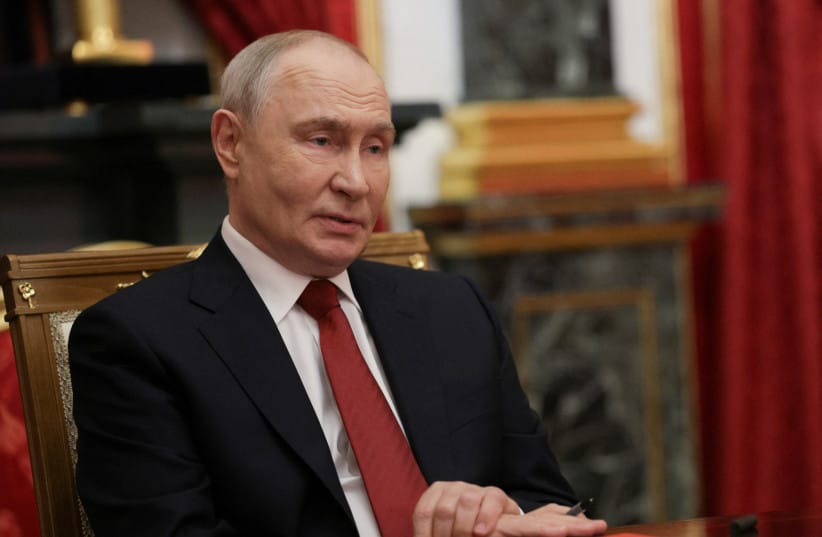
US special envoy Steve Witkoff touched down in St. Petersburg early on Wednesday for a face-to-face meeting with Russian President Vladimir Putin, carrying an updated framework for ending the war in Ukraine — the culmination of a whirlwind diplomatic shuttle that began less than 24 hours earlier in Oslo with President Volodymyr Zelenskyy.
Witkoff was greeted at Pulkovo Airport by Kremlin envoy Kirill Dmitriev, according to photos shared with CNN, which cited two sources with knowledge of the visit. Russian state media reported the Putin meeting is scheduled for the first half of Wednesday. The trip follows a Tuesday summit in Norway where US officials say the two sides made "meaningful progress" and reached "strong alignment" on the next steps toward a settlement.
Table of Contents
- What happened in Oslo
- What Witkoff is carrying to Putin
- Kushner's role — and the refinery strikes dispute
- The friction behind the smiles
- What comes next
- Frequently Asked Questions
What happened in Oslo
The Oslo talks on Tuesday brought together Zelenskyy, Witkoff, and a broad European contingent including officials from NATO and the European Union. US Secretary of State Marco Rubio, speaking during a visit to India, described the discussions as "positive" and said Witkoff would travel onward to Russia "armed with those ideas."
"He'll now, armed with those ideas, be able to go to Saint Petersburg and share them with the Russian side — and let's see if we can make some progress," Rubio said, according to CNA.
A US official told CNN that Ukraine "brought forward new ideas and proposals, which were discussed in detail," and that Washington and Kyiv are now in "strong alignment" on what the next steps will be. As Chronicle reported yesterday, the Oslo summit was convened at Zelenskyy's own request in an effort to return diplomacy to "a more constructive track."
Zelenskyy also thanked Washington on Tuesday for the resumption of US intelligence sharing on Russian strikes, including the early-warning system for incoming ballistic missiles. "We are thankful that intelligence works," he told reporters in Oslo, calling the warnings "very, very important for our people, for children, adults, civilians."
What Witkoff is carrying to Putin
According to Axios, citing a US official, Witkoff is expected to present Putin with an updated proposal for ending the war — one developed in consultation with Ukraine and European partners in Oslo. A US official described the framework as covering "key elements of a comprehensive peace framework, including long-term security guarantees for Ukraine, a post-war economic and prosperity plan, and a broader European security architecture designed to create lasting stability."
But the gulf between the two sides' positions remains wide, and the details will be the battleground:
- Ukraine's red lines: future security guarantees to ensure Russia does not invade again, and a flat rejection of any demand to surrender territory, reiterated by Kyiv and its allies in Oslo.
- Russia's demands: that Ukraine give up the entire eastern Donbas region, now mostly under Russian control; a dramatic reduction in the size of Ukraine's military; and a pledge never to join NATO.
The White House hopes the new proposal will open the way for direct negotiations involving Ukraine, Russia and the United States. Zelenskyy has gone further, calling for a potential trilateral leaders' summit with Trump and Putin to resolve the war's core issues — a format Moscow has so far rejected.
Kushner's role — and the refinery strikes dispute
Trump's son-in-law Jared Kushner is expected to participate in the St. Petersburg meeting virtually, a US official told AFP, reprising his remote role in the Oslo session. Kushner emerged in Oslo as a particularly blunt voice: a source familiar with the talks told Axios that he pressed Ukraine directly to stop striking Russian oil refineries.
"Jared was very direct," the source said. Zelenskyy reiterated that Ukraine was prepared to halt the strikes if Moscow took reciprocal steps — a conditional offer that underscores how energy infrastructure has become a negotiating chip on both sides.
The friction behind the smiles
The positive tone of the Oslo readout marks a striking turnaround from days of open friction between Kyiv and Washington. The tension followed Trump's decision to strike a diesel-supply deal with Putin — easing restrictions on Russian diesel sales — and the US president's calls for Zelenskyy to be replaced after Ukraine refused to halt its attacks on Russian refineries.
On Monday, Trump said he believed Russia wanted to reach an agreement but questioned Zelenskyy's willingness to end the war, warning of serious consequences if no deal was reached. The back-to-back Witkoff trips to Oslo and now St. Petersburg represent Washington's most concentrated diplomatic push in months, and the clearest test yet of whether Trump's personal-channel diplomacy can bridge positions that have barely moved all year.
What comes next
No public agenda or expected outcome for the Witkoff–Putin meeting has been released, and the Kremlin has not commented on the updated proposal. Diplomats will be watching for three signals: whether Moscow engages seriously with the framework Witkoff is carrying, whether any date is set for follow-up talks, and whether Zelenskyy's proposed trilateral summit gains any traction.
For now, the shuttle itself is the message. In the space of 48 hours, the same American envoy has sat with both wartime leaders — a sequence Washington has not pulled off at this intensity since the current administration took office. Whether it produces a negotiation rather than another round of readouts will be decided in St. Petersburg.
Frequently Asked Questions
Why is Steve Witkoff meeting Vladimir Putin in St. Petersburg?
Witkoff is presenting an updated US-backed peace proposal for ending the war in Ukraine, drawn from talks he held with President Zelenskyy and European officials in Oslo on Tuesday. The White House hopes it opens the way to direct Ukraine–Russia–US negotiations.
Who else is involved in the diplomatic push?
Jared Kushner, Trump's son-in-law, is participating virtually in both the Oslo talks and the St. Petersburg meeting. Kremlin envoy Kirill Dmitriev greeted Witkoff at the airport. Secretary of State Marco Rubio has publicly endorsed the shuttle, calling the Oslo session "positive."
What are the main obstacles to a deal?
Ukraine demands binding security guarantees and refuses to cede territory. Russia insists on the entire Donbas, a smaller Ukrainian military, and a no-NATO pledge. Ukraine's strikes on Russian refineries and Trump's diesel deal with Putin have added fresh friction between Kyiv and Washington.
Has a Trump–Putin–Zelenskyy summit been agreed?
No. Zelenskyy has publicly called for a trilateral leaders' summit with Trump and Putin to settle the war's key issues, but Moscow has rejected that format so far. Wednesday's meeting is between Witkoff and Putin only.