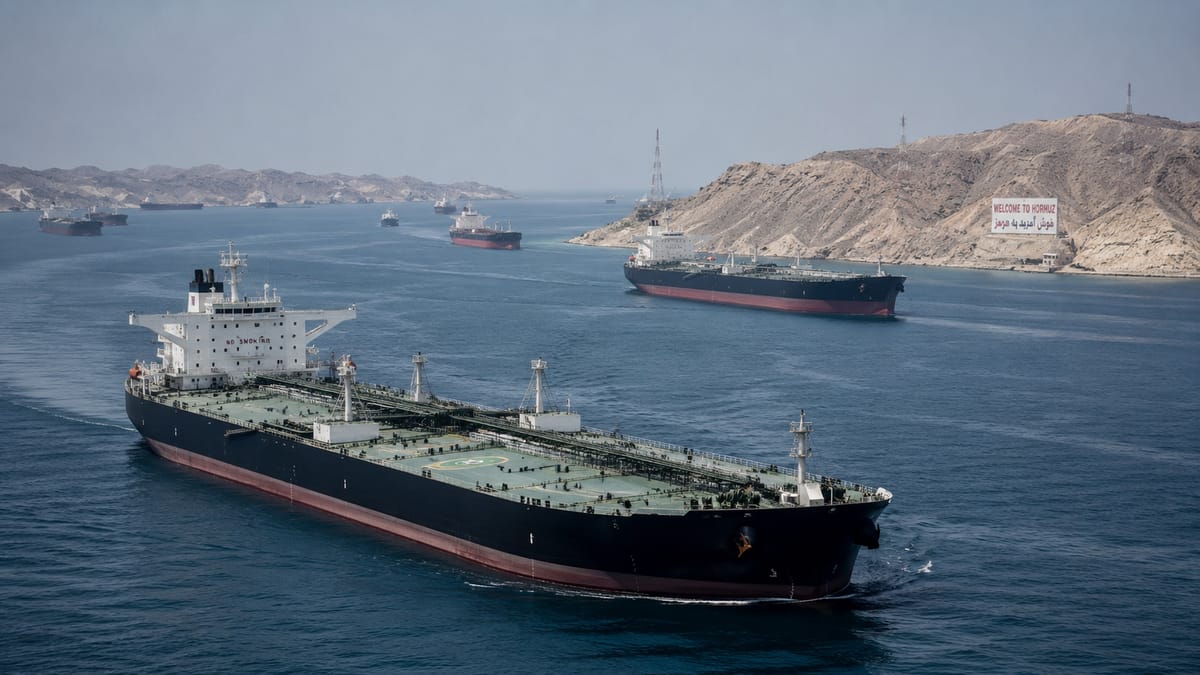
Iran's military said on Monday, 16 November 2026, that another energy tanker had struck a sea mine and caught fire east of the Strait of Hormuz, the latest in a fast-growing series of attacks on commercial shipping in the world's most important oil waterway. The vessel was left immobilised, Tehran said, after sailing with its navigation system switched off along what Iran calls an unauthorised route. Al Jazeera
The Iranian army said the commercial vessel had travelled along an "unauthorised route" when it struck the explosive. In the same statement, it delivered a blunt message to Washington: "Despite the lies of the US president, the Strait of Hormuz is closed and will remain closed as long as the Islamic Republic of Iran deems it necessary."
No details were given about the tanker's name, flag, cargo or crew, and the claim has not been independently confirmed — a pattern that has repeated through weeks of incidents in and around the strait.
A pattern of fires at sea
Monday's incident follows a cluster of similar events over the weekend. On Saturday, 14 November, Iran's navy and the Revolutionary Guards said fires had broken out on three oil tankers that struck mines in and around the strait. Two of the vessels were said to have been attempting to cross through an unauthorised southern route with their tracking and identification systems switched off; the third was hit east of the chokepoint. One of the vessels struck inside the strait was described as a supertanker. Channel News Asia
Those claims, too, came only from Iranian military authorities. Reuters said at the time that it could not immediately verify the reports, and the UK Maritime Trade Operations centre, which monitors shipping in the region, had not confirmed the incidents. The US military has said it cleared the main shipping routes through the waterway of mines.
The incidents are the latest in a campaign that has intensified sharply since the war between the United States, Israel and Iran broke out in February 2026. Tehran has required vessels to obtain its permission to transit the strait ever since, and has attacked ships that do not comply, while Washington has imposed a naval blockade on Iranian ports and provides military support to tankers using the waterway.
Chronicle has previously reported on two supertankers catching fire in the strait and on an LNG carrier striking a mine in the same waters.
Table of Contents
- A pattern of fires at sea
- The human and commercial toll
- A third US carrier arrives
- Diplomacy stalls as pressure builds
- Key takeaways
- Frequently Asked Questions
- Sources
- More from Chronicle
The human and commercial toll
The United Nations told the Security Council this week that at least 25 seafarers have been killed in and around the Strait of Hormuz since the war broke out in February. The UN's International Maritime Organization has tracked 136 security incidents involving vessels in Hormuz and the wider Middle East between 1 March and 11 November — 35 of them in October alone, the highest monthly tally since the conflict began.
British maritime data firm Lloyd's List Intelligence recorded 37 ship attacks in and around the strait last month, a record high since the war began, with at least 14 more confirmed so far in November. A total of 418 non-Iranian oil tankers passed through the strait in the period covered by its data, underscoring how much commercial traffic continues to run the gauntlet. The Curtain
Before the war, about a fifth of the world's oil passed through the strait, which links the Gulf to the Gulf of Oman. Each new incident pushes insurance costs higher, forces shippers to weigh longer routes around Africa, and feeds volatility in crude prices — costs that eventually reach consumers at the pump and on supermarket shelves.
A third US carrier arrives
The tanker fire came on the same day the United States deployed a third aircraft carrier to the Middle East. A US official told Al Jazeera on Monday that the USS Theodore Roosevelt had arrived in the region, joining two other carrier strike groups already operating in the US Central Command's area of responsibility.
Officials pointed out over the weekend that the US needs three aircraft carriers in the Middle East to carry out operations around the clock if it launches a major military operation again. Whether the Roosevelt's arrival is a routine rotation or the prelude to renewed strikes remains unclear: one of the other two strike groups may move out of the region in the coming days, and what happens in the next week or so will determine whether the build-up is a genuine precursor to attack.
It is, however, an open secret in Washington that Israel's prime minister, Benjamin Netanyahu, and the head of the Mossad spy agency have been pressing the White House to join new attacks on Iran, with Netanyahu again raising the threat of Iran's nuclear programme over the weekend. The US, for now, is not keen to do that. Al Jazeera
Diplomacy stalls as pressure builds
Diplomatic efforts to end the war permanently and reopen the strait remain stalled, despite intensified mediation by Qatar and Pakistan. Iranian Foreign Minister Abbas Araghchi, in Islamabad on Monday for a meeting of the Economic Cooperation Organization, called for heightened energy cooperation with oil-and-gas producing neighbours, warning that renewed US-Israeli attacks threaten stability across the region. He also held a telephone conversation with his Russian counterpart, Sergey Lavrov, about diplomatic efforts aimed at preserving regional and global peace and security.
In Washington, the war is becoming a domestic political issue. House Democratic leader Hakeem Jeffries called on Monday for the conflict to end, blaming it for rising living costs faced by Americans. "The reckless war of choice in Iran has made your life way more expensive," he wrote. "It must end." He argued that Iran's response to the February attack — restricting shipping through Hormuz — had driven up the prices Americans pay for groceries, petrol, travel and other everyday necessities. Cost of living was cited by about 90 percent of voters as a major factor in the midterm elections, in which President Donald Trump's Republican Party lost both the House and the Senate.
Meanwhile, the wider region continues to smoulder. Saudi-led coalition forces said they intercepted two drones fired by Yemen's Houthis towards Mecca and Riyadh, and Iraq ordered its army into the stronghold of the Iran-backed Kataib Hezbollah group following accusations of oil smuggling. In a sign of the shipping industry's shifting calculations, the Maersk alliance announced it was resuming container shipments through the Red Sea and the Suez Canal after attacks from Yemen.
Key takeaways
- Iran's army says another energy tanker struck a sea mine and caught fire east of the Strait of Hormuz on 16 November, leaving the vessel immobilised.
- The tanker had reportedly switched off its navigation system and was travelling an "unauthorised route", according to Tehran.
- Iran declared the strait "closed and will remain closed as long as the Islamic Republic of Iran deems it necessary".
- The incident follows three tanker mine strikes reported on 14 November, and at least 25 seafarers have been killed in the waterway since February, according to the UN.
- The USS Theodore Roosevelt arrived in the Middle East on Monday, becoming the third US aircraft carrier in the region, as diplomacy to end the war remains stalled.
Frequently Asked Questions
What happened in the Strait of Hormuz on 16 November 2026?
Iran's military said an energy tanker struck a sea mine and caught fire east of the Strait of Hormuz. The vessel had switched off its navigation system and was travelling along what Iran calls an unauthorised route, and it was left immobilised. The claim has not been independently confirmed.
How many tankers have been hit by mines in the strait recently?
Three oil tankers were reported to have struck mines on 14 November, two inside the strait and one east of it, and two supertankers caught fire after explosions on 12 November. The International Maritime Organization has tracked 136 security incidents involving vessels in Hormuz and the wider Middle East between March and mid-November.
Why does the Strait of Hormuz matter so much?
The strait links the Gulf to the Gulf of Oman and carried about a fifth of the world's oil before the war. Disruption there raises shipping insurance costs, pushes up crude prices and threatens global energy supplies.
Why has a third US aircraft carrier arrived in the Middle East?
The USS Theodore Roosevelt joined two other carrier strike groups in the region on 16 November. US officials say three carriers are needed for round-the-clock operations if a major military operation resumes, but it is unclear whether the deployment is a routine rotation or a build-up ahead of renewed strikes on Iran.
Is the Strait of Hormuz actually closed?
Iran says the strait is closed and will remain so as long as it deems necessary, and it requires vessels to obtain its permission to transit. Commercial traffic continues to pass through, however, with US military support, and the US military says it has cleared the main shipping routes of mines.
Sources
- Al Jazeera — Iran war live blog, 16 November 2026
- Channel News Asia — "Iran reports three incidents of oil tankers hit by mines in Hormuz", 14 November 2026
- Free Malaysia Today — "Iran reports three incidents of oil tankers hit by mines in Hormuz", 14 November 2026
- The Curtain — "Three Tankers Strike Mines and Catch Fire in Hormuz as Iran Warns Ships to Keep Out", 15 November 2026