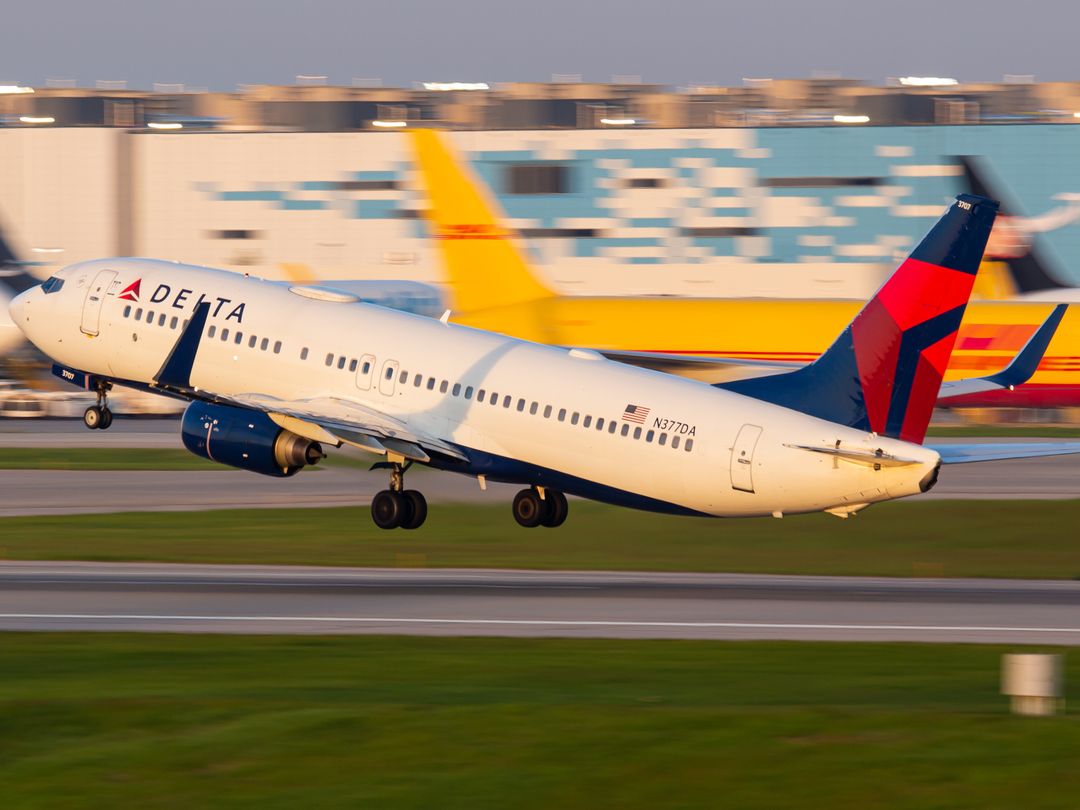
Delta Air Lines cut its annual profit forecast by nearly a quarter on Friday as soaring fuel costs — expected to add $6 billion to its 2026 bill — overwhelmed resilient travel demand and higher ticket prices, according to Reuters. Shares fell 2.5% in early trading after the carrier cut its outlook for the first time this year and lifted its projected fuel-cost increase by $2 billion, in what analysts say is the industry's worst crisis since the pandemic.
Table of Contents
- The numbers behind the downgrade
- "All of it's fuel"
- Can fares keep rising?
- A war-driven crisis across the industry
- Frequently Asked Questions
- Sources
- Related from Chronicle
The numbers behind the downgrade
Delta, the first major global carrier to report third-quarter results, said fuel expenses for the quarter rose 62% from a year earlier to $4.1 billion — more than $500 million above what it anticipated in July. Its average adjusted fuel price jumped 60% to $3.61 per gallon.
The airline now expects adjusted annual earnings of $5.10 to $5.60 a share, down from the $6.50 to $7.50 per share it forecast in July. The new midpoint of $5.35 sits below the analysts' average estimate of $5.46, according to LSEG data. Delta forecast $4.5 billion in adjusted pre-tax profit for 2026 and trimmed its full-year free cash flow outlook to $2.5 billion, down from as much as $4 billion expected in July.
Third-quarter adjusted earnings of $1.72 a share narrowly missed the $1.76 consensus, while the adjusted operating margin fell to 9.4% from 11.1% a year earlier — the first revenue and earnings miss for the carrier in two years.
"All of it's fuel"
When asked what drove the forecast cut, Delta chief financial officer Erik Snell gave reporters a blunt three-word answer: "All of it's fuel," citing increases in both crude oil and refined jet fuel prices since the summer.
The numbers support him. Net profit fell 47% year on year to $756 million in the third quarter, even as operating revenue rose 21% to $20.19 billion on record demand. Revenue advanced strongly — yet expenses rose faster, with fuel alone accounting for the overwhelming majority of the cost overrun.
Can fares keep rising?
The downgrade sharpens the central question hanging over the industry: will passengers absorb further fare increases if fuel prices stay elevated? Airlines have already raised fares substantially this year, and analysts warn that another round of increases could test travellers' willingness to keep spending.
So far, demand has held. Delta expects December-quarter revenue to rise about 20% year on year, and its CEO Ed Bastian pointed to the "structural strength" the airline has built over years as evidence it can weather what he called one of the highest fuel-price environments in recent times. The company still plans to generate roughly $2.5 billion in free cash flow and pay down more than $2 billion in debt this year.
A war-driven crisis across the industry
The Iran war is the engine of the crisis. With no end to the conflict in sight, jet fuel prices have been driven sharply higher worldwide — and US carriers alone spent $42.9 billion on fuel for scheduled flights in the first eight months of 2026, nearly $13.2 billion more than a year earlier, despite using slightly less fuel, according to the Bureau of Transportation Statistics.
The war is also reshaping Delta's route map: Bastian told CNBC the airline is reviewing whether to proceed with its planned Atlanta–Riyadh service, scheduled to begin on October 23, amid security concerns following the recent strikes on Saudi Arabia. "Safety is going to make the call," he said. Rivals United, American and Southwest report later this month, and Delta's numbers set an anxious tone for them.
Frequently Asked Questions
By how much did Delta cut its 2026 profit forecast?
Delta lowered its adjusted earnings outlook to $5.10–$5.60 per share from $6.50–$7.50 forecast in July — a cut of nearly a quarter at the midpoint.
What caused the downgrade?
Surging fuel costs. Delta expects its 2026 fuel bill to rise by roughly $6 billion, and third-quarter fuel expenses jumped 62% year on year to $4.1 billion, exceeding its July forecast by more than $500 million.
How did Delta's third-quarter results look?
Third-quarter adjusted earnings of $1.72 a share narrowly missed the $1.76 consensus estimate, and the adjusted operating margin fell to 9.4% from 11.1% a year earlier. Revenue rose 21% to $20.19 billion on strong demand.
Why are fuel prices so high?
The Iran war has driven jet fuel prices sharply higher worldwide, with no end to the conflict in sight — a dynamic also visible across energy markets, from Trump's diesel deal with Putin to Russia's domestic fuel crisis.