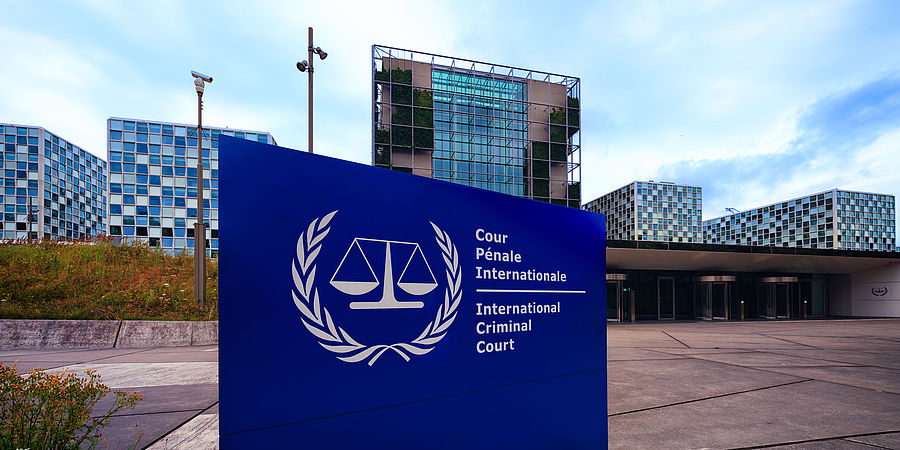
The International Criminal Court on Monday unsealed arrest warrants for two senior Taliban officials — Education Minister Habibullah Agha and Higher Education Minister Neda Mohammad Nadeem — accusing them of crimes against humanity for their role in denying Afghan women and girls their right to education. The warrants, issued on 9 September 2025 and kept under seal until now, say there are reasonable grounds to believe the two men committed gender-based persecution, a crime against humanity under Article 7(1)(h) of the Rome Statute, according to France24.
Table of Contents
- Who the warrants target
- The charges: gender-based persecution
- Four warrants, one campaign
- What the Taliban and the world say
- Frequently Asked Questions
- Sources
- Read more on Chronicle
Who the warrants target {#targets}
The two newly named suspects sit at the heart of the Taliban's education system: Habibullah Agha, the education minister overseeing schools, and Neda Mohammad Nadeem, the higher education minister overseeing universities. Both men, according to the court, played key roles in implementing the vision of Taliban Supreme Leader Haibatullah Akhundzada — a vision that has systematically shut Afghan women and girls out of classrooms since the movement returned to power in August 2021.
The Pre-Trial Chamber II judges found reasonable grounds to believe Agha and Nadeem are criminally responsible for ordering, inducing or soliciting persecution. The alleged crimes were committed in Afghanistan from the Taliban's takeover until at least 20 January 2025, as UN News reported.
The charges: gender-based persecution {#charges}
The court's case centres on a policy, not a single act. Through a cascade of decrees and edicts, the Taliban deprived girls and women of the rights to education, privacy and family life, and of the freedoms of movement, expression, thought, conscience and religion. Girls aged over 12 have been barred from secondary school; women have been excluded from higher education entirely.
The judges went further than the bare charge of educational exclusion. They found the persecution was committed "in connection with" other alleged crimes under the Taliban's rule — including murder, imprisonment, torture, rape and enforced disappearance. And they concluded that while some Taliban rules applied to everyone, girls and women were specifically targeted because of their gender.
Notably, the court addressed people who do not fit the Taliban's gender norms at all. The persecution extended, judges found, to those targeted because certain expressions of sexuality or gender identity were considered at odds with Taliban policy — and on political grounds to people seen as "allies of girls and women", including those whose opposition was passive or expressed only by failing to act.
In line with international law, the court interpreted the Rome Statute's definition of "gender" as going beyond a purely biological conception of sex, recognising instead the socially constructed roles, behaviours, expectations and hierarchies traditionally associated with people on the basis of their sex — a significant development in how the ICC frames gender-based persecution, as UN News noted.
Four warrants, one campaign {#four}
Monday's announcement brought the total number of unsealed Afghanistan warrants to four. The warrants for Supreme Leader Haibatullah Akhundzada and Supreme Court President Abdul Hakim Haqqani had their existence made public in July 2025; the chamber's latest decision unseals those alongside the two ministers' warrants.
The move continues the campaign of ICC Prosecutor Karim Khan, who sought the warrants in January, saying Afghan women and girls — and the LGBTQI+ community — faced "unprecedented, unconscionable and ongoing persecution." Human Rights Watch welcomed the decision, and rights groups have framed it as a crucial step toward accountability for the systematic deprivation of fundamental rights. The warrants also sharpen international pressure on a regime that has, in recent weeks, secured its first formal diplomatic recognition — from Russia — deepening the tension between legal accountability and geopolitical acceptance, a dynamic we have tracked in our coverage of the region.
What the Taliban and the world say {#reaction}
The Taliban's foreign ministry has previously condemned the ICC's pursuit of its leaders, calling earlier warrant requests devoid of a fair legal foundation and politically motivated, and accusing the court of turning a blind eye to crimes committed by foreign forces during two decades of war. No immediate comment on the unsealed warrants had been reported as of Monday, though AFP said it had approached the Taliban authorities.
The practical reach of the warrants is uncertain. The court has no police force of its own and relies on member states to enforce arrests — a structural limitation that has shadowed high-profile warrants for other leaders, from Russia's Vladimir Putin to Israel's Benjamin Netanyahu. The ministers are unlikely to travel to ICC member states, but the warrants narrow their diplomatic horizons and keep Afghanistan's women and girls at the centre of the international agenda.
Frequently Asked Questions
Who do the newly unsealed ICC warrants name?
Taliban Education Minister Habibullah Agha and Higher Education Minister Neda Mohammad Nadeem. The warrants were issued on 9 September 2025 and unsealed on Monday, 5 October 2026.
What are they accused of?
Crimes against humanity — specifically gender-based persecution under Article 7(1)(h) of the Rome Statute — for policies that barred girls over 12 from school and excluded women from higher education, in connection with other alleged crimes including imprisonment, torture, rape and enforced disappearance.
Are there other Taliban officials wanted by the ICC?
Yes. The same decision unsealed previously announced warrants for Taliban Supreme Leader Haibatullah Akhundzada and Supreme Court President Abdul Hakim Haqqani, whose existence was made public in July 2025.
Will the warrants lead to arrests?
Probably not soon. The ICC has no police force and depends on its member states to make arrests. The warrants mainly add legal and diplomatic pressure and restrict the ministers' ability to travel to ICC member countries.
How has the Taliban responded?
The Taliban foreign ministry previously rejected the ICC's pursuit of its leaders as politically motivated and devoid of a fair legal foundation, and the movement's spokesman has dismissed the warrants as unfounded.
Sources {#sources}
- France24 — france24.com — "ICC unseals arrest warrants for Taliban education ministers", 5 October 2026.
- UN News — news.un.org — "ICC unseals four arrest warrants over Taliban persecution of women and girls", 5 October 2026.
- The Economic Times — economictimes.com — "International Criminal Court unseals arrest warrants for Taliban education ministers", 5 October 2026.