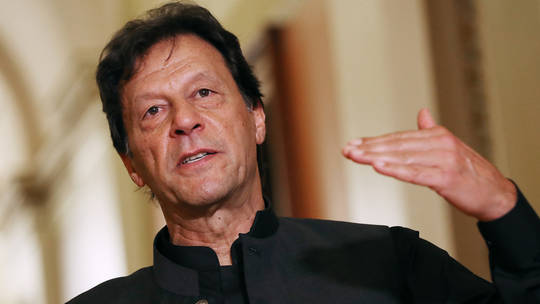
Pakistan's jailed former prime minister Imran Khan has warned the country's top judges that he may not survive his imprisonment, saying his health has deteriorated sharply in Adiala Jail and that court orders for his medical treatment have gone unimplemented. In an open letter dated 16 November, he said he has lost 85 percent of the vision in his right eye and that doctors have warned him he is at high risk of a brain haemorrhage and cardiac arrest.
The letter, addressed to the chief justices of the Supreme Court, the Federal Constitutional Court and the Islamabad High Court, was shared publicly on Monday by his lawyer, Barrister Salman Safdar, after a three-hour meeting with Khan at the prison on 11 November. It is the starkest account yet of the 74-year-old's condition since he was imprisoned in August 2023, and it has turned a long-running dispute over his medical care into a direct appeal to the judiciary. The Express Tribune
What Khan told the judges
Khan wrote that his blood pressure, once controlled, has climbed steadily during his confinement — from 130 to 150, then 170, before reaching 192 and 193 on 10 November. Doctors, he said, have told him he is "highly vulnerable to a brain haemorrhage and cardiac arrest" and that his heart has already suffered damage.
"At seventy-four, this unrelenting state is taking me to a place from which I may not return alive," he wrote. The letter also covers his wife, Bushra Bibi, who is jailed alongside him; Khan asked that both receive proper treatment, noting that she has sought examination by an ophthalmologist and permission to be treated by doctors of her choice at her own expense. Telegraph India
The vision loss is the most concrete of the claims. Khan said the extent of it was discovered only when Safdar met him on 10 February this year, and that neither his family nor his legal team had been told. Doctors diagnosed central retinal vein occlusion — a blockage in the main vein that drains blood from the retina — a condition his party, Pakistan Tehreek-e-Insaf (PTI), described at the time as extremely serious and requiring prompt treatment. Outlook India
On the night of 10–11 November, Khan was taken from Adiala Jail to the Pakistan Institute of Medical Sciences (PIMS) in Islamabad for an eye examination and follow-up treatment, where doctors administered an anti-VEGF injection into his right eye. He was discharged at around 2:30 a.m. and returned to prison. PIMS subsequently described him as clinically stable. Firstpost
The court order Khan says was ignored
At the heart of the letter is a Supreme Court order that Khan says has never been carried out. On 18 August, a three-member bench directed that he be shifted to Shifa International Hospital within two days, examined by a medical board including a cardiologist and an eye specialist, and allowed weekly meetings with his family and twice-weekly calls with his sons.
"That order has not been implemented. My case now rests on the docket of the FCC, awaiting a hearing," Khan wrote. His lawyer has framed the letter as a humanitarian plea rather than a political statement, asking the three chief justices to ensure the earlier directions are enforced.
Khan also described his conditions in detail. He said his circumstances changed on 20 December 2025, the day the verdict was announced in the Toshakhana-2 case, after which he was "totally isolated, disconnected and held incommunicado from the outside world, in torturous solitary confinement for up to twenty-two hours a day". He and Bushra Bibi were sentenced to 17 years in prison in that case, which concerns the alleged undervaluation of state gifts received while he was prime minister.
The government's response
The government has rejected Khan's account. Parliamentary Affairs Minister Tariq Fazal said the PTI founder is receiving all facilities in jail, and officials say he undergoes regular medical assessments and has been examined by specialists at PIMS. The hospital's own statement after the 10–11 November visit said his vital parameters were within normal limits and that he remained clinically stable before, during and after the procedure.
That leaves two sharply different versions of the same man's health. Khan's side points to specific numbers — the blood pressure readings, the 85 percent vision loss, the retinal diagnosis — and to a court order that, on their account, was simply not obeyed. The government's side points to repeated PIMS examinations and a clinical assessment of stability. What neither side has produced is an independent medical report that both accept: Khan's lawyers dispute the adequacy and independence of his care, and no underlying medical report confirming the specific haemorrhage and cardiac risks was made public alongside the letter.
The dispute over who gets to examine him, and who sees his records, is now as central as the medical claims themselves. Khan's camp wants a specialist board at a hospital of the court's choosing; the authorities say the existing PIMS assessments are sufficient.
Why this letter lands differently
Khan has been in prison since August 2023, and his supporters have raised health concerns before — most notably earlier this year, when PTI first publicised the retinal vein blockage. His supporters have repeatedly marched in Islamabad demanding his release, and his family has faced its own pressures, including the reported abduction of his son Kasim's sisters. But this letter is different in tone and in audience: it is addressed directly to the three most senior judges in the country, it names specific medical risks rather than general complaints, and it frames the issue as one of court orders being defied rather than merely of harsh conditions.
It also arrives at a moment when Pakistan's politics are unusually fluid. The Toshakhana-2 verdict in December 2025 deepened Khan's isolation, and the transfer of his case to the newly created Federal Constitutional Court has left the Supreme Court's August order in procedural limbo. Whether the chief justices respond — and whether the FCC takes up the case — will determine whether the letter produces action or becomes another document in a file.
For Khan, the appeal is deliberately personal. "I spent my life building hospitals so that those who could not afford treatment would receive it free of cost," he wrote. "Today, I ask only that my wife and I be treated."
What to watch next
Four things will decide what happens next. First, whether any of the three chief justices responds to the letter, and whether the Federal Constitutional Court schedules a hearing on the unimplemented August order. Second, whether an independent medical board is allowed to examine Khan and publish its findings — the step that would settle the competing claims about his condition. Third, whether Bushra Bibi receives the ophthalmology examination and choice of doctors she has requested. And fourth, whether the letter triggers wider pressure, at home or abroad, on a government that has so far treated Khan's detention as a settled matter.
Until one of those things happens, the central question remains unanswered: whether a 74-year-old former prime minister, held in near-total isolation for almost a year, is receiving the medical care a court ordered for him — or whether, as he warns, his imprisonment is becoming a sentence he may not survive.
Frequently Asked Questions
What did Imran Khan say in his open letter?
He warned Pakistan's top judges that his health is deteriorating in Adiala Jail, saying he has lost 85 percent of the vision in his right eye, his blood pressure reached 192 and 193 on 10 November, and doctors have warned him he is highly vulnerable to a brain haemorrhage and cardiac arrest. He asked the chief justices to enforce earlier court orders for his medical treatment.
What is central retinal vein occlusion?
It is a blockage in the main vein that drains blood from the retina, the light-sensitive tissue at the back of the eye. It can cause sudden, severe vision loss, and it is the condition diagnosed in Khan's right eye. He received an anti-VEGF injection at PIMS hospital on the night of 10–11 November to treat it.
What court order does Khan say was not implemented?
A Supreme Court order of 18 August 2026 directing that he be shifted to Shifa International Hospital within two days, examined by a medical board including a cardiologist and an eye specialist, and allowed weekly family meetings and twice-weekly calls with his sons. Khan says the order has not been carried out and his case now rests with the Federal Constitutional Court.
What does the government say about his health?
The government says Khan receives regular medical assessments and has been examined by specialists at the Pakistan Institute of Medical Sciences, which described him as clinically stable after his November hospital visit. Parliamentary Affairs Minister Tariq Fazal said Khan is getting all facilities in jail.
How long has Imran Khan been in prison?
He has been imprisoned since 5 August 2023. He and his wife, Bushra Bibi, were sentenced to 17 years in the Toshakhana-2 case in December 2025, after which Khan says he was placed in solitary confinement for up to 22 hours a day.