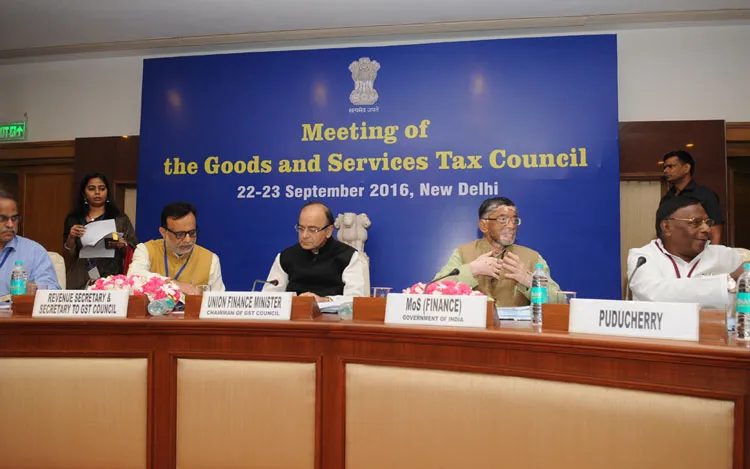
India's Goods and Services Tax Council on Thursday approved one of the most far-reaching overhauls of the country's indirect tax administration in years: the complete removal of arrest powers for GST officers, a fivefold rise in the prosecution threshold, and a shift to faster, largely automated refunds. The decisions, taken at the 57th meeting of the Council in New Delhi chaired by Finance Minister Nirmala Sitharaman, will take effect from 1 April 2027.
The package marks a decisive pivot in the "GST 2.0" reform drive. Having simplified the rate structure in an earlier phase, the Council has now turned its attention to how the tax is administered day to day — a move officials say will cut compliance anxiety for millions of businesses, especially small and mid-sized firms.
Table of contents
- What was decided
- No more arrests by GST officers
- A higher bar for prosecution
- Faster refunds and lighter penalties
- Why now: from rate-setting to trust
- Key takeaways
- Frequently Asked Questions
- Sources
- Further reading
What was decided
According to The Hindu BusinessLine, the Council recommended significant tax-administration reforms, including the complete elimination of arrest powers for GST officers, an increase in the threshold for criminal prosecution, a reduction in general penalties, accelerated refund processing, and simplified procedures for taxpayer registration and cancellation.
Briefing reporters afterwards, Sitharaman said almost all agenda items were agreed to, with only two referred to committees that must report within three months. Every agreed reform will be implemented from 1 April 2027.
No more arrests by GST officers
The headline decision is the removal of the power of arrest under GST law. Under the earlier framework, GST officers could arrest individuals in cases involving major offences such as tax evasion, fraudulent input tax credit claims or wrongful refunds above the prescribed threshold — a provision that business groups had long argued created fear and scope for harassment.
Sitharaman underlined that the arrest powers of tax officials have been removed, while clarifying that "in case of criminality, arrest can be made by enforcement agencies," per The Hindu BusinessLine. The change is intended to reduce the scope for criminal proceedings in routine GST disputes while keeping the government's ability to recover unpaid taxes, interest and penalties intact.
A higher bar for prosecution
Alongside the arrest reform, the Council raised the monetary threshold for launching prosecution from Rs 1 crore to Rs 5 crore — a fivefold increase that will sharply reduce the number of cases that can be taken to court. The minimum-punishment provision has also been removed: where prosecution is initiated, the punishment — fine, imprisonment, or both — will now be left to judicial discretion, rather than being prescribed by statute.
In addition, no notices will be issued in cases involving amounts below a monetary threshold of Rs 10,000, shielding the smallest disputes from official scrutiny altogether.
Faster refunds and lighter penalties
The reforms are not only about enforcement. The Council approved accelerated, largely automated refund processing and simplified registration and cancellation procedures. Tax lawyers cited by the Economic Times said the refund reforms will matter most to exporters and businesses with an inverted duty structure: the acknowledgement timeline drops from 15 days to 10, with deemed acknowledgement if the department does not respond, and 80 per cent of a refund claim is to be sanctioned within three working days on a risk basis.
The general penalty under the law is being cut from Rs 25,000 to Rs 10,000. The Council also extended refunds under the inverted rate structure to input services — a change available for credit availed on or after 1 November 2026 that corrects a long-standing anomaly which had blocked significant working capital. A taxpayer who files late, makes a mistake or falls behind on payment will face recovery, interest and a proportionate penalty, "and nothing beyond that."
Why now: from rate-setting to trust
The shift is deliberate. The Hindu BusinessLine notes that the approvals formed a sweeping package of process and enforcement reforms that fundamentally change how businesses interact with the indirect tax system, moving the emphasis from rate changes to faster refunds, easier input tax credit, automated compliance and more proportionate enforcement. Legal commentators cited by the Economic Times described the 57th meeting as a clear move "from rate-setting to rebuilding trust in how GST is administered," signalling that procedural lapses will be treated as civil matters, not criminal ones.
Prime Minister Narendra Modi welcomed the reforms, saying: "The focus is clear: faster decisions, lower compliance costs, automated refunds, trust-based administration. These are in line with our constant efforts to make GST more efficient, transparent and citizen-friendly."
Sitharaman has said the process reforms under the next-generation GST framework are expected to stabilise over the next year — a timeline that dovetails with the April 2027 implementation date, giving tax administrators time to build the risk-assessment and automation systems the reforms depend on.
Key takeaways
- The 57th GST Council removed GST officers' arrest powers entirely; criminal arrests remain possible only through enforcement agencies.
- The prosecution threshold rises fivefold, from Rs 1 crore to Rs 5 crore, and minimum punishment is abolished in favour of judicial discretion.
- Refunds become faster and largely automated, with 80 per cent sanctioned within three working days on a risk basis.
- The general penalty drops from Rs 25,000 to Rs 10,000; no notices in cases below Rs 10,000.
- All changes take effect from 1 April 2027, as the second phase of GST 2.0 shifts focus from rates to compliance.
Frequently Asked Questions
Have GST officers lost all enforcement powers?
No. They have lost the power of arrest specifically. The government can still recover unpaid tax, interest and penalties, and genuine criminality can still lead to arrest by enforcement agencies. What changes is that routine compliance failures will be handled through civil, monetary remedies rather than criminal proceedings.
When do the reforms take effect?
1 April 2027. The Council said almost all agenda items were agreed, with two referred to committees that must report within three months — after which another Council meeting will consider them.
How will the refund changes help businesses?
The acknowledgement timeline falls from 15 to 10 days, with deemed acknowledgement if the department stays silent, and 80 per cent of a refund claim is sanctioned within three working days on a risk basis. Extending inverted-duty-structure refunds to input services, for credit availed from 1 November 2026, also frees up working capital that had been locked in the system.
Does this mean GST rates are changing again?
No. Sitharaman made clear this meeting was about process and compliance reforms, not rate rejigging. The earlier phase of GST 2.0 dealt with the rate structure; this phase deals with administration.
Sources
- The Hindu BusinessLine — "GST Council: No more arrest powers, no rate rejig" (link)
- The Economic Times — 57th GST Council meeting live blog, 8 October 2026