Blasts and air-raid sirens rang out across Bahrain early on Sunday, 15 November 2026, as Iran's Revolutionary Guards said they had launched a drone attack on a US radar system at a military base in the Gulf kingdom — the second such claim in three days. Bahrain's military said its air defences intercepted and destroyed several Iranian aerial attacks before they could reach their targets.
The escalation rattled a region already on edge, with Gulf states caught between a widening US–Israeli war on Iran and Tehran's threats to strike American military assets across the region. Al Jazeera
What happened on Sunday
Iran's Islamic Revolutionary Guard Corps (IRGC) said its Aerospace Force targeted the US air defence radar system at the Al-Riffa helicopter base in Bahrain with six drones, in retaliation for what it described as "hostile US actions", according to a statement carried by Iranian state media and the IRGC-affiliated Fars news agency.
Bahrain's Interior Ministry issued two public alerts within about three hours, the first at around 4:30am local time (01:30 GMT), urging residents to "remain calm" and "proceed to the nearest safe location". Explosions could be heard around 4am, with residents reporting a second series of blasts around 6:30am, according to an AFP journalist in the kingdom. Malay Mail
The Bahrain Defence Force said its air defence systems had thwarted several Iranian "aerial attacks" targeting the kingdom. There was no immediate confirmation from US or Bahraini authorities that the radar had been hit, and no casualties or damage had been reported by the time the alerts were lifted. Khaleej Times
The second attack in three days
Sunday's incident followed a near-identical claim on Friday, when the Revolutionary Guards said they had struck a US early-warning radar facility in Bahrain in retaliation for what Tehran described as an air attack on a telecommunications tower in the southern Iranian city of Sirik.
The US military's Central Command denied that claim, saying it had shot down two Iranian drones and that there were no injuries or damage. The conflicting accounts — Tehran claiming a successful strike, Washington insisting the drones were intercepted — have become a familiar pattern in the exchanges of the past week.
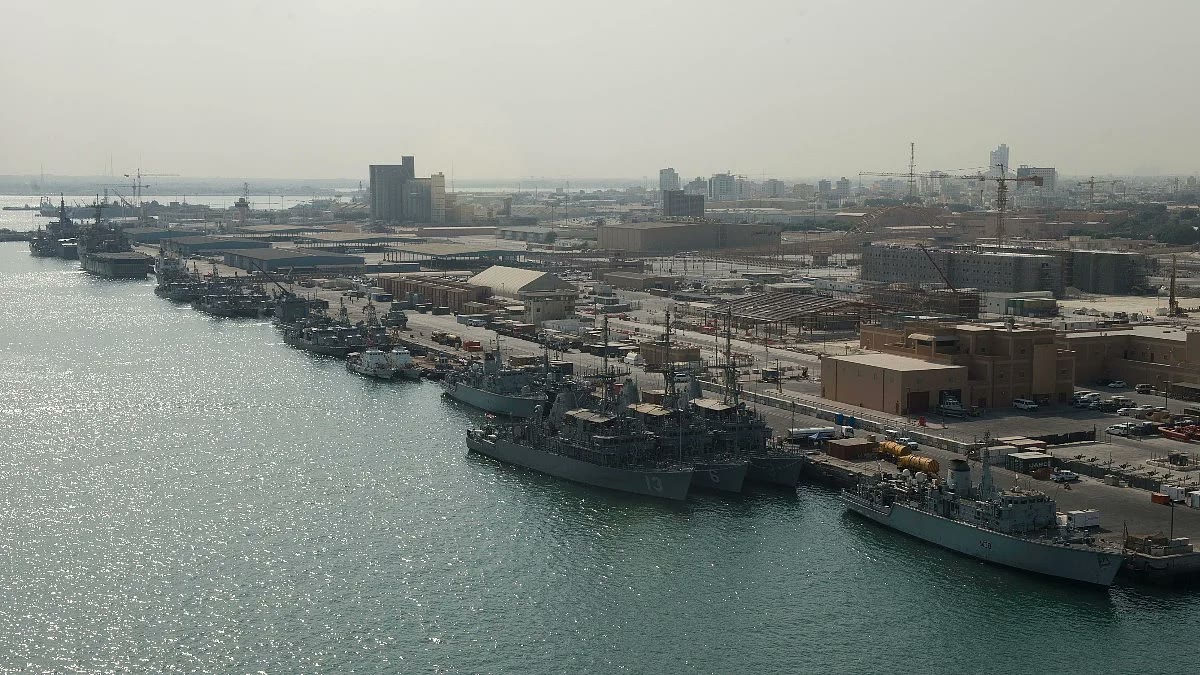
The repeat targeting of Bahrain is significant. The island kingdom hosts the US Navy's Fifth Fleet and the headquarters of US Naval Forces Central Command, making it one of the most important American military hubs in the Gulf. Any sustained Iranian campaign against its facilities would mark a sharp widening of a conflict that has so far been fought largely over Iranian and Israeli territory.
A region under strain
The Bahrain attacks came on the same day that Saudi Arabia said it had intercepted missiles and drones aimed at Riyadh, and Riyadh publicly condemned the Iranian attacks on its neighbour. The twin incidents underscored how quickly the conflict is spilling beyond its original theatre, drawing Gulf states that have tried to stay on the sidelines into the line of fire.
Tehran has warned that the Strait of Hormuz is closed and that "any aggression by the American enemy will be met with an even harsher and more forceful response", according to the Guards' statement. The strait is the world's most important oil chokepoint, and its closure — even a claimed one — has already unsettled energy markets and shipping.
The diplomatic picture remains deeply uncertain. Talks aimed at ending the US–Israeli war on Iran have produced no breakthrough, and President Donald Trump has told advisers he may hold off on further strikes on Iran unless Tehran or its allies provoke Washington again. Sunday's drone attack is precisely the kind of provocation that could test that restraint.
What to watch next
Three questions will shape the coming days. First, whether Washington confirms or denies the IRGC's claim that the Al-Riffa radar was hit — the credibility of both sides' battlefield claims is now part of the contest. Second, whether Bahrain's air defences can keep intercepting repeated salvos, or whether a drone eventually gets through and forces a Gulf state into open retaliation. And third, whether the attacks harden the Trump administration's position at a moment when it appeared to be leaning towards restraint.
For now, residents of Bahrain have been told to follow official channels and stay alert. The sirens that woke them on Sunday morning were the first such warnings since September — and, if Tehran's threats are to be believed, they may not be the last.
Frequently Asked Questions
What did Iran claim to have attacked in Bahrain on Sunday?
Iran's Revolutionary Guards said they launched six drones at a US air defence radar system at the Al-Riffa helicopter base in Bahrain, in retaliation for what they called "hostile US actions". The claim was carried by Iranian state media and the Fars news agency.
Did the drones reach their target?
Bahrain's Defence Force said its air defences intercepted and destroyed several Iranian aerial attacks before they reached their targets. Neither the US nor Bahrain immediately confirmed that the radar had been hit, and no casualties or damage were reported.
Why is Bahrain significant in this conflict?
Bahrain hosts the US Navy's Fifth Fleet and the headquarters of US Naval Forces Central Command, making it one of the most important American military hubs in the Gulf. Attacks on its facilities would mark a widening of the conflict to Gulf states that have tried to remain on the sidelines.
Was this the first such attack on Bahrain?
No. Two days earlier, on Friday 13 November, the Revolutionary Guards said they had destroyed a US early-warning radar system in Bahrain. The US military denied that claim, saying it had shot down two Iranian drones with no injuries or damage.