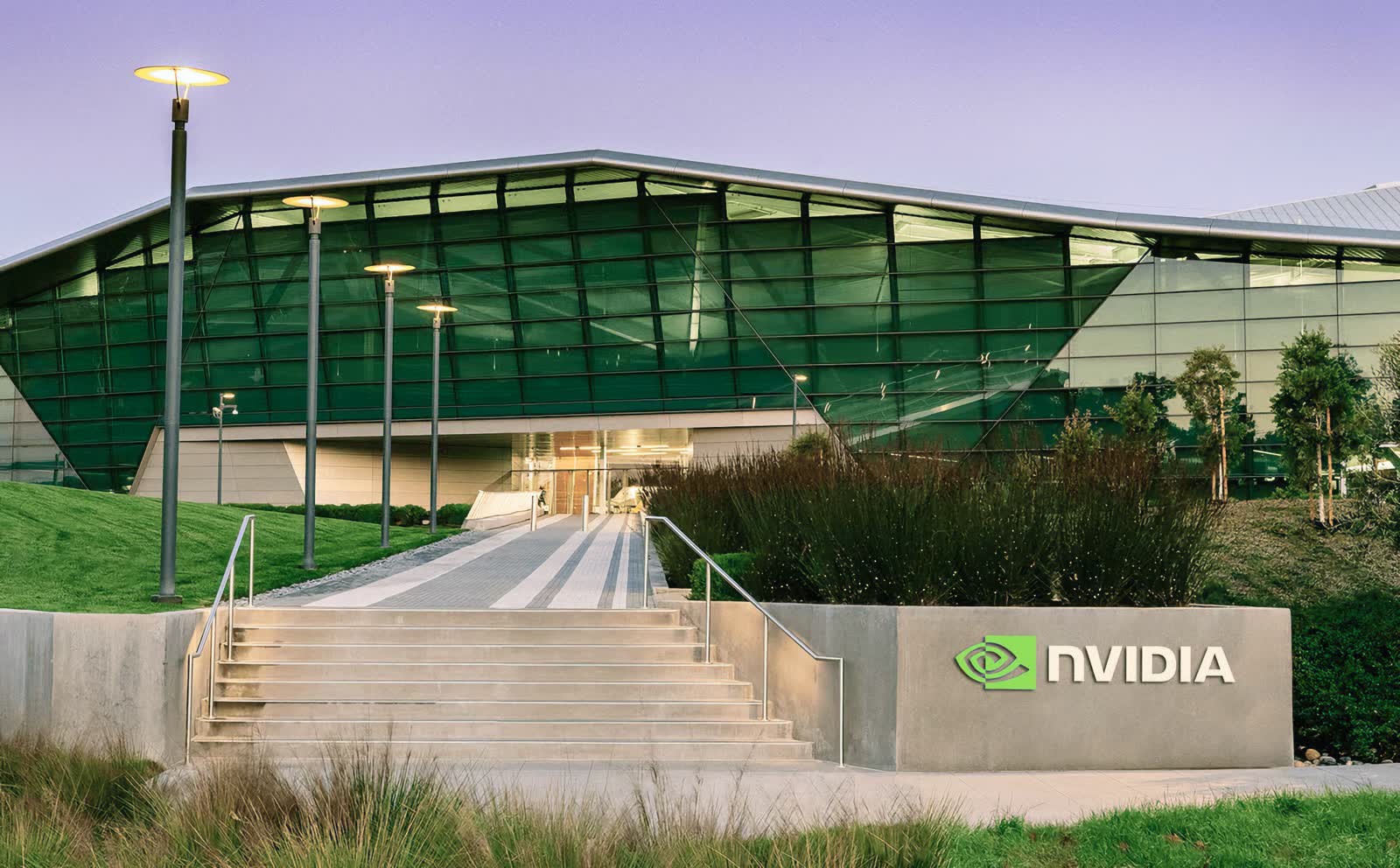
Jensen Huang has resigned as president, chief executive and a member of the board of Nvidia with immediate effect, the company announced on Thursday, bringing a sudden end to the 33-year reign of the co-founder who turned a graphics-chip maker into the world's most valuable company and the emblem of the artificial intelligence boom. Reuters
Nvidia said chief financial officer Colette Kress had agreed to serve as interim chief executive while retaining her finance role, and that the board was beginning a search for a permanent successor, considering both internal and external candidates. The board also appointed Harvey C. Jones, a former Synopsys chief executive and long-time board member, as its first-ever chairman. GlobeNewswire
Shares in Nvidia fell more than 10% in premarket trading after the announcement, deepening a rout that has already wiped hundreds of billions of dollars from the company's market value this week and weighed on the broader market.
A one-week fall from grace
Huang's departure caps a crisis that unfolded with extraordinary speed. On Sunday, Nvidia's board opened an independent investigation into whether its chief executive had been the target of a foreign intelligence operation, after reports of a relationship between Huang and Alice Huang, a former executive at a Singapore data-centre company whom US intelligence agencies suspect of spying for China. Huang acknowledged in a letter to staff that he had been unfaithful to his wife and apologised for violating his family's trust. Chronicle covered the opening of the investigation and Huang's apology.
The crisis escalated on Wednesday, when the New York Times reported a second relationship, this time with Kimberly Powell, a senior Nvidia executive who runs the company's healthcare business and reports directly to Huang. Within hours, the Wall Street Journal reported that Nvidia's board was preparing to remove its chief executive, and the board met on Wednesday evening to decide his future. Chronicle reported on the board's emergency meeting and the plunge in Nvidia shares.
Nvidia's statement on Thursday gave no reason for Huang's resignation and contained no comment from him. It thanked him for what it called his "immeasurable contributions" to the company and the industry over 33 years.
The succession problem
The company now faces a leadership vacuum it has never planned for. Huang, 63, co-founded Nvidia in 1993 and had said publicly that he did not believe in succession planning, arguing that leaders should pass on knowledge continuously rather than grooming a single heir. He had spoken of remaining at the helm for at least another 20 years, and had reportedly hoped one of his two children, Madison and Spencer, both of whom work at Nvidia, might eventually succeed him. Le Monde
Nvidia's own proxy statement warns that the company is "highly dependent on the services of our longstanding executive team" and that a failure to ensure effective succession planning could "hinder our strategic planning, execution, and long-term success". The Wall Street Journal
Kress, who has been Nvidia's chief financial officer since September 2013, is the executive with the most prominent public profile after Huang, and analysts had already identified her as the most likely interim choice. Her appointment brings stability to the finance function, but the permanent search — to be overseen by the newly appointed chairman Jones — will be watched closely by investors, customers and rivals alike.
A $4 trillion company at a turning point
The stakes could hardly be higher. Nvidia, worth roughly $4 trillion, is the dominant supplier of the chips that power the world's AI systems, and its customers include every major technology company. Before this week, its shares had already fallen 27% from their early-October peak, and the company has lost about $600 billion in market value since the board announced its investigation on Sunday.
Analysts moved quickly to reassess the stock. Baird's Tristan Gerra cut his rating to neutral from outperform and slashed his price target to $200 from $500 even before Thursday's announcement. Barron's
Political pressure is also mounting. Republican Senator Kevin Cramer has said Huang should step aside, while the chairman of the House Select Committee on China, John Moolenaar, has warned that Huang could face congressional subpoenas if he does not agree to testify behind closed doors about the allegations. President Donald Trump said on Sunday that he had not spoken to Huang about the matter and described him as "a good person".
What happens next
Nvidia confirmed it will report its third-quarter results on Tuesday, November 17, as previously scheduled — an earnings call that will now be the first public test of Kress's leadership and the board's plans. Investors will be looking for reassurance that the company's product roadmap, customer commitments and massive AI infrastructure deals remain on track without the man who built them.
The resignation also raises wider questions for the AI industry. Huang was not merely Nvidia's chief executive; he was the public face and chief evangelist of the AI boom, a rock-star figure whose keynote speeches set the agenda for the entire sector. His abrupt exit leaves the industry without its biggest champion at the moment when the technology faces its sharpest questions about spending, returns and geopolitical risk.
For now, the board's priority is continuity: keep the chips shipping, keep the customers on side, and find a permanent leader capable of running the most important company in the AI era — a search that begins with no obvious successor in sight.
Frequently Asked Questions
Why did Jensen Huang resign from Nvidia?
Nvidia announced on Thursday, November 12, 2026, that Huang had resigned as president, chief executive and board member with immediate effect. The company gave no reason in its statement. The resignation followed a board investigation opened on Sunday into reports of two extramarital affairs, one with a woman US intelligence agencies suspect of spying for China, and a board meeting on Wednesday to decide his future.
Who is the interim CEO of Nvidia?
Colette Kress, Nvidia's executive vice president and chief financial officer since September 2013, has agreed to serve as interim chief executive while retaining her finance role until a permanent successor is named.
What happened to Nvidia's share price?
Nvidia shares fell more than 10% in premarket trading on Thursday after the resignation was announced. The stock had already fallen 27% from its early-October peak, and the company has lost roughly $600 billion in market value since the board announced its investigation on Sunday.
Who is Harvey C. Jones?
Harvey C. Jones, a former chief executive of Synopsys and a long-time Nvidia board member, was appointed as the company's first-ever chairman of the board. He will oversee the search for a permanent chief executive.
When will Nvidia report its next earnings?
Nvidia will report its third-quarter fiscal 2027 results on Tuesday, November 17, 2026, as previously scheduled, followed by an earnings call at 2 p.m. Pacific Time.