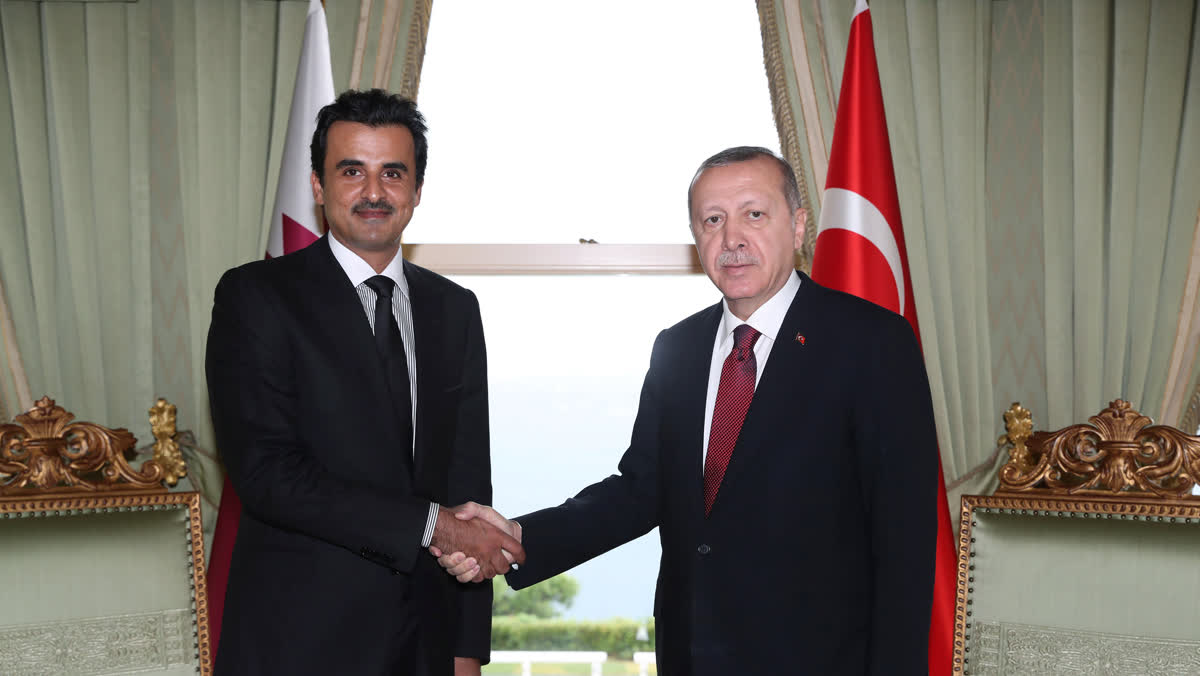
Qatar and Türkiye signed a mutual defence agreement in Istanbul on Friday, pledging to take a unified stance against any external armed attack on either country, in the latest sign that Gulf and regional powers are building their own security architecture amid fears of a renewed war in the region. The pact was signed by Turkish President Recep Tayyip Erdogan and Qatar's Emir Sheikh Tamim bin Hamad Al Thani after talks at the presidential Dolmabahce Office, following the 12th session of the two countries' Supreme Strategic Committee.
Under the agreement, the two allies committed to strengthening collective defence, consulting each other on threats to their security, and coordinating positions on regional and international security issues and defence policies, according to a joint communique published by Qatar's Foreign Ministry. The cooperation is to extend to joint military exercises, defence-industry collaboration and personnel training exchanges.
Table of Contents
- What the pact commits both countries to
- A message of deterrence
- A fast-growing web of regional pacts
- Gaza, energy and the wider agenda
- Key takeaways
- Frequently Asked Questions
- Sources
- Further reading from Chronicle
What the pact commits both countries to
The Turkish presidency announced the signing in a statement on X, saying President Erdogan had told the Qatari emir that the two countries "would continue working together to prevent the resurgence of war in the Gulf region and establish a basis for dialogue and achieve peace". The presidency said the agreement "would add another dimension to our brotherhood", according to Reuters.
Neither side published operational details of the accord, including the mechanisms through which either country would respond to an armed attack. The joint communique said the agreement reflected both countries' commitment to protecting their sovereignty and territorial integrity and their shared vision of "a more secure and stable regional order".
The defence pact was one of five agreements signed during the visit, covering trade, education, diplomacy and defence, according to Turkey's state-run Anadolu news agency. The two governments also signed a memorandum of understanding on cooperation in peace, reconciliation and conflict resolution, Qatar's Amiri Diwan said.
A message of deterrence
Analysts in Doha described the agreement as a deliberate signal to potential aggressors. Abdulla Banndar al-Etaibi, an assistant professor of international affairs at Qatar University, told Al Jazeera that the pact was designed to "increase cost of attack" — deterring foreign aggression by making clear that an assault on one partner would draw in the other.
The logic is rooted in recent history. Qatar was struck by an Israeli attack in September, and the Gulf has spent much of 2026 on a war footing as the United States and Israel have fought a war with Iran. For Doha, a formal defence commitment from Türkiye — NATO's second-largest army, with a military base already stationed in Qatar and a fast-growing defence industry — adds a layer of protection that a bilateral partnership alone could not provide. For Ankara, the pact deepens its standing as a security guarantor in the Gulf, a role it has pursued for more than a decade.
A fast-growing web of regional pacts
The Istanbul agreement is the third major defence arrangement in the region in as many months, and the pattern is hard to miss. In August, Türkiye, Saudi Arabia and Pakistan signed a joint defence agreement in Mecca, under which an armed attack on one member is considered an attack on all three; the Turkish parliament ratified that pact last week. In October, Qatar, Indonesia, Pakistan and Türkiye signed the multilateral "Badr" memorandum of understanding on defence cooperation in Doha, focused on defence industry, technology transfer and training.
Chronicle covered the Badr memorandum in October: Qatar, Türkiye, Pakistan and Indonesia sign four-way "Badr" defence pact. The new bilateral pact goes further than Badr, which was a cooperation framework rather than a mutual-defence commitment.
Taken together, the agreements amount to an emerging, overlapping network of security arrangements stretching from the Gulf through South Asia to Southeast Asia — built by states that, in the words of one analyst, are hedging against over-reliance on Washington for their security without abandoning their existing alliances.
Gaza, energy and the wider agenda
The talks in Istanbul ranged well beyond defence. Both sides expressed deep concern about what they described as ongoing Israeli violations in Gaza that undermine implementation of the Gaza peace plan, and agreed to coordinate support for the early recovery and reconstruction of Gaza as well as humanitarian aid efforts, according to the joint communique.
President Erdogan also said the two countries were working to develop and diversify their energy partnership, and that cooperation in the defence industry would continue to grow — a point that matters for both sides. Qatar is one of the world's largest exporters of liquefied natural gas, while Türkiye's defence exports have expanded rapidly in recent years, with Qatari orders among them.
The timing also matters for the wider region. As fighting continues in Yemen and tensions with Iran remain unresolved, Gulf capitals have been moving quickly to lock in security guarantees. Qatar's warning in October that a war with Iran would send energy shockwaves through the region — covered in Chronicle's earlier report — helps explain why Doha is formalising its partnerships now rather than later.
Whether the pact deters or provokes will depend on how it is read in Tehran and Tel Aviv. What is clear is that the Middle East's security map is being redrawn in public, one signed agreement at a time — and the countries doing the drawing are no longer waiting for outside powers to draw it for them.
Key takeaways
- Qatar and Türkiye signed a mutual defence agreement in Istanbul on 13 November 2026, pledging a unified stance against any external armed attack on either country.
- The pact commits both sides to collective defence, consultation on security threats, joint military exercises, defence-industry cooperation and personnel training exchanges.
- It follows the August Mecca defence pact (Türkiye, Saudi Arabia, Pakistan) and October's four-way "Badr" memorandum, forming a growing web of regional security arrangements.
- Both leaders also discussed preventing a resurgence of war in the Gulf, coordination on Gaza reconstruction and humanitarian aid, and deepening energy cooperation.
Frequently Asked Questions
What did Qatar and Türkiye agree in the new defence pact?
The two countries agreed to strengthen collective defence and take a unified stance in confronting any external armed attack targeting either party, consulting each other on security threats and coordinating on regional and international security and defence policies.
When and where was the pact signed?
It was signed on Friday, 13 November 2026, in Istanbul by Turkish President Recep Tayyip Erdogan and Qatar's Emir Sheikh Tamim bin Hamad Al Thani, following the 12th session of the two countries' Supreme Strategic Committee.
How is this different from the "Badr" agreement signed in October?
The October "Badr" memorandum, signed by Qatar, Indonesia, Pakistan and Türkiye in Doha, was a framework for defence-industry cooperation, technology transfer and training. The new bilateral pact is a mutual-defence commitment between two countries, pledging a unified response to an armed attack.
Why are Gulf states signing so many defence pacts now?
Regional powers are seeking to strengthen their own security guarantees amid the ongoing war involving the United States, Israel and Iran, fears of a renewed Gulf war, and uncertainty over the reliability of outside protection — while keeping their existing alliances intact.
Does the pact include military exercises and defence-industry cooperation?
Yes. The joint communique says the two sides will enhance cooperation through joint military exercises, defence-industry cooperation and personnel training exchanges.
Sources
- Al Jazeera — "Turkiye and Qatar sign mutual defence agreement"
- Reuters via The Jerusalem Post — "Turkey, Qatar sign defense agreement, accuse Israel of violating Gaza peace plan"
- Geo News — "Erdogan, Qatar's emir sign defence deal, pledge support against external attacks"