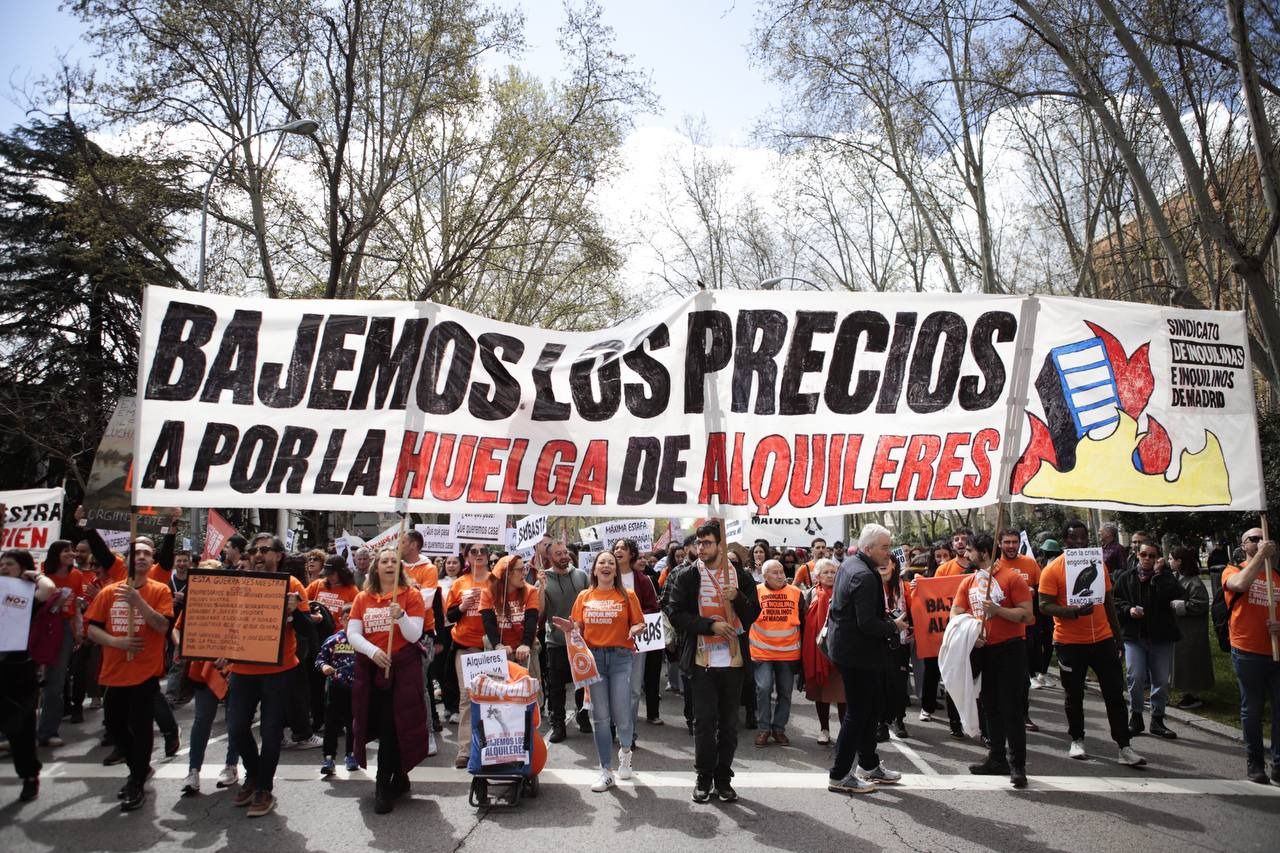
Spain's parliament dealt a punishing blow to Pedro Sánchez's minority government on Friday, voting down two flagship affordable-housing bills that were meant to defuse a nationwide housing crisis. The twin defeats — 178 votes to 172 on the first bill and 184 to 166 on the second — have emboldened the opposition, with the far-right Vox party openly demanding an early general election. Outside the chamber, hundreds of protesters shouted "Shame!" as the bills were quashed, capping a week of demonstrations that included a tent city in the heart of Madrid.
Contents
- Two bills, two defeats
- Junts: the kingmaker that walked away
- A week of anger on the streets
- Early election speculation
- Key takeaways
- Sources
- Read also
Two bills, two defeats
The two bills, rejected by parliament on Friday 2 October, were the Sánchez government's main legislative answer to Spain's spiralling housing costs. According to reporting by France24 (with AFP and Reuters), the first measure would have introduced the automatic renewal of rental contracts when they expire, along with stronger protections against the eviction of vulnerable tenants. The second took aim at so-called "vulture funds" — investment firms that buy up properties cheaply in pursuit of higher returns, a practice tenant groups blame for pushing rents out of reach.
Neither came close to passing. The first bill fell 178–172, the second 184–166, exposing the arithmetic problem that has haunted Sánchez's coalition all term: in a parliament where his government lacks a majority, every vote is a negotiation, and this time the negotiation failed.
Just before the two votes, Sánchez made a last appeal to lawmakers to "forget for a moment political calculations" and back the measures. It did not work. As Social Rights minister Pablo Bustinduy left the chamber, he declared that the parties who voted against "have made a huge mistake and will pay for this at the polls."
Junts: the kingmaker that walked away
The decisive defection came from Junts, the Catalan separatist party whose seven lawmakers prop up Sánchez's minority government. Passage of the bills was already in jeopardy on Thursday, when Junts announced its opposition — a turn that turned a difficult vote into an impossible one. The conservative Popular Party and the far-right Vox also voted against.
Junts argued the proposals unfairly lumped small landlords who depend on rental income together with profit-driven real-estate companies, and warned the measures could have "negative and irreversible" effects on the housing market. The party said it wanted the bills redrafted rather than rejected outright — a demand the government, which had negotiated the legislation with the business-friendly Catalan formation, ultimately failed to meet.
The episode underlines a structural weakness of the Sánchez government: its survival depends on a patchwork of regional and left-wing allies who extract concessions vote by vote. When one of them walks away — as Junts did this week — legislation collapses.
A week of anger on the streets
The parliamentary defeat landed in the middle of an extraordinary week of housing protests across Spain. Demonstrators have erected a tent city in Madrid's central Puerta del Sol, which the Spanish Tenants' Union says it intends to keep in place until its demands are met. Fresh demonstrations were planned for Saturday, and protesters have backed calls for a general strike — which the Tenants' Union has now called.
The flashpoint of the protest wave was the September 23 eviction of 87-year-old Maricarmen Abascal from the Madrid apartment she had occupied for some 70 years. Her case became a national symbol of the crisis, and the investment company that owned her building reversed the eviction only after public outrage mounted, as reported by the Associated Press.
The numbers behind the anger are stark. Rents in Spain have roughly doubled over the past decade, averaging €1,176 ($1,323) a month — equivalent to 98.7% of an average young person's salary, according to the Youth Council of Spain. For a generation priced out of ownership and squeezed by rents, the failed bills were a rare moment of hope. "We saw this coming, but even if we expected it we are going to have to fight on," said protester David Llamas, 26, who still lives with his parents because of high rents. As the votes were counted, the crowd outside parliament chanted "Shame!"
The housing emergency is also a cost-of-living story familiar across advanced economies — see our coverage of the US jobs picture and the affordability squeeze for the transatlantic dimension.
Early election speculation
Friday's defeat piles pressure on a government that was already governing on borrowed time. The episode "could intensify opposition calls for an early election," with Vox leader Santiago Abascal saying earlier Friday that "the sooner elections are held, the better." Sánchez has repeatedly ruled out calling an early vote — general elections are scheduled for 2027 — but each parliamentary defeat makes that pledge harder to sustain.
Recent opinion polls generally place the opposition Popular Party ahead of Sánchez's Socialists, which may explain why the government gambled on a high-profile housing package even without the votes secured: in a pre-election climate, being seen to fight for affordable housing may matter as much as winning the vote. The gamble failed, and the opposition now has both a policy victory and a talking point.
European voters have been in an electoral mood this autumn — Latvia also went to the polls this week against a backdrop of cost-of-living pressures — and Spain's housing crisis is shaping up as the defining domestic issue of the run-up to 2027.
Key takeaways
- Double defeat: Spain's parliament rejected two affordable-housing bills on 2 October — one on rental contract renewals and eviction protections (178–172), one targeting "vulture funds" (184–166).
- Junts walks away: The Catalan separatists' seven lawmakers, essential to Sánchez's minority government, joined the PP and Vox in voting no, arguing the bills would hurt small landlords.
- Street anger: A week of protests — including a Puerta del Sol tent city and the eviction of 87-year-old Maricarmen Abascal — culminated in "Shame!" chants outside parliament and a general strike call.
- The crisis in numbers: Rents have doubled in a decade to an average €1,176/month — 98.7% of an average young person's salary.
- Election pressure: Vox demands an early vote; Sánchez refuses; polls show the opposition Popular Party ahead with elections due in 2027.
Sources
- France24 (with AFP and Reuters) — "Spanish lawmakers vote down affordable housing bills in blow to Sanchez's government" (2 October 2026).
- Associated Press — reporting on the Maricarmen Abascal eviction and Madrid protests (2 October 2026).
Read also
- US jobs data and the global cost-of-living squeeze — the affordability crisis on both sides of the Atlantic.
- Latvia votes amid cost-of-living pressures — another European election shaped by household budgets.