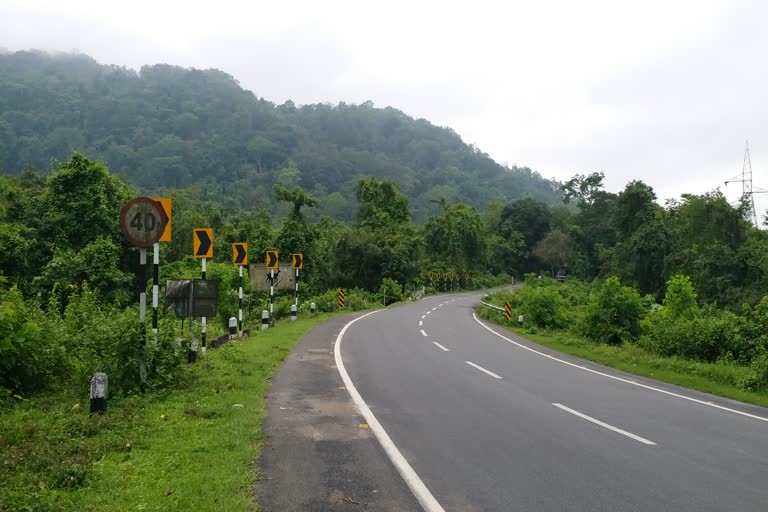
At least 23 people were killed and 20 others injured on Friday when a minibus collided head-on with a container truck near Kaziranga National Park in the north-eastern Indian state of Assam, officials said. Many of the dead were college students travelling home from their classes, making the crash one of the deadliest road accidents in India this year.
The collision happened at Rangajan, near the Hathikuli Tea Estate in the Kohora range, on National Highway 715, a senior police officer said. Two of those killed were women. The injured were taken to nearby hospitals, and officials warned that the death toll could still rise.
Table of Contents
- What happened on National Highway 715
- Rescue effort and the injured
- A highway through a wildlife corridor
- India's persistent road safety crisis
- What happens next
- Key takeaways
- Frequently Asked Questions
- Sources
- Chronicle further reading
What happened on National Highway 715
The crash took place on Friday 13 November 2026, when the passenger minibus met the container truck head-on on the highway that runs past Kaziranga, one of India's best-known wildlife reserves. The Hindu reported that at least 23 people died and 20 others were injured, citing officials, while Al Jazeera put the death toll at at least 24 in its early reporting — a reminder that casualty figures in the first hours after a major crash are often revised as rescue teams work through the wreckage.
A police officer at the scene said many of the victims were college students returning from their classes, a detail that underlines the human scale of the tragedy: for families across the district, an ordinary journey home turned into the worst news of the year. The stretch of road where the crash occurred, at Rangajan near the Hathikuli Tea Estate, is a busy two-lane section of the highway that carries a heavy mix of local passenger vehicles, tea-garden traffic and long-distance freight trucks.
It was not immediately clear what caused the two vehicles to meet head-on. Police have not yet said whether speed, an overtaking manoeuvre, driver fatigue or a mechanical fault played a role, and an investigation is expected to establish the sequence of events.
Rescue effort and the injured
Emergency teams reached the scene quickly, and the injured were rushed to hospitals in the area. With 20 people hurt, some seriously, hospitals in Golaghat district were treating a large number of casualties on Friday, and officials had not yet published a full list of the dead. In crashes of this scale, identification of victims and notification of families often takes hours, and the final toll can change as the seriously injured are assessed.
Local residents were among the first on the scene, a pattern seen in road accidents across rural India, where bystanders frequently pull survivors from wreckage and call for ambulances before official rescue teams arrive.
A highway through a wildlife corridor
The crash site sits on the edge of Kaziranga National Park, a UNESCO World Heritage site famous for its population of one-horned rhinoceroses. National Highway 715 runs along the park's southern boundary, and the road is notorious for a different kind of danger: wildlife crossing between the park and the Karbi Anglong hills, particularly during the monsoon floods when animals move to higher ground.
Authorities have long debated how to make the corridor safer, including proposals for an elevated highway and speed restrictions through the animal-crossing stretches. Those measures are aimed mainly at protecting wildlife, but they also speak to the wider problem of a road that mixes high-speed freight traffic with local vehicles, pedestrians and animals on a narrow alignment.
India's persistent road safety crisis
Friday's crash is the latest in a grim and familiar pattern. India records more than 170,000 road deaths a year, according to government figures — among the highest tolls in the world — and head-on collisions on two-lane national highways are one of the most common causes of mass casualties. Buses and minibuses carrying students and workers are frequently involved, and a single crash can wipe out dozens of lives in seconds.
The reasons are well documented: speeding, dangerous overtaking, driver fatigue on long freight routes, overloaded vehicles, poor road design and weak enforcement of traffic rules. Successive governments have tightened penalties and promised better highways, and some stretches have improved, but the national death toll has remained stubbornly high.
Assam itself has seen a series of deadly crashes in recent years. The state's highways carry heavy freight traffic between the north-east and the rest of India, and the mix of trucks, buses and smaller vehicles on two-lane roads leaves little margin for error when something goes wrong.
What happens next
Police in Assam are expected to open a formal investigation into the crash, examining the condition of both vehicles, the drivers' records and the road itself. If negligence is established, charges are likely to follow, as they routinely do after fatal accidents in India.
For the families of the dead, the immediate questions are more practical: the identification of loved ones, the treatment of the injured, and the compensation that state governments typically announce after such disasters. The Assam government has not yet announced a compensation package, but such announcements usually follow within a day or two of a major crash.
The longer question is whether this crash — like so many before it — will lead to lasting change on the highway where it happened. Calls for median dividers, better lighting, stricter speed enforcement and safer overtaking stretches are made after every disaster. Whether they are answered this time will determine if National Highway 715 becomes any safer for the students, workers and truck drivers who use it every day.
Key takeaways
- At least 23 people were killed and 20 others injured when a minibus collided head-on with a container truck on National Highway 715 near Kaziranga National Park in Assam on Friday 13 November 2026.
- The crash happened at Rangajan, near the Hathikuli Tea Estate in the Kohora range; two of the dead were women and many were college students returning from classes.
- The death toll may still rise, with early reports differing slightly as rescue teams work through the wreckage.
- The highway runs along the edge of Kaziranga National Park, a UNESCO World Heritage site, and mixes heavy freight traffic with local passenger vehicles on a two-lane road.
- India records more than 170,000 road deaths a year, and head-on collisions on two-lane highways are a leading cause of mass-casualty crashes.
Frequently Asked Questions
How many people were killed in the Assam bus crash?
At least 23 people were killed and 20 others injured, according to officials cited by The Hindu. Al Jazeera reported a toll of at least 24 in its early coverage. The figures may be revised as rescue work continues and hospitals assess the seriously injured.
Where exactly did the crash happen?
The collision happened at Rangajan, near the Hathikuli Tea Estate in the Kohora range, on National Highway 715 near Kaziranga National Park in Assam, north-eastern India.
Who were the victims?
Two of the dead were women, and many of the victims were college students who were returning home from their classes, according to a police officer at the scene.
What caused the crash?
It is not yet known. The minibus and the container truck collided head-on, but police have not said whether speed, overtaking, driver fatigue or a mechanical fault was responsible. An investigation is expected to establish the cause.
Why is this stretch of highway considered dangerous?
National Highway 715 runs along the southern edge of Kaziranga National Park and carries a heavy mix of freight trucks, local passenger vehicles and wildlife crossing between the park and the nearby hills, on a largely two-lane alignment.
Sources
- The Hindu — "At least 23 die in bus-truck collision in Assam's Kaziranga; 20 others injured"
- Al Jazeera — "Truck and bus crash in India's Assam state kills at least 24 people"