Botswana will double its holding in diamond producer De Beers from 15% to 30%, President Duma Boko told parliament on Monday, throwing the government's weight behind a consortium bid for Anglo American's controlling stake and positioning the country as the company's largest single shareholder.
The announcement, made during Boko's State of the Nation address in Gaborone on 9 November, is the most decisive step yet in the long-running effort to sell De Beers, one of the world's best-known diamond companies. Reuters reported that Boko confirmed Botswana had chosen the Global Diamond Consortium, led by former De Beers chief executive Gareth Penny, as its preferred bidder for Anglo American's 85% stake.
"This means that, when this transaction is complete, Botswana's shareholding in De Beers will double from the current 15% to 30%," Boko said. "Botswana will become the single largest shareholder in De Beers, and with that comes greater influence in the strategic decisions for decades to come."
Table of Contents
- Why Botswana's backing matters
- Who is buying De Beers
- A diamond industry under pressure
- A regional deal, not just a national one
- What happens next
- Key takeaways
- Frequently Asked Questions
- Sources
- Chronicle further reading
Why Botswana's backing matters
Botswana's support was essential to any sale. The country holds a right of first refusal over Anglo American's stake in De Beers, giving it an effective veto over any buyer. Without Gaborone's blessing, no deal could proceed.
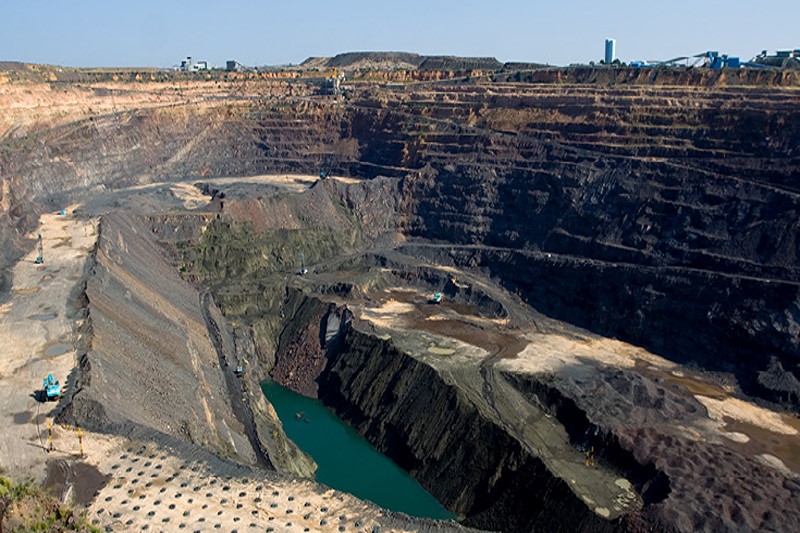
That leverage reflects the scale of Botswana's dependence on diamonds. The country is the world's largest diamond producer by value, and diamond revenues fund a large share of the national budget. Botswana already owns half of Debswana, the joint venture that operates the country's mines, alongside its 15% direct stake in De Beers — a stake it bought 25 years ago.
Doubling that holding to 30% would give Botswana unprecedented influence over the company that markets much of its output. Boko framed the move as a matter of national sovereignty over a strategic resource, telling parliament that the larger stake would secure Botswana's voice in decisions shaping the industry "for decades to come".
Who is buying De Beers
The preferred bidder is the Global Diamond Consortium, a new industry alliance led by Gareth Penny, who ran De Beers as chief executive, alongside diamond veterans Saurin Parikh of Diarough and Moshe Klein of Grandview Klein. The consortium became the lead bidder over the summer, and Boko's speech confirmed the government's choice.
Other big names are circling the deal. South African billionaire Johann Rupert's Compagnie Financière Richemont, the Swiss luxury group behind Cartier and Van Cleef & Arpels, has been in talks since mid-October to join the consortium, alongside the US jewellery retailer Signet Jewelers, owner of Kay, Zales and Jared. The size of any stake Richemont might take has not been disclosed.
The reported price for Anglo American's 85% holding is about $1 billion, including $750 million paid upfront and $250 million deferred. That is a steep fall from De Beers' former valuations: Anglo American cut the carrying value of the business to $2.3 billion in February, its third impairment in three years, and the company was once valued at close to $13 billion in 2011.
A diamond industry under pressure
Anglo American put De Beers up for sale in 2024 as part of a wider restructuring, as the diamond market endured a prolonged slump. Prices for natural diamonds have fallen sharply, squeezed by weak demand in key markets and by growing competition from laboratory-grown stones, which now offer consumers a cheaper alternative that is chemically identical.
The downturn has hit Botswana hard. Diamond sales are the backbone of the economy, and the slump has strained government finances in a country that has built its post-independence prosperity on the stones beneath the Kalahari. A stronger ownership position in De Beers gives Gaborone a direct stake in the company's recovery — and a seat at the table when decisions are made about marketing, pricing and the fightback against synthetic rivals.
For Anglo American, the sale is part of a pivot towards copper, the metal at the centre of the energy transition. De Beers, with operations and exploration spanning Botswana, Namibia, Angola, South Africa and Canada, no longer fits that strategy.
A regional deal, not just a national one
Boko also confirmed that the governments of Namibia and Angola would participate in the De Beers transaction. Both countries host De Beers mining operations, and their involvement turns the sale into a regional arrangement among southern Africa's diamond-producing states, rather than a purely commercial handover.
The final allocation of stakes among the consortium and the participating governments has not been disclosed, and Boko gave no details of how Botswana would fund the purchase of its additional 15%. Those terms will be settled in the binding transaction documents that Anglo American said on Monday it would continue working towards with Botswana, the other governments and the consortium.
What happens next
No binding sale agreement has been signed, and no completion date or regulatory timetable has been reported. The 30% stake should therefore be treated as a plan, not yet a completed transaction: it depends on the consortium's acquisition of Anglo's 85% holding reaching completion.
Anglo American has said it will keep working with all parties towards binding documents, and earlier reporting pointed to completion in the final quarter of 2026. If the deal closes on the announced terms, Botswana will emerge as De Beers' largest single shareholder, with Namibia and Angola also holding stakes — a reshaping of ownership that would put the world's most famous diamond company largely in the hands of the African states that produce its stones.
Key takeaways
- Botswana will double its stake in De Beers from 15% to 30%, President Duma Boko told parliament on 9 November 2026, making the country the company's largest single shareholder.
- Boko backed the Global Diamond Consortium, led by former De Beers CEO Gareth Penny, as preferred bidder for Anglo American's 85% stake, reportedly valued at about $1 billion.
- Botswana's support was essential because the country holds a right of first refusal over Anglo's stake, giving it a veto over any buyer.
- The governments of Namibia and Angola will also participate in the transaction, subject to final terms.
- No binding agreement has been signed yet, so the 30% stake remains a plan pending completion of the sale.
Frequently Asked Questions
Has Botswana already doubled its De Beers stake to 30%?
Not yet. President Duma Boko announced the intention on 9 November 2026 and named the Global Diamond Consortium as preferred bidder, but no binding sale agreement, completion date or regulatory approval has been reported. The 30% stake will take effect only when the transaction completes.
Why does Botswana's backing matter so much?
Botswana holds a right of first refusal over Anglo American's 85% stake in De Beers, giving it an effective veto over any buyer. The country is also the world's largest diamond producer by value, and diamond revenues fund a large share of its national budget.
Who is the Global Diamond Consortium?
It is a new industry alliance led by former De Beers chief executive Gareth Penny, alongside diamond veterans Saurin Parikh of Diarough and Moshe Klein of Grandview Klein. It became the lead bidder for Anglo's stake over the summer of 2026.
How much is Anglo American's De Beers stake worth?
The offer has been reported at about $1 billion, including $750 million upfront and $250 million deferred. Anglo American cut De Beers' carrying value to $2.3 billion in February 2026 after its third impairment in three years, as natural diamond prices slumped.
Which other countries are involved in the deal?
President Boko confirmed that Namibia and Angola, where De Beers also operates mines, will participate in the transaction. Their exact stakes and the final allocation among the consortium and the governments have not been disclosed.