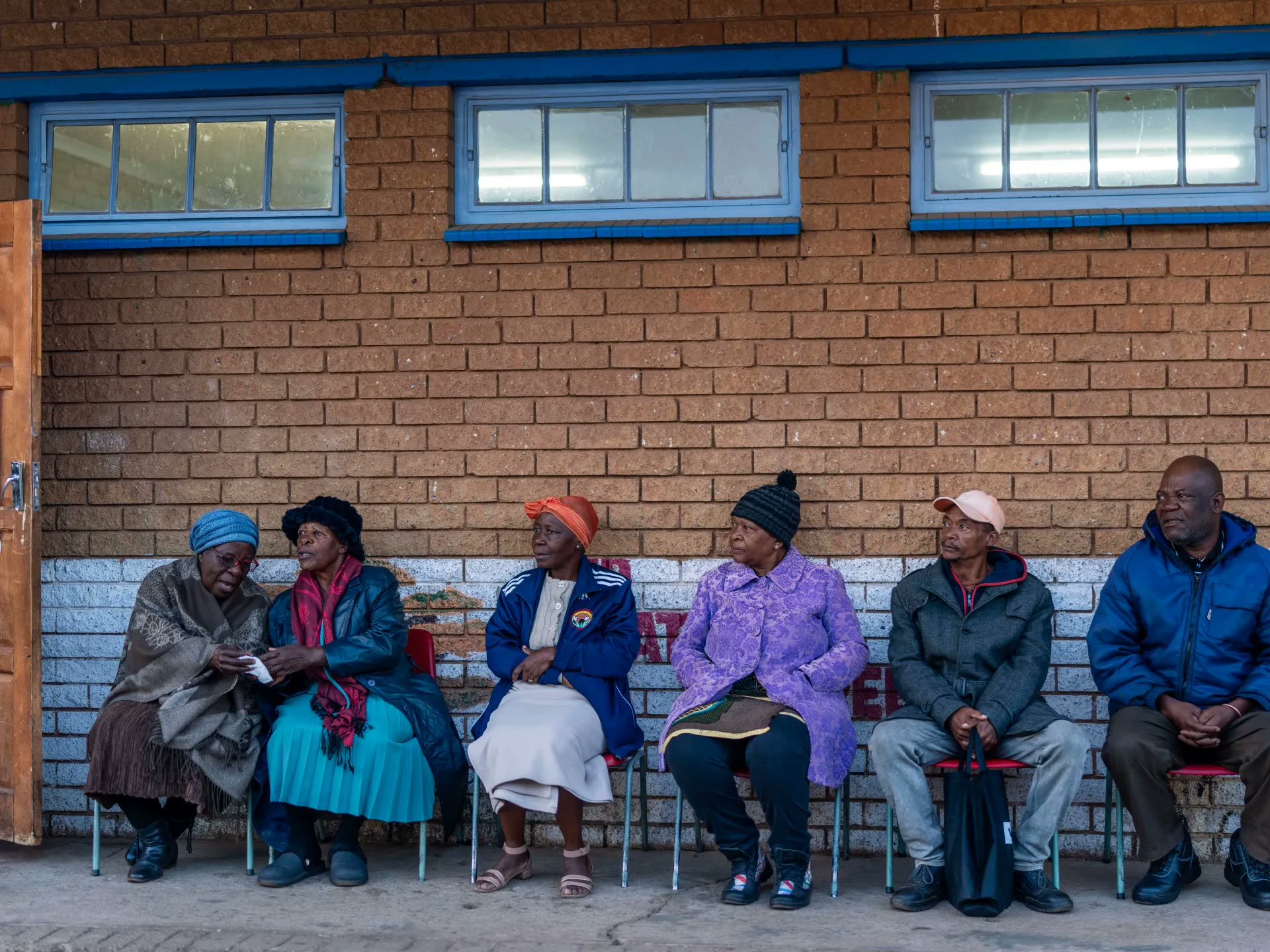
South Africa's African National Congress is on course for its worst electoral result since the end of apartheid, falling below a third of the national vote in this week's municipal elections as voters punished the party that has governed the country for more than three decades. With more than 80% of ballots counted by Friday, the former liberation movement stood at under 32% nationally — almost 14 percentage points below its showing in the last local elections in 2021, according to The Guardian.
The result marks another stage in the steady decline of a party that has led every national government since Nelson Mandela became president in 1994. Wednesday's fragmented vote, held across 257 municipal councils, suggests that the ANC's dominance of South African politics — already dented when it lost its national majority in 2024 — is eroding further at the level of government closest to people's daily lives.
A bruising night for the ANC
Official tallies published by the Electoral Commission showed the ANC on 31.9% of the national vote with 70% of ballots counted on Friday morning. The Democratic Alliance (DA), its main rival and its partner in the national unity government, stood second on 24.6% — up from 21.7% in 2021. The Economic Freedom Fighters fell to 6.2%, down from 10.3%, while former president Jacob Zuma's uMkhonto weSizwe (MK) Party took around 8.5%.
The counting told an even starker story in the cities. In Johannesburg, South Africa's economic heartland, the DA led with roughly 41% of the vote against just 17% for the ANC, with ActionSA — a newer party founded by former Johannesburg mayor Herman Mashaba — in third on about 16%. Five years ago the ANC won 33.6% in Johannesburg; the collapse to barely half that figure is the single most dramatic result of the election.
The DA also led in Tshwane, the municipality that includes the capital Pretoria, on about 34%, and in Ekurhuleni on 29%. Across Gauteng, the country's richest province, the DA led with 34.6% against the ANC's 21.3%, ahead in seven of the province's nine metropolitan and local municipalities. In Cape Town, the DA was on course to retain its outright majority, with around 60% of the vote counted so far.
Hung councils and coalition bargaining
No party was on track to win an outright majority in any of the other seven largest metropolitan areas, and the early picture was dominated by hung councils: 69 of the first 100 councils decided produced no outright winner, leaving smaller parties with outsized influence. By Thursday night the ANC had won 21 councils outright, the DA six and the MK Party three.
The Electoral Commission was expected to declare the final results over the weekend. Once declared, parties will have two weeks to negotiate coalition governments in the hung municipalities — a process that has repeatedly produced unstable administrations in South African cities in recent years, including in Johannesburg itself, which has cycled through a string of mayors since 2021.
A projection by the Council for Scientific and Industrial Research, developed with the public broadcaster SABC, suggested the ANC would finish on roughly 32% of the national vote. Turnout was projected at around 52% — higher than in 2021 — a sign, analysts said, of how strongly voters felt about the state of local services.
Why voters turned away
The election was widely seen as a referendum on the basics of municipal government: water, electricity, roads and refuse collection. High unemployment — roughly a third of South Africans are out of work — crime, and a string of corruption scandals have all contributed to voters turning away from the ANC, and the party itself has acknowledged its failures in local governance.
President Cyril Ramaphosa, who cast his ballot at Hyde Park High School in Johannesburg on Wednesday, leads a national unity government formed after the 2024 general election, in which the ANC lost its outright majority for the first time and was forced into coalition with the DA and eight smaller parties. That national arrangement has held, but at municipal level the two big parties are direct competitors — and the local results may reshape the balance of power between them.
ANC chairperson Gwede Mantashe remained publicly optimistic as the results came in, but the numbers point to a party struggling to convince voters it can fix the services it has run for 32 years. Water outages and power cuts, potholed roads and failing infrastructure were the themes voters raised most often during the campaign.
What happens next
The final allocation of seats on all 257 councils is expected over the weekend, after which coalition talks will begin in earnest. For the ANC, the question is whether it can still anchor governing coalitions in the big metros it once ran outright, or whether it will be forced into opposition in cities it has controlled since 1994.
For the DA, the prize is Johannesburg. Winning the country's economic capital would be the party's biggest electoral achievement and a powerful platform ahead of the next national election. But with no outright majority in sight, it too will need partners — and South Africa's recent history of fragile municipal coalitions suggests the bargaining will be long and fractious.
Whatever the final deals, the direction of travel is clear. The party of Mandela, which once commanded more than 60% of the vote, now speaks for less than a third of South Africans at the ballot box — and the voters who abandoned it this week did so not over ideology, but over taps that run dry and lights that go out.
Key takeaways
- The ANC fell below a third of the national vote with more than 80% of ballots counted, down almost 14 points from 2021 — its worst result since 1994.
- The DA led nationally among challengers on about 25%, and surged in the big cities: roughly 41% in Johannesburg, 34% in Tshwane and 29% in Ekurhuleni.
- ActionSA emerged as a significant force in Gauteng, polling about 17% across the province and 16% in Johannesburg.
- 69 of the first 100 councils decided were hung, with coalition negotiations due to begin once final results are declared over the weekend.
- Turnout was projected at around 52%, higher than in 2021, reflecting voter anger over water and power outages, potholes, crime and corruption.
Frequently Asked Questions
How badly did the ANC do in the 2026 local elections?
With more than 80% of ballots counted, the ANC stood at under 32% of the national vote — almost 14 percentage points below its 2021 result, which was already its worst in history. It is the party's weakest showing since it first won power in 1994.
Which party won in Johannesburg?
The Democratic Alliance led in Johannesburg with about 41% of the vote, more than double the ANC's roughly 17%. ActionSA was third on about 16%. No party won an outright majority, so a coalition will have to be negotiated.
Why did voters turn against the ANC?
Voters punished the party over failing basic services — water and electricity outages, potholed roads and poor refuse collection — as well as high unemployment, crime and corruption scandals. The ANC itself has acknowledged its failures in local governance.
When will the final results be known?
The Electoral Commission was expected to release the final outcome and the allocation of seats on all 257 municipal councils over the weekend. Parties then have two weeks to form coalition governments in hung councils.
What does this mean for South Africa's national government?
The ANC already governs nationally in a coalition with the DA and eight smaller parties after losing its majority in 2024. The local results do not directly change that arrangement, but they weaken the ANC's bargaining position and strengthen the DA ahead of the next national election.
Sources
- The Guardian — "ANC faces bruising defeat in South African local elections with 80% of ballots counted"
- Daily Investor — "Election results 2026: ANC on track for worst-ever results"
- The South African — "DA leads Gauteng metros – full breakdown"
- CNBC Africa — "South Africa's ANC faces 'worst nightmare' as vote share tumbles"