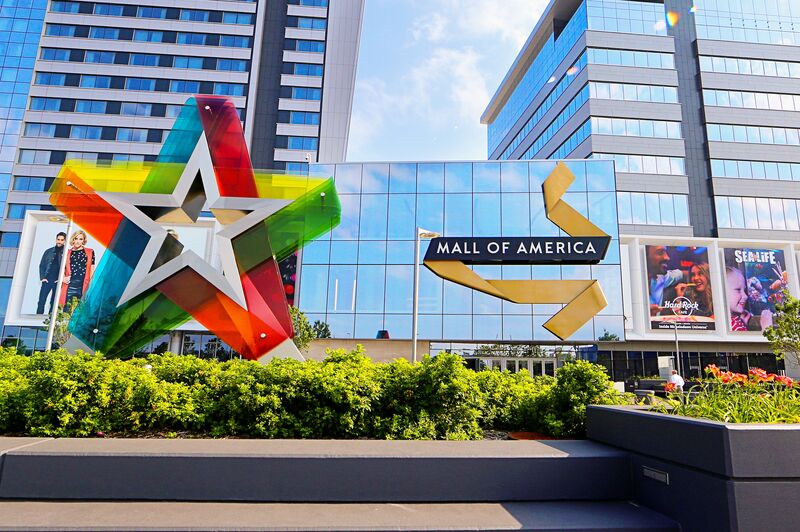
The FBI has arrested an 18-year-old Minnesota man accused of plotting a mass shooting at the Mall of America in support of ISIS, federal prosecutors announced on Wednesday. Sheikhdoon Abdullahi Mohamud, a US citizen of Somali descent, was taken into custody on Tuesday after he paid $600 to an undercover FBI employee posing as an ISIS member for an AK-47 assault rifle and 200 rounds of ammunition, according to a federal criminal complaint. He allegedly intended to kill 30 to 60 people at the Bloomington shopping center during a crowded cultural event on October 24.
Table of Contents
- How the sting unfolded
- What the complaint alleges
- A nearly two-year investigation
- Federal response
- A wider pattern of foiled plots
- Frequently Asked Questions
How the sting unfolded
According to the criminal complaint filed in federal court in Minnesota, Mohamud exchanged hundreds of messages with a confidential FBI source over encrypted and social-media channels beginning in December 2024. Posing as an ISIS operative, the source supplied him with a Chinese-made Norinco AK-47 rifle, four magazines and roughly 200 rounds of ammunition for $600 in a public park in Richfield. The moment he left the undercover vehicle carrying the weapon, agents moved in and arrested him at gunpoint.
He now faces a single federal count of knowingly receiving a firearm and ammunition while knowing — or having reason to believe — they would be used to commit a felony and a federal crime of terrorism, including material support to a designated foreign terrorist organization.
What the complaint alleges
Prosecutors say Mohamud told the informant he wanted to strike the Mall of America — the largest shopping center in the United States — because he believed it was Jewish-owned, writing that killing "even 30 people" there would empty it. In other messages he reportedly wrote that he wanted to "harm the jew just like the brothers in australia bondi beach harmed the jews," and that he would "go grab assault rifle... kill maybe 30-60 people insha Allah."
The affidavit, reported by the Washington Examiner, says Mohamud settled on October 24 because the mall was hosting a Hmong Arts Celebration that would draw "a lot of people." He told the source he had studied video of the 2016 Pulse nightclub attack in Orlando and believed he could do the same. He also allegedly posted a video on Discord last month pledging allegiance to ISIS, discussed traveling to Somalia to fight for al-Shabaab, and weighed the Valleyfair amusement park as an alternate Christmas-time target before focusing on the mall.
A nearly two-year investigation
The bureau's handling of the case has drawn scrutiny as well as praise. The FBI acknowledged that agents tried to meet Mohamud's parents in May 2025, but the father declined to provide information and referred the agents to his attorney. It was not immediately known whether Mohamud had an attorney who could speak on his behalf.
Counterterrorism analysts note that undercover stings have become the standard instrument against lone-actor radicalization: since the suspect's online contacts turned out to be the FBI all along, there was never a live weapon in play until the moment of arrest.
Federal response
At a Minneapolis press conference, US Attorney for the District of Minnesota Daniel Rosen said Mohamud was a "radicalized young man who needed to be watched," adding that agents "were able to detect a threat, and disrupt it, before the defendant carried out his intention to kill, in his words, maybe 30 to 60 people." Rosen added that "the threat of terrorism in support of ISIS and other foreign terrorist organizations is active and continuing."
Attorney General Todd Blanche shared a screenshot on social media of one of the ISIS propaganda videos — depicting executions — that Mohamud had reportedly sent to the informant, according to the New York Post.
A wider pattern of foiled plots
The arrest fits a pattern of recent counterterrorism cases relying on undercover operations, including last year's foiled ISIS-inspired Election Day plot in which Nasir Ahmad Tawhedi and Abdullah Haji Zada were arrested after buying weapons from an undercover FBI employee. Similar sting-based disruptions have played out beyond the US this year — see our earlier report on the RAF Fairford terror plot arrests in Britain and the ISIS attack in Hawija, Iraq, the first since the US withdrawal.
Frequently Asked Questions
Who was arrested in the Mall of America plot?
Sheikhdoon Abdullahi Mohamud, an 18-year-old US citizen of Somali descent living in Minnesota, was arrested on October 6 and charged with receiving a firearm and ammunition he allegedly intended to use in an ISIS-inspired mass-casualty attack.
When was the attack supposed to happen?
According to the federal complaint, Mohamud set October 24 as the date because the Mall of America was hosting a Hmong Arts Celebration expected to draw large crowds.
How was he caught?
The FBI had him under investigation since December 2024. A confidential informant posing as an ISIS member sold him an AK-47 and ammunition for $600; agents arrested him the moment he took possession of the weapon in a Richfield park.
Is the Mall of America safe now?
Federal officials have not announced any ongoing threat to the mall. The case was presented as a disrupted, lone-actor plot with no indication of co-conspirators who remain at large.