Bahrain said an Iranian attack struck a civilian industrial facility late on Saturday, 21 November 2026, setting it on fire, while Iran's Revolutionary Guards claimed they had destroyed two American Patriot air defence radars at US bases in the kingdom. No injuries were reported, but the duelling accounts — and a second wave of attacks reported later the same night — marked the sharpest escalation yet in a campaign that has repeatedly pulled the Gulf island into a war that began when the United States and Israel attacked Iran in February. Al Jazeera
Bahrain's Interior Ministry said on X that "as a result of the heinous Iranian aggression, a civilian industrial facility was targeted, causing a fire at the site", adding that Civil Defence teams were working to bring the blaze under control and that preliminary reports indicated material damage with no injuries. The ministry did not name the facility or say where it was. Residents told an AFP correspondent they saw smoke rising above Sitra Island, on Bahrain's east coast, which is home to several industrial facilities including a refinery run by the state oil company Bapco. TRT World
Three versions of the same night
What actually burned — and what was actually hit — is now the subject of three incompatible accounts. Bahrain's Defence Force said its air defences intercepted a number of Iranian aerial attacks late on Saturday, and that shrapnel from the interceptions caused material damage but no casualties, accusing Tehran of continuing its "systematic hostile approach" towards the kingdom.
Iran's Islamic Revolutionary Guard Corps (IRGC) told a different story. In a statement carried by state media, the Guards said their Aerospace Force had carried out a combined missile-and-drone operation against US military positions at the Al-Riffa and Awali bases, claiming it had destroyed two Patriot air defence radars. The attack, the statement said, came "in response to continued aggression and violations of the airspace of the Islamic Republic of Iran", after two US MQ-1 and MQ-9 drones allegedly violated Iranian airspace.
A third version emerged from Iran's own state news agency, IRNA, which reported that an interceptor missile launched from the US Fifth Fleet base in Bahrain had crashed on Sitra Island and started a large fire — citing an outlet called Bahrain News, which blamed a recurring malfunction in the Patriot air defence system. The semi-official Fars news agency, meanwhile, initially reported that the Guards had attacked two military bases used by US forces at Sheikh Isa and Juffair, a different pair of locations from the Al-Riffa and Awali bases named in the official statement.
None of the three accounts can be independently verified, and US Central Command did not immediately respond to requests for comment on the Guards' claims. The fog is itself part of the pattern: in each of the recent Bahrain incidents, Tehran has claimed a successful strike on American military hardware while Washington and Manama have insisted the attacks were intercepted. What is new this time is the fire — the first confirmed damage to a civilian site in Bahrain since the attacks resumed.
A day of claims on both sides
Saturday's attack did not come out of nowhere. Earlier in the day, Iran said it had shot down a US drone over Qeshm Island in the Strait of Hormuz, and the Guards claimed to have downed a 58th US MQ-9 drone over the strait — a running tally Washington has repeatedly disputed. Iranian state media also reported that the country's air defences had targeted a US F-16 fighter jet on Friday evening, damaging the aircraft and forcing it to make an emergency landing. US Central Command flatly denied that account, saying: "Iran did not attack a US F-16 fighter aircraft yesterday — at all," and that all US military fighter jets in the Middle East were safe and accounted for.
The tempo of attacks on Bahrain has quickened sharply. The kingdom reported intercepting several Iranian aerial attacks in recent days, after a lull of several weeks since September. Tehran claimed a strike on a US early-warning radar in Bahrain on 13 November, then launched a second drone attack on the Al-Riffa radar base on 15 November, and fired drones at a US military radar system again on Tuesday. Saturday's combined missile-and-drone salvo — and the report of a second attack later the same night — suggests the campaign is intensifying rather than fading.
The blockade, the mediation and the warnings
The escalation is unfolding against a tightening US naval blockade of Iran. Washington has warned that ships receiving Iranian cargo through ship-to-ship transfers could be stopped, boarded or seized, even if they never enter Iranian ports — a stranglehold that one former Pentagon official, David Des Roches, told Al Jazeera leaves Iran "strangled" and makes a return to full-scale war "inevitable". Iran said on Saturday that it had held talks with Qatari mediators and urged the United States to accept its conditions, but no breakthrough has been reported.
The wider regional picture is darkening in parallel. Two oil tankers were hit by unknown projectiles near the Strait of Hormuz earlier this week, and Iran's navy said a tanker caught fire after hitting a naval mine in a restricted area east of the strait. In Washington, Democrats have called for an end to funding for the war on Iran ahead of a 11 December deadline, a sign that the conflict is becoming a domestic political fight as well as a military one.
The Gulf Cooperation Council's secretary-general, Jassim Mohammed Albudaiwi, expressed the bloc's "full solidarity" with Bahrain after Saturday's attack, saying the kingdom's security and territorial integrity are an integral part of the security of all GCC states. Bahrain later issued an all-clear notice, saying the threat to civilians was over.
What to watch next
Four questions will shape the coming days. First, whether Washington confirms or denies the claim that two Patriot radars were destroyed — the credibility of both sides' battlefield claims has become part of the contest itself. Second, whether the fire at the industrial facility is confirmed as the result of an Iranian strike or of a malfunctioning interceptor, a distinction with very different political consequences. Third, whether the Qatari mediation channel produces any movement, or whether the blockade and the attacks harden into a cycle with no off-ramp. And fourth, whether the pattern of attacks on Gulf states widens — Saudi Arabia has already reported intercepting missiles and drones aimed at Riyadh this month, and the region's governments are under growing pressure to choose sides in a war they have tried to avoid.
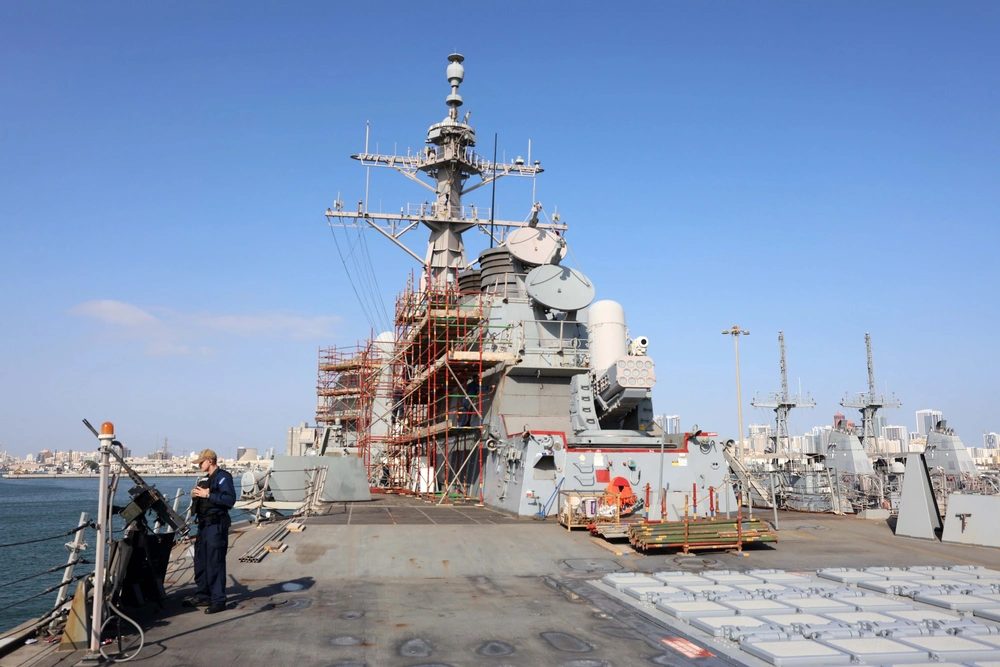
For Bahrain's residents, the all-clear notice ended a frightening night, but the sirens and the smoke over Sitra Island were a reminder of how close the war now sits. The kingdom hosts the US Navy's Fifth Fleet and the headquarters of US Naval Forces Central Command, making it one of the most important American military hubs in the Gulf — and, increasingly, one of the most exposed.
Frequently Asked Questions
What happened in Bahrain on Saturday, 21 November?
Bahrain said an Iranian attack hit a civilian industrial facility, causing a fire but no injuries, while its air defences intercepted a number of Iranian aerial attacks. Iran's Revolutionary Guards said they carried out a combined missile-and-drone operation against US positions at the Al-Riffa and Awali bases, claiming to have destroyed two Patriot air defence radars.
Was anyone hurt in the attack?
No. Bahrain's Interior Ministry said preliminary reports indicated material damage with no injuries, and the Defence Force said shrapnel from interceptions caused minor material damage and no casualties.
Why do the accounts of the attack differ?
Bahrain says a civilian industrial facility was hit; Iran says it targeted US military radars; and Iran's IRNA news agency reported that a US interceptor missile crashed on Sitra Island and started the fire. None of the accounts has been independently verified, and US Central Command did not immediately comment.
Why is Bahrain being attacked?
Bahrain hosts the US Navy's Fifth Fleet and US Naval Forces Central Command, making it a key American military hub in the Gulf. Iran has repeatedly said it will strike US military assets in the region in retaliation for the US–Israeli war on Iran, which began in February 2026, and for what it describes as violations of Iranian airspace by US drones.
Has this happened before?
Yes. Iran claimed a strike on a US radar site in Bahrain on 13 November, launched a second drone attack on the Al-Riffa base on 15 November, and fired drones at a US military radar system again on Tuesday this week. Bahrain had reported a lull in attacks since September before this month's resumption.