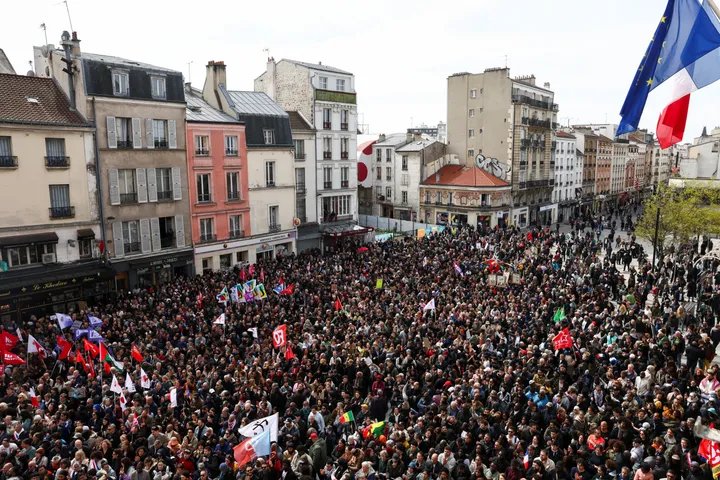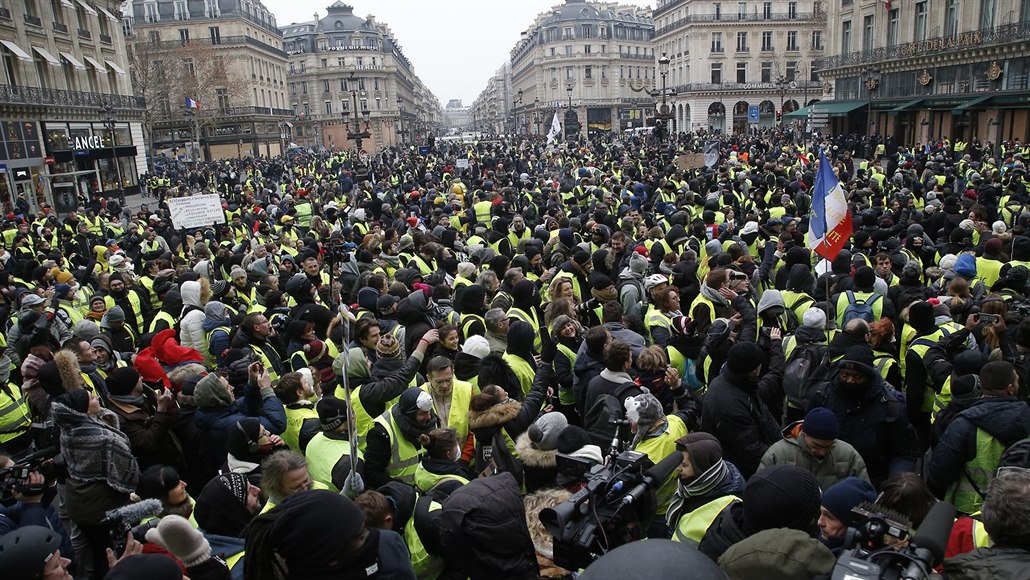
Eight years after they brought France to a standstill, the Yellow Vests are marching again. Former figures of the movement that rattled Emmanuel Macron's first presidency have thrown their weight behind a new protest wave, joining forces with high-school students, trade union members and farmers in a nationwide day of action on Saturday, October 17, against rising prices and what demonstrators describe as the country's fraying social model.
Hundreds of thousands of people are expected to demonstrate across France, according to France 24, which is running live coverage of the day. The convergence of the two movements — students who have been blockading their lycées for weeks, and the remnants of a grassroots revolt that began at fuel-tax roundabouts in 2018 — is the development the government in Paris has most feared.
Table of Contents
- A day of action eight years in the making
- The students' revolt: where it started
- "Finish what we started": the Yellow Vests' call
- Why the merger matters to the government
- Echoes of 2018 — and what is different now
- Key takeaways
- Frequently Asked Questions
- Sources
A day of action eight years in the making
The October 17 mobilisation has been building for weeks. An online movement against rising fuel prices gathered momentum through the month, and in recent days former Yellow Vest figures announced they would join Saturday's demonstrations in support of high-school students, France 24 reported. Some organisers are explicitly drawing parallels with the 2018 protests — a comparison few in the Élysée will welcome.
What makes this wave different from a single-issue student revolt is its breadth. In an online appeal spread through social media, the Yellow Vest network called on teachers, workers, pensioners and farmers — as well as students — to take to the streets, widening the front well beyond the school gates.
The students' revolt: where it started
The student movement began in mid-September at a Paris high school and snowballed into a national crisis: at its peak, classes were fully or partially shut in some 400 to 500 high schools across France, with authorities reporting thousands of arrests — the large majority of them minors — since the movement began.
Students say years of underinvestment have left them with overcrowded classrooms, absent teachers, crumbling buildings and exhausting school days. The education ministry, for its part, has blamed infiltration by far-left activists for the worst of the vandalism and clashes, and promised a gradual return to classes. It has not come. The students' rage has, meanwhile, been amplified far beyond France's borders — a sign of how closely the world is watching.
"Finish what we started": the Yellow Vests' call
The slogan circulating among returning Yellow Vest groups — "finish what we started" — captures the mood. The 2018 movement, born of a fuel-tax hike, grew into a sprawling revolt against Macron's economic policies before fading under the weight of police crackdowns and internal divisions. Its return, even in a reconstituted form, gives the student protests something they previously lacked: a veteran street infrastructure and a name that still strikes fear in French ministries.
France 24's report from the ground, by Shirli Sitbon, notes that the prospect of the two movements merging "poses a big challenge to the government" — not least because the Yellow Vests' 2018 playbook was built precisely around sustained, decentralised blockades that security forces struggled to contain.
Why the merger matters to the government
For Paris, the danger is arithmetic. A student protest can be met with education concessions; a Yellow Vest resurgence speaks the language of household budgets, fuel prices and pensioners' purchasing power. Combined, they threaten to turn a school crisis into a general cost-of-living uprising on the eve of municipal election season.
The government has so far treated the two movements as separate problems. Saturday's demonstrations will test whether that separation survives contact with the streets. Trade union involvement — unions have already been part of autumn's strikes — adds a third pillar that could extend the unrest beyond a single day.
Echoes of 2018 — and what is different now
The parallels with 2018 are real: a fuel-price grievance as the spark, a social-media-born movement with no single leader, and a presidency already under pressure. But the differences matter too. In 2018 the Yellow Vests were the movement; in 2026 they are joining one that students started and largely lead. And unlike 2018, this time they arrive alongside an organised trade-union machine and a school system already in open revolt.
Whether the convergence produces a sustained coalition or a single loud Saturday remains the question everyone in Paris is asking. The Yellow Vests' 2018 wave peaked, then burned out; the students' energy is real but young. What is certain is that the government can no longer count on the protest wave burning itself out quietly.
Key takeaways
- Former Yellow Vest figures have joined France's student protest movement, backing a nationwide day of action on Saturday, October 17.
- Hundreds of thousands are expected to demonstrate across the country against rising prices and what protesters call a fraying social model.
- The Yellow Vest network issued an online call to teachers, workers, pensioners, farmers and students — deliberately widening the protest beyond school gates.
- Organisers invoke the 2018 cost-of-living revolt that shook Macron's first term; their rallying cry is to "finish what we started."
- The merger of students, unions and Yellow Vest veterans poses the government's biggest challenge since the protest wave began in September.
Frequently Asked Questions
What are the Yellow Vests?
The Yellow Vests — gilets jaunes — are a French grassroots protest movement born in late 2018 against a fuel-tax increase. Named after the high-visibility vests French drivers must carry, they staged weekly Saturday demonstrations for months, at their peak bringing hundreds of thousands onto the streets in a broad revolt against President Emmanuel Macron's economic policies.
Why are they returning now?
An online movement against rising fuel prices gained momentum through October 2026, and former Yellow Vest figures announced they would join the October 17 nationwide demonstrations in support of striking high-school students. Some explicitly frame it as finishing the work the 2018 movement started.
What are the students protesting?
France's high-school students have been blockading lycées since mid-September over overcrowded classrooms, teacher shortages, dilapidated buildings and long school days — conditions they blame on years of underinvestment in public education. The movement spread to hundreds of schools nationwide, with thousands of arrests.
How big is the October 17 protest expected to be?
Hundreds of thousands of people are expected to demonstrate across France on Saturday, with students, trade union members and Yellow Vest supporters joining forces. France 24 is providing live coverage of the day.
What does this mean for Macron's government?
The convergence of the student revolt, trade unions and returning Yellow Vests threatens to turn an education crisis into a broader cost-of-living uprising — the scenario Paris has most feared. The government had treated the movements separately; Saturday will show whether that strategy survives.
Sources
- France 24, Live: France's Yellow Vests throw their weight behind mounting student protests, October 17, 2026 (France 24's website refused direct access to this environment; facts taken from its public RSS feed).
- France 24, "Finish what we started": After student protests, France braces for return of the Yellow Vests, October 16, 2026.
- France 24, France braces for massive protests: Yellow Vests to join students on Saturday (report by Shirli Sitbon), October 16, 2026.
- Chronicle, France Student Protests: 400–500 High Schools Closed, background on the student movement.