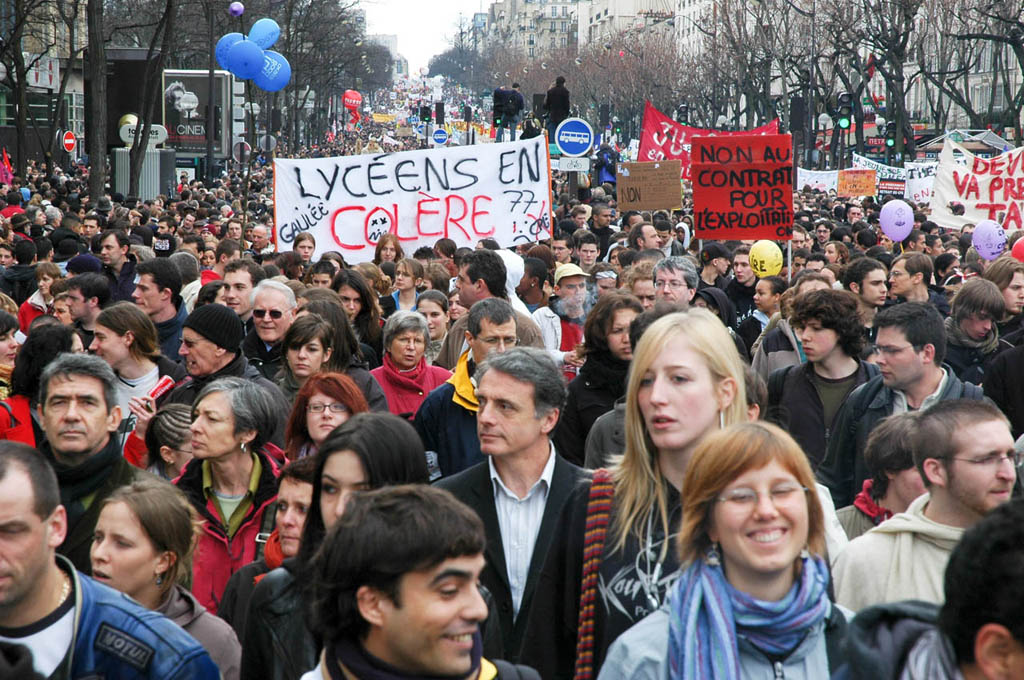
US President Donald Trump has thrust France's weeks-long student uprising into the centre of American politics, claiming on Tuesday that the unrest has nothing to do with schools and everything to do with "out of control mass migration" — an intervention that landed just as a quarter of a million people marched across France and more than 800 schools closed their doors.
"What's happening in France is nothing less than out of control mass migration. This isn't about schools, this is about Islam wanting to take over a once great Country!" Trump wrote on Truth Social, in a post that echoed the rhetoric of Europe's far right and arrived with American midterm elections only weeks away (CNN).
A school revolt that became a national crisis
The movement began quietly. On September 21, pupils at Saint-Exupéry high school in a Parisian suburb joined their teachers in protesting chronic understaffing and decaying facilities. Their demands were quickly met and the strike ended — but by then, as student leader Manès Nadel put it, the match had been lit.
"It spread like wildfire," Nadel told CNN. "It's an unprecedented number of schools that are now involved."
Pupils and teachers across France have spent years documenting classrooms with too few desks, broken taps, windows that won't open, and rats running across classroom floors. Videos shared this autumn show ceilings collapsing under leaking water and cockroaches in school kitchens. French high school students carry among the heaviest compulsory classroom loads in Europe, and the government's 2027 budget offered only a 1.7% increase in education spending excluding pensions — below the rate of inflation (Fox News).
Clashes, injuries and a charged officer
As the protests spread from Lille to Marseille, they grew increasingly violent. The Interior Ministry says 6,100 people have been taken into custody since the movement began in September, while Reuters reports at least 715 police officers and 215 teenagers injured in clashes. On Tuesday, classes were suspended at 891 schools and student unions said over half of France's high schools were closed or blockaded.
The most serious incident came on September 28 in the Paris suburb of Saint-Ouen, when a police officer allegedly fired a tear gas grenade into the face of a 14-year-old protester at point-blank range. Prosecutors have charged the officer with causing bodily harm "leading to mutilation or permanent disability"; he has been suspended from duty and released under judicial supervision (The Times).
For background on how the movement reached this point, see our earlier coverage: French student protests shut or damage hundreds of high schools and the case of the student who lost his hand to a grenade in Lens.
Trump's timing: an eye on the midterms
Trump's comments fit a well-worn pattern: he and his administration have repeatedly blamed Europe's social problems on migration, urging the continent to close its borders and warning of what he calls civilisational decline. MAGA commentators have been circulating videos of the French unrest for days — ally Glenn Beck said Monday the "riots in France are a clear warning to the rest of the West."
The White House may also see France as useful election ammunition. Republicans are leaning hard into migration and culture-war messaging ahead of next month's midterms, amid fears that Trump's unpopularity and the fallout from the Iran war could cost them control of Congress (Manila Times).
Frequently Asked Questions
What did Trump say about the France protests?
On Tuesday, Trump posted on Truth Social that "what's happening in France is nothing less than out of control mass migration" and that "this isn't about schools, this is about Islam wanting to take over a once great Country!" — blaming the unrest on immigration rather than the education crisis that sparked it.
Why are French students protesting?
Students at hundreds of high schools have blocked entrances since late September to demand better school conditions: fewer crowded classrooms, more staff, buildings in good repair and sane timetables. The movement began at Saint-Exupéry high school in suburban Paris on September 21 and spread nationwide within days.
How large are the protests now?
A quarter of a million demonstrators took to the streets across France on Tuesday, October 6. The Interior Ministry says 6,100 people have been taken into custody since the protests began, and 891 schools had classes totally or partially suspended.
Has France responded to Trump's comments?
There was no immediate official response from the French government at the time of writing, but Paris has historically rejected foreign commentary on its domestic affairs — and the claim that a student movement against school underfunding is about migration is unlikely to find much support among French educators or the students themselves.