At least ten people were killed and thirteen others injured in clashes in north-eastern Guinea this week, after security forces moved to enforce a government ban on artisanal gold mining in the Siguiri region, the country's Ministry of Territorial Administration said. Five of the dead were foreign nationals whose identities have not yet been established.
The violence broke out on Wednesday in Sétiguiyah, in the Balato district of Siguiri, during a joint patrol by defence and security forces checking that the ban was being observed, according to the ministry's statement, issued late on Thursday. The provisional casualty figures, drawn from regional health authorities, put the injured at thirteen, including civilians and members of the security forces.
Table of Contents
- What happened in Siguiri
- Why Guinea banned artisanal mining
- A crackdown on a huge scale
- An exodus across the region
- What happens next
- Key takeaways
- Frequently Asked Questions
- Sources
- Chronicle further reading
What happened in Siguiri
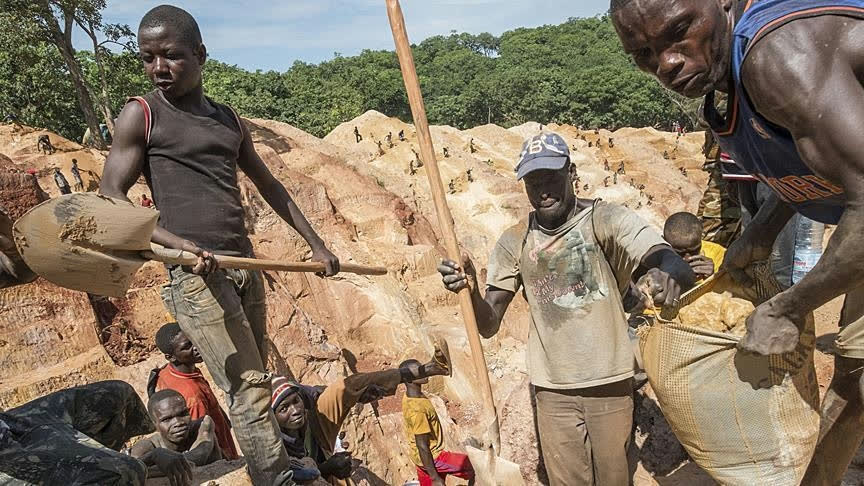
Siguiri, in the far north-east of Guinea near the border with Mali, is one of West Africa's most important gold-producing areas, and for years it has drawn tens of thousands of artisanal miners — many of them migrants from neighbouring countries — to its open pits and riverbeds. Reuters reported that the clashes erupted when a patrol of defence and security forces arrived in Sétiguiyah to verify that the ban on uncontrolled mining was being respected, and met resistance from demonstrators.
The ministry's statement gave no account of how the confrontation escalated, or who fired first. It said judicial authorities had been tasked with establishing what triggered the violence and determining who was responsible. Al Jazeera reported the same toll — ten dead, including five foreign nationals, and thirteen injured — and noted that the nationalities of the five foreigners had yet to be established.
The deaths are the most serious consequence so far of a crackdown that began less than two weeks ago, and they underline how combustible the encounter between the state and the informal mining economy has become in a region where digging for gold is, for many families, the only livelihood available.
Why Guinea banned artisanal mining
On 2 November, five government departments — including defence, security, environment and mines — issued a joint order imposing a total ban on uncontrolled and illegal artisanal gold mining in the Siguiri administrative region. The government blamed unregulated operations for extensive environmental damage, including the contamination of farmland and rivers and the destruction of vegetation.
The concerns are real. Artisanal mining across West Africa is associated with deforestation, the silting and poisoning of waterways — often with mercury used to separate gold from ore — and the degradation of farmland that communities depend on for food. Governments across the region have long struggled to bring the sector under control: it is vast, diffuse, largely informal, and in many places more lucrative than any alternative employment.
But the ban also cut off, overnight, the income of thousands of people who had travelled to Siguiri from Guinea's neighbours and from further afield. For a government that has itself come to power by military means and that faces the same pressures of unemployment and poverty as its neighbours, the operation was always going to be a test of whether environmental enforcement could be carried out without provoking the very unrest it was meant to prevent.
A crackdown on a huge scale
The scale of the operation is striking. According to reporting on the government's figures, security forces have arrested 1,412 people across Siguiri and the neighbouring Kérouané region since the crackdown began, with 202 defendants facing proceedings before Guinea's economic and financial crimes court. Mining.com reported that more than 1,200 suspected illegal miners had been detained in the north-east.
Those numbers suggest an operation aimed not merely at a handful of sites but at clearing an entire mining economy — and at making an example of it. The arrests, the patrols and now the deaths in Sétiguiyah have sent a message that the ban will be enforced with force, whatever the cost to the communities that live from the pits.
It is a gamble. Artisanal mining is woven into the social fabric of Siguiri: miners buy from local traders, eat in local restaurants, send money home to families in Mali, Burkina Faso, Senegal and beyond. Shutting it down abruptly does not make the miners disappear; it displaces them, and the displacement is already visible across the region.
An exodus across the region
In the days since the ban, thousands of miners have left Siguiri, many of them heading for the borders. Photographs published this week showed artisanal miners waiting for repatriation vehicles bound for Burkina Faso at Kanadjiguilla, on the outskirts of Bamako, the Malian capital, on 10 November. Mali's government has recorded eleven deaths linked to the displacement crisis, separate from the fatalities reported in Guinea.
The exodus raises uncomfortable questions for the whole region. The miners being expelled from Guinea are, in many cases, citizens of the very countries now receiving them — Mali, Burkina Faso and others — and their return, often without money or possessions, adds strain to communities already coping with insecurity and economic hardship. The eleven deaths recorded in Mali, connected to the upheaval of the displacement itself, suggest that the human cost of the crackdown extends well beyond the ten killed in Sétiguiyah.
There is also a security dimension. The Sahel is already one of the world's most unstable regions, and the informal gold trade has long been entangled with armed groups and smuggling networks. A sudden, forced movement of thousands of young men with mining skills and no income is the kind of shock that regional governments have learned to fear.
What happens next
The immediate question is the investigation the Guinean authorities have promised into the Sétiguiyah killings. Whether it produces a credible account of what happened — and whether anyone is held responsible — will shape how the crackdown is judged, both inside Guinea and by its neighbours.
The longer question is whether the ban can hold. Governments across West Africa have announced crackdowns on artisanal mining before, and the pits have a habit of reopening once the patrols move on. The economics have not changed: gold prices remain high, formal employment remains scarce, and the land still holds gold. Unless the government pairs enforcement with alternatives — licensed small-scale mining, other work, or compensation — the miners are likely to return, and the next confrontation may be worse.
For now, Siguiri is quieter than it was a fortnight ago, but at a heavy price: ten people dead, thirteen injured, more than 1,400 arrested, and thousands of families uprooted. The government says it acted to protect the environment. The families of the dead in Sétiguiyah will measure that protection against what it cost them.
Key takeaways
- At least ten people were killed and thirteen injured in clashes on Wednesday in Sétiguiyah, Balato district, in Guinea's north-eastern Siguiri region, when security forces enforced a ban on artisanal gold mining.
- Five of the dead were foreign nationals whose identities and nationalities have not yet been established; the figures are provisional, based on regional health authorities.
- Guinea imposed a total ban on uncontrolled and illegal artisanal gold mining in Siguiri on 2 November, citing environmental damage including contaminated farmland and rivers.
- More than 1,400 people have been arrested across Siguiri and Kérouané since the crackdown began, with 202 defendants facing proceedings before the economic and financial crimes court.
- The crackdown has triggered a mass exodus of miners; Mali has recorded eleven deaths linked to the displacement, and miners have been photographed waiting for repatriation vehicles to Burkina Faso.
Frequently Asked Questions
How many people were killed in the Guinea gold mining clashes?
At least ten people were killed and thirteen injured, according to Guinea's Ministry of Territorial Administration. The clashes took place on Wednesday in Sétiguiyah, in the Balato district of the Siguiri region. Five of the dead were foreign nationals whose identities have not yet been established.
Where did the violence happen?
The violence erupted in Sétiguiyah, in the Balato district of Siguiri, a gold-producing region in north-eastern Guinea near the border with Mali. It happened during a joint patrol by defence and security forces verifying the implementation of the ban on artisanal gold mining.
Why did Guinea ban artisanal gold mining?
The government imposed the ban on 2 November, in a joint order from five departments including defence, security, environment and mines. It blamed unregulated mining for extensive environmental damage, including the contamination of agricultural land and rivers and the destruction of vegetation.
How many people have been arrested in the crackdown?
More than 1,400 people have been arrested across Siguiri and Kérouané since the crackdown began, with 202 defendants facing proceedings before Guinea's economic and financial crimes court.
What has happened to the miners who were forced out?
Thousands have left Siguiri, many heading for the borders. Miners have been photographed waiting for repatriation vehicles bound for Burkina Faso near Bamako, and Mali's government has recorded eleven deaths linked to the displacement crisis, separate from the fatalities in Guinea.