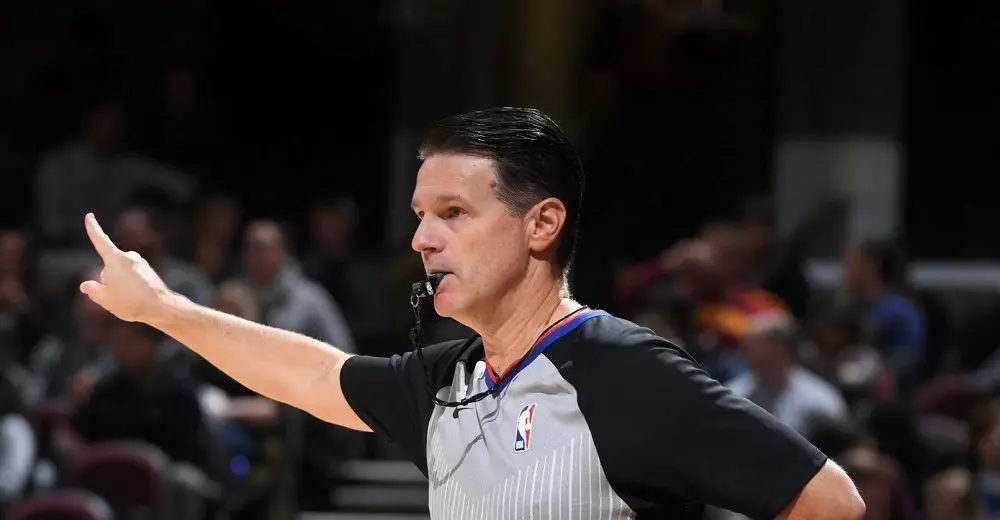
The NBA is putting two pieces of technology through their paces ahead of the new season, the league announced on Monday: a Bluetooth-enabled "smart basketball" that collects data for future real-time officiating decisions, and wrist wearables that give referees a direct line to the league's Replay Center in select preseason games. The crucial caveat from the league: the data is for research only and will not affect a single call on the court.
Table of Contents
- The Announcement
- The Smart Basketball: Measuring, Not Deciding
- Wrist Wearables: A Direct Line to the Replay Center
- Why the NBA Is Moving Cautiously
- Technology and Officiating: A Wider Trend
- Key Takeaways
- Frequently Asked Questions
- Sources
- Read Next on Chronicle
The Announcement
The league's communications arm confirmed that selected exhibition games will feature the connected ball and that officials in certain games will wear wrist devices to communicate with the Replay Center in designated situations — including potential replay reviews, scoring changes, and clock malfunctions. The wearables had what the NBA called a successful pilot program during the 2026 summer league. Neither technology will extend into the 2026–27 regular season.
The announcement, first reported by the Associated Press, makes the NBA the latest major league to explore how instrumented equipment and wearable communication can support — but not yet replace — human officials.
The Smart Basketball: Measuring, Not Deciding
The connected ball was developed with Wilson, the league's official ball supplier, and carries a Bluetooth sensor that captures information while remaining usable as a regulation game ball. The league says the data will be used to build more accurate, reliable models for possible future use in real-time officiating determinations.
For now, the NBA is keeping a deliberate separation between measurement and adjudication: the sensor can generate research datasets, but officials will make the actual in-game decisions exactly as before. That distinction matters. Instrumented equipment can record possession, release timing, trajectory, and boundary events more directly than video review alone — but moving from research data to officiating calls would require extensive validation against the league's existing review standards.
Wrist Wearables: A Direct Line to the Replay Center
The second experiment puts a communication device on an official's wrist, usable in designated situations involving replay reviews, scoring changes, and clock malfunctions. The goal is to give referees a faster, more discreet link to the centralized Replay Center without turning the test into an automated decision system.
The NBA has invested heavily in its centralized review infrastructure over recent seasons, and the wearables represent the next step in connecting on-court officials to it. The league stressed that the devices are a communication tool, not an officiating aid that interprets play.
Why the NBA Is Moving Cautiously
Sports leagues have learned to be careful about letting technology intrude on the flow and human judgment of a game. The NBA's approach — limited to select exhibitions, data quarantined from decisions, and no regular-season use — reflects a strategy of proving the technology's reliability and acceptance before anything touches live competition.
The stakes are high: officiating controversies routinely dominate sports discourse, and any system that appears to override referees in real time would face intense scrutiny from players, coaches, and the players' union. By framing the tests as research, the league buys itself time to build trust — and evidence.
Technology and Officiating: A Wider Trend
The NBA is not alone. Tennis has embraced electronic line-calling, football uses goal-line technology and semi-automated offside detection, and cricket's Decision Review System has normalised the mix of human and machine judgment. Basketball has been relatively conservative, relying on video replay from a centralized center rather than instrumenting the ball itself.
A Bluetooth sensor in the ball is a natural extension of that evolution — the object of the game, rather than the camera angles around it, becomes a data source. Whether it ever whistles a foul or calls out of bounds is a decision for future seasons.
Key Takeaways
- The NBA is testing two technologies in select preseason games: a Bluetooth "smart basketball" developed with Wilson and wrist wearables for referees.
- The connected ball collects data for research only — it will not influence officiating decisions during these exhibition games.
- Referee wearables enable communication with the Replay Center during replay reviews, scoring changes, and clock malfunctions, following a successful summer league pilot.
- Neither technology will be used in the 2026–27 regular season; the league is treating the tests as a research exercise.
- The move reflects a wider trend across sports toward instrumented equipment and centralized review, from tennis line-calling to football's goal-line technology.
Frequently Asked Questions
What is the NBA's smart basketball?
It is a regulation basketball developed with Wilson that contains a Bluetooth sensor. The sensor collects data during select preseason games to help the league build more accurate models for possible future use in real-time officiating decisions.
Will the smart basketball affect calls in the games where it is used?
No. The NBA says the data is for research only and will not impact officiating decisions during the preseason games in which the ball is used. Human officials continue to make all calls.
What are the referee wrist wearables for?
The wearables let officials communicate with the league's Replay Center in designated situations, including potential replay reviews, scoring changes, and clock malfunctions. They were piloted successfully during the 2026 summer league.
Will this technology be used in the regular season?
No. The NBA says the experiments are limited to select preseason exhibition games and will not extend into the 2026–27 regular season.
Are other sports using similar technology?
Yes. Tennis uses electronic line-calling, football uses goal-line technology and semi-automated offside detection, and cricket uses ball-tracking and edge-detection in its Decision Review System. Basketball has been comparatively cautious, relying mainly on video replay.
Sources
- Associated Press via TSN — "NBA experimenting with smart basketballs, official wrist wearables in select preseason games"