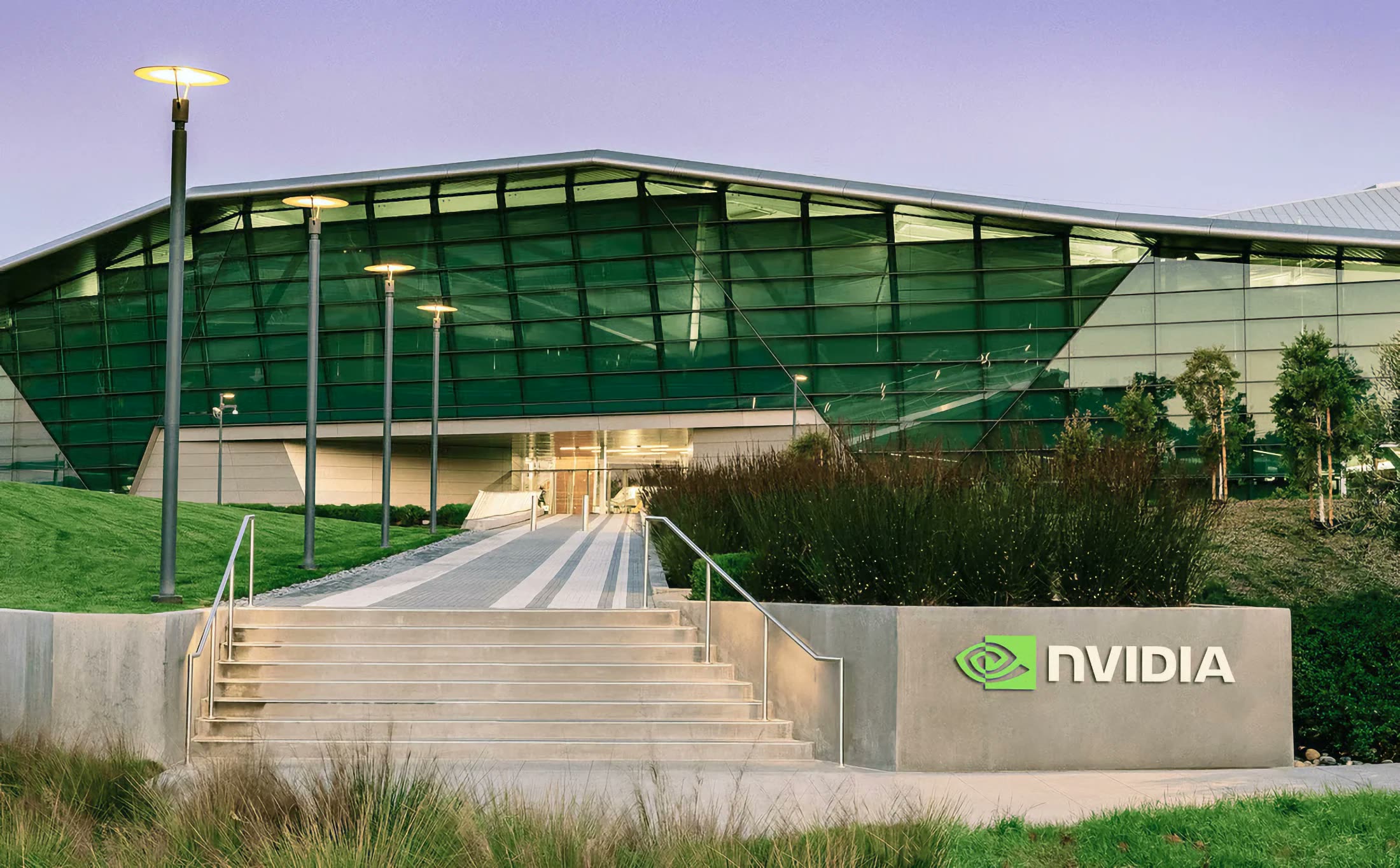
Nvidia began the search for only the second chief executive in its 33-year history on Friday, a day after co-founder Jensen Huang resigned with immediate effect, leaving interim chief Colette Kress and newly appointed board chairman Harvey C. Jones to steady a company whose shares, staff and customers are all asking the same question: who comes next? Barron's
The board said on Thursday that Kress, Nvidia's chief financial officer since 2013, had agreed to serve as interim chief executive while retaining her finance role, and that it was beginning a search for a permanent successor that would consider both internal and external candidates. Jones, a former Synopsys chief executive and long-time Nvidia director, was named the company's first-ever chairman of the board. Reuters
"An extraordinarily difficult period"
Kress moved quickly to address employees. In an internal memo seen by the Wall Street Journal, she wrote: "I recognize that this has been an extraordinarily difficult period," and promised staff more information in the coming days about "our future together". She said she would host a company-wide meeting on 18 November. The Wall Street Journal
Jones also addressed staff, telling them the board had begun the search for a permanent chief executive and would weigh candidates from inside and outside the company. The speed of the two messages underlines how abruptly the transition arrived: Huang, who co-founded Nvidia in 1993 and built it into the emblem of the artificial intelligence boom, had no succession plan in place, with dozens of executives reporting directly to him. Barron's
Huang's departure capped a week of extraordinary turmoil. The board opened an independent investigation after reports of a relationship between Huang and Alice Huang, a former executive at a Singapore data-centre company whom United States intelligence agencies suspect of spying for China. Huang acknowledged he had been unfaithful to his wife and apologised to staff. The company gave no reason for his resignation and included no comment from him in its announcement, while thanking him for his "immeasurable contributions". Chronicle covered Huang's resignation and the appointment of Kress as interim chief and the board investigation that preceded it.
The early favourites
With no obvious heir, attention has turned to the small group of senior executives who worked most closely with Huang. Prediction markets have already taken a view: Nvidia executive Ian Buck, a long-time engineering leader, is the front-runner at about 29 per cent, narrowly ahead of Kress herself at about 28 per cent, according to Polymarket. Arm chief executive Rene Haas is third at 6 per cent. Barron's
Kress, 59, joined Nvidia in September 2013 after finance roles at Cisco and Microsoft, and is the only other Nvidia executive besides Huang with much of a public profile. Buck is known among investors for his technology credentials, while general counsel Tim Teter, operations chief Debora Shoquist and Nick Parker, who oversees worldwide field operations, form the rest of the inner circle. Analysts quoted by Barron's suggested it may take an engineer to replace Huang — a view that, if the board shares it, would favour Buck over Kress.
President Donald Trump added an unexpected name to the mix on Thursday, writing on social media: "NOW THAT Nvidia CEO JENSEN HUANG, who has done a fantastic job, has resigned, there is only one man to take his place – TIM COOK of Apple. A Legend replaces a Legend!" There is no indication that Cook, who leads Apple, is a candidate.
Huang remains Nvidia's fourth-largest shareholder, with a 3.61 per cent stake, and has hired the law firm Paul Weiss, according to a person familiar with the matter cited by Reuters.
Markets and the earnings test
Investors gave the transition a wary reception. Nvidia shares fell 4.3 per cent on Thursday to $166.19, their lowest close since 30 March 2026, according to Dow Jones Market Data, and briefly dropped 14 per cent early in the session. The stock recovered about 1 per cent in after-hours trading. Barron's
The first real test for the new leadership comes within days. Nvidia will report its third-quarter fiscal 2027 results on Tuesday 17 November at about 1:20 p.m. Pacific Time, followed by its earnings call at 2 p.m., as previously scheduled. The numbers — and Kress's first appearance before investors as interim chief — will show whether the company that sits at the centre of the global AI build-out can keep its momentum while its founder is gone.
Why the choice matters beyond Nvidia
Huang's exit could have far-reaching consequences for the AI ecosystem and for United States chip export policy. He had pushed hard to preserve Nvidia's access to the Chinese market and maintained close ties with the Trump administration. Whoever succeeds him will inherit not only the world's most valuable chip business but also the delicate politics of selling advanced AI hardware in a world split by export controls, national-security investigations and a trade war over technology. Reuters
For now, the board's message is continuity: Kress runs the company, Jones chairs the board, and the search begins. But with no designated successor, a founder-sized hole at the top and earnings five days away, the race to lead Nvidia is only just beginning — and the whole technology industry is watching it.
Frequently Asked Questions
Who is Nvidia's interim CEO?
Colette Kress, Nvidia's executive vice president and chief financial officer since September 2013, agreed to serve as interim chief executive after Jensen Huang resigned on 12 November. She will continue as chief financial officer while serving as interim chief executive until a permanent successor is named.
Who are the favourites to become Nvidia's permanent CEO?
Prediction markets put Nvidia engineering executive Ian Buck narrowly ahead at about 29 per cent, followed by interim chief Colette Kress at about 28 per cent, with Arm chief executive Rene Haas third at about 6 per cent. The board says it will consider internal and external candidates.
When will Nvidia report its next earnings?
Nvidia will publish its third-quarter fiscal 2027 results on Tuesday 17 November at about 1:20 p.m. Pacific Time, followed by an earnings call at 2 p.m. It will be the company's first results since Huang's resignation.
Why did Jensen Huang resign?
Nvidia's board announced on 12 November that Huang had resigned as president, chief executive and board member with immediate effect, but gave no reason and included no comment from him. His departure followed reports of two extramarital affairs, including one with a woman US intelligence agencies suspect of spying for China, and a board investigation into whether he had been targeted by a foreign intelligence operation.