ATHENS — US Secretary of State Marco Rubio declared on Wednesday that Iran has "lost complete control" of the Strait of Hormuz, pointing to oil shipments that have nearly returned to pre-war levels, and said Tehran's economy is in "total and complete freefall" as a result of crippling international sanctions.
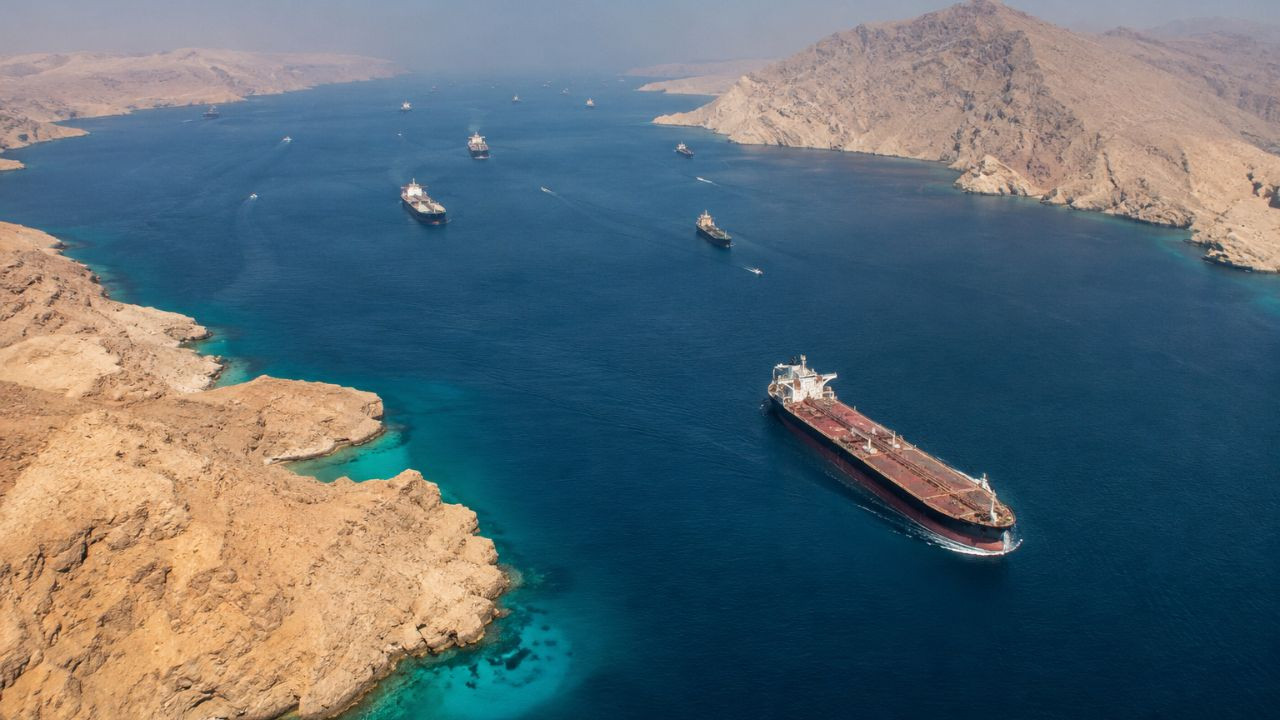
Speaking at a joint press conference in Athens with Greek Foreign Minister Giorgos Gerapetritis, Rubio argued that months of maritime attacks and Iranian threats have failed to keep the world's most important oil chokepoint closed. "The Straits of Hormuz are open. There's almost as much oil flowing out now as there was before this conflict began. So they've lost complete control of the Straits," he said, according to Arab News.
Contents
- The oil numbers behind the claim
- An economy in "total and complete freefall"
- "Every dollar" goes to proxies, Rubio says
- Tehran's defiant answer
- Why Athens: Greece's strategic turn
- Where this leaves the Iran standoff
- Frequently Asked Questions
- Sources
- Chronicle related coverage
The oil numbers behind the claim
Rubio's assertion rests on ship-tracking data. According to figures from the analytics firm Kpler cited by The National, the seven-day moving average for crude exports from the Gulf stood at 18.3 million barrels per day on September 30, compared with an average of 18 million barrels per day that passed through the region in the twelve months before the Iran war began. The figures include shipments through the Strait of Hormuz, the Red Sea and other routes.
If the numbers hold, they mark a striking turnaround. The strait has been a central flashpoint of the conflict between the United States and Iran, with months of maritime attacks on tankers and Iranian threats to close the waterway — threats that at one point sent insurance rates and crude prices soaring. As recently as this month, tankers were still being hit: projectile strikes targeted commercial vessels in the Strait in early October.
An economy in "total and complete freefall"
Rubio went further than the shipping argument, predicting that the Iranian economy was "about to reach a place few countries in the world have been" as a result of what he described as crippling sanctions. The phrasing marks some of the strongest language yet from the Trump administration about the economic toll of the campaign against Tehran.
The claim lands against a backdrop of deepening isolation for Iran. Its currency has collapsed, inflation has soared, and the war — now stretching into its later stages — has compounded the damage from years of American and European sanctions.
"Every dollar" goes to proxies, Rubio says
The secretary of state accused Iran's leadership of spending state revenue on regional proxies rather than on Iranians. "Every dollar and every penny that regime gets, they don't spend it on roads or bridges or helping improve the lives of the Iranian people," he said. "They spend that money on Hezbollah and Hamas, on militias that fire rockets out of Iraq and on the Houthis. That's who they spend their money on."
He argued that Tehran had been trying to build a conventional military capability "so massive that they would become untouchable" — and drew a hard red line on the nuclear file: "Iran cannot have a nuclear weapon, simple, period, end of story," adding that any acceptable agreement "has to be something that ensures that Iran will never have a nuclear weapon."
Tehran's defiant answer
Iran's response was swift and defiant. Brigadier General Mohammad Reza Naqdi, a senior adviser to the commander-in-chief of the Islamic Revolutionary Guard Corps, maintained that Iran's armed forces retain full control of the strait and that the closure would continue until Tehran's "legitimate demands" are met, The National reported.
The standoff over the waterway has already hardened into a diplomatic impasse: Tehran set out seven conditions for any resolution to the Hormuz crisis earlier this month — a position Washington has dismissed outright.
Why Athens: Greece's strategic turn
Rubio's remarks came during the Athens leg of a three-country European tour, following his visit to Iceland on October 5 and ahead of a stop in Lisbon. The centrepiece in Greece is the sixth session of the US-Greece Strategic Dialogue, and Rubio is scheduled to meet Prime Minister Kyriakos Mitsotakis and address an audience from the Pnyx, the hill near the Acropolis where ancient Athenians gathered their democratic assembly.
Greece is positioning itself as a key southeastern European hub for natural gas transport — a role that has grown in importance as the wars in Iran and Ukraine exposed the fragility of energy supply chains. "Greece is a very important US ally," Rubio said ahead of the visit. "It's a place that we have not just a military presence but strong economic ties."
Where this leaves the Iran standoff
Rubio's Athens remarks amount to a victory lap in the economic and shipping dimension of the war — but they also raise the stakes. If Washington's assessment is right, Tehran's leverage over global energy flows has largely evaporated even as the military confrontation grinds on. If Tehran's counterclaim is right, the most dangerous escalation may still lie ahead. What is clear is that the diplomatic space for a negotiated exit has narrowed: each side now publicly insists the other is losing, and neither is offering concessions.
Frequently Asked Questions
What did Marco Rubio say about the Strait of Hormuz?
On October 7, 2026, in Athens, Rubio said Iran has "lost complete control" of the Strait of Hormuz, arguing that oil flows through the strategic waterway have largely recovered to pre-conflict levels despite months of maritime attacks.
How bad does Rubio say Iran's economy is?
He described it as being in "total and complete freefall" due to crippling sanctions, predicting it was about to reach a level of hardship "few countries in the world have been" in — some of the strongest language yet from the US administration.
What was Iran's response?
Brigadier General Mohammad Reza Naqdi, an adviser to the IRGC commander-in-chief, insisted Iran's armed forces maintain full control of the strait and that the closure will continue until Tehran's "legitimate demands" are met.
Why was Rubio in Athens?
He was attending the sixth session of the US-Greece Strategic Dialogue during a three-country European tour covering Iceland, Greece and Portugal, focused on regional and energy security with NATO allies.
Sources
- Arab News: Iran has 'lost complete control' of Hormuz Strait: Rubio
- The National: Iran has 'lost complete control' of Strait of Hormuz, US claims
- Al Arabiya English: Iran has 'lost complete control' of Hormuz Strait, its economy is in 'freefall' Rubio says