More than 200,000 people have fled their homes since fighting escalated in Yemen in recent weeks, the United Nations' International Organization for Migration (IOM) said on Wednesday — a staggering surge from just 76,000 in mid-September that underscores the speed of the country's worst military escalation since a UN-brokered truce in 2022, according to Reuters.
Contents
- "People are running for their lives"
- The worst escalation since the 2022 truce
- Taiz bears the heaviest blow
- A hunger crisis gathering pace
- What happens next
- Frequently Asked Questions
- Sources
- Related reading
"People are running for their lives"
"People are running for their lives and finding nowhere safe to go," said IOM Director General Amy Pope, calling for increased funding as needs for food and shelter soar. Nearly all of the 200,000 displaced fled since fighting intensified in early September.
Displacement has been recorded across ten governorates, and more than 3,700 people have fled by sea to Djibouti, the agency said — a sign of how few safe options remain inside the country. The UN refugee agency has warned it is preparing for more than 10,000 arrivals in Djibouti in the coming months.
The worst escalation since the 2022 truce
Yemen is experiencing its most serious escalation in fighting since a UN-brokered truce largely halted major cross-border attacks in 2022. The Iran-backed Houthis, who already control most of northern Yemen including the capital Sanaa, seized the country's entire Red Sea coast last month from Saudi-backed forces of the internationally recognised government based in the southern port of Aden.
On Sunday, Rashad al-Alimi, chairman of Yemen's Presidential Leadership Council, announced an offensive to retake all remaining Houthi-held territory, including Sanaa, which the group has controlled since 2014. The renewed conflict threatens Red Sea shipping lanes and has already pushed up energy prices.
The fighting has also intensified along the western coast: government forces recaptured the port city of Mocha from the Houthis in recent weeks, while Taiz governorate has become the epicentre of the ground fighting.
Taiz bears the heaviest blow
The southwestern governorate of Taiz has taken the heaviest displacement toll. Nearly half of Yemen's 34 million people already face acute food insecurity, and about half a million suffer severe malnutrition, according to UN figures — and the closure of major roads into Taiz City has raised fears of an impending humanitarian disaster in the besieged urban centre.
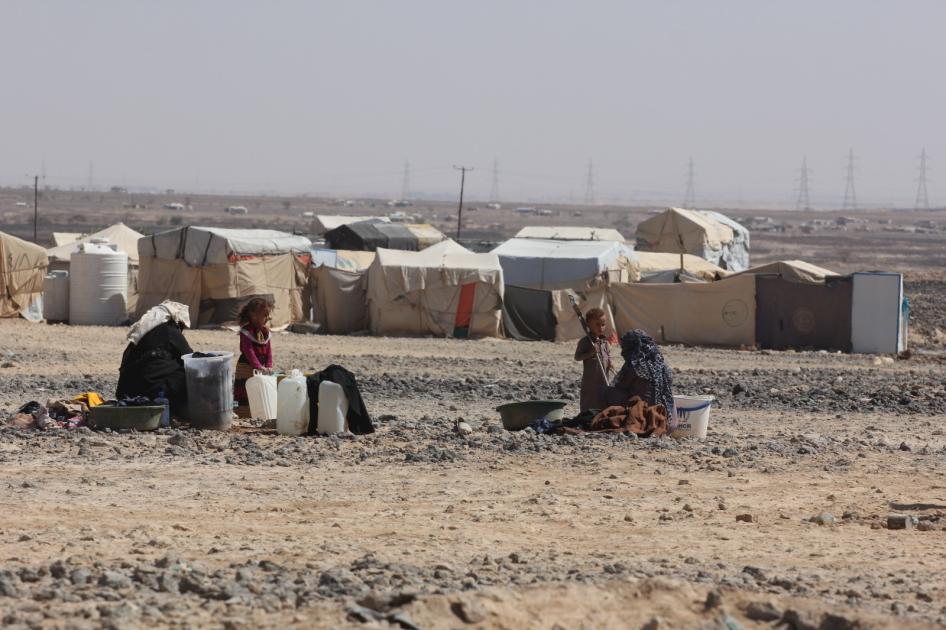
Al Jazeera's reporting from the region describes displaced people sheltering in tents between the provinces of Taiz and Aden in extremely difficult conditions, with vulnerable groups — the elderly and children — surviving for weeks without humanitarian assistance. Some families have been forced to flee two, three, even four times as the front lines shift.
A hunger crisis gathering pace
The displacement surge is compounding an already dire hunger emergency. On Friday, the UN World Food Programme warned that three in four families in parts of Yemen were going hungry due to the "absolutely devastating" impact of the renewed conflict.
UNICEF has warned that acute malnutrition among children is rising as fighting intensifies, with displacement and disrupted access to healthcare increasing the risks for affected children and families. UN humanitarian teams continue to operate but say they require urgent funding and unhindered safe access to reach the tens of thousands newly displaced.
What happens next
Diplomats see few short-term off-ramps. The Houthis show no sign of yielding the Red Sea coast they captured last month, while al-Alimi's government has committed publicly to retaking lost territory — a campaign that, if pursued at full scale, could push displacement figures far beyond the current 200,000.
The question facing international donors is whether funding arrives fast enough to prevent the displacement crisis from hardening into famine. The IOM's message this week was blunt: needs are soaring, and the money is not keeping pace.
Frequently Asked Questions
How many people have been displaced in Yemen?
More than 200,000 people have fled their homes since fighting escalated in recent weeks, according to the IOM — up from 76,000 in mid-September. Displacement has been recorded across ten governorates.
What triggered the latest escalation?
Fighting intensified in early September after the Houthis seized Yemen's entire Red Sea coast. On Sunday, government leader Rashad al-Alimi announced an offensive to retake all Houthi-held territory, including the capital Sanaa.
Why is this escalation significant?
It is the most serious fighting since a UN-brokered truce largely halted major cross-border attacks in 2022. It threatens Red Sea shipping lanes and has already affected energy prices.
Which area is hit hardest?
The southwestern governorate of Taiz has taken the heaviest blow, with nearly 200,000 of the displaced coming from the region and major roads into Taiz City closed.
What is the humanitarian impact beyond displacement?
The UN World Food Programme says three in four families in parts of Yemen are going hungry. Nearly half of the country's 34 million people face acute food insecurity, and UNICEF warns child malnutrition is rising.
Sources
- Reuters: More than 200,000 people displaced since fighting in Yemen began, says UN agency, 7 October 2026.
- Al Jazeera: More than 200,000 displaced as fighting escalates in Yemen, UN says, 7 October 2026.