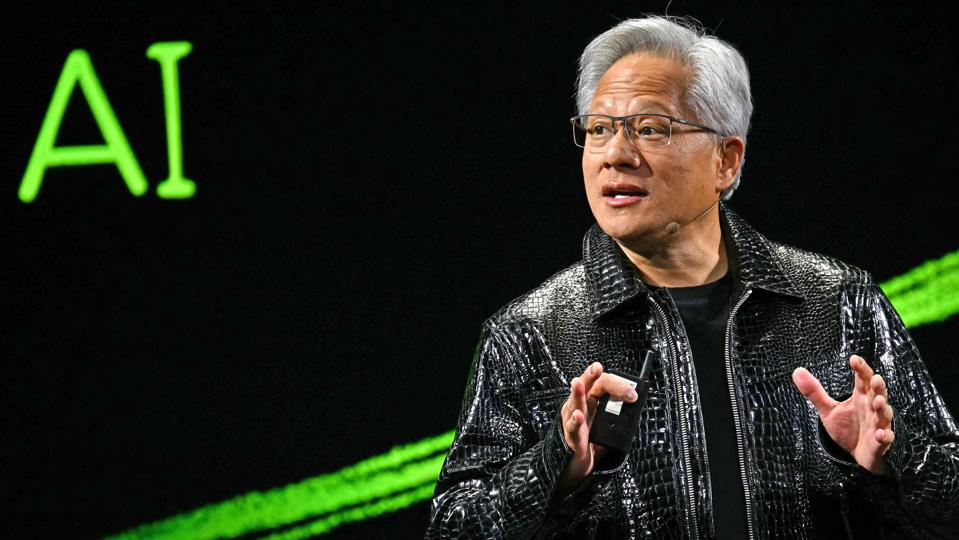
Less than a week after Jensen Huang resigned as chief executive of Nvidia, a campaign to bring him back is gathering extraordinary force — a petition signed by more than 177,000 people, a behind-the-scenes "war room" of technology executives lobbying the board, and public backing from Elon Musk and even President Donald Trump (Al Jazeera).
Huang, who co-founded Nvidia in 1993 and led it for 33 years, stepped down last week after reports of extramarital affairs, including one with a woman suspected by US intelligence of having links to Chinese intelligence, and another involving a subordinate. Chief Financial Officer Colette Kress is serving as interim chief executive while the board conducts an independent investigation into the circumstances of his departure.
Now the question dominating Silicon Valley is not who replaces him — but whether he should be replaced at all.
A petition with 177,000 names
The public face of the campaign is an open letter titled "Stand With Jensen", addressed to Nvidia's board and hosted on the website standwithjensen.com. Its signatories describe themselves as current and former Nvidia employees, partners, shareholders and supporters, and they make a blunt demand: bring Huang back while an independent investigation establishes the facts, unless the board can provide compelling evidence that his removal is in Nvidia's best interests.
Among the signatories are some of the most prominent names in technology. Tesla and SpaceX chief executive Elon Musk wrote on X on Friday: "A petition is underway to reinstate Jensen and I'm signing it too." Epic Games chief executive Tim Sweeney, Y Combinator chief executive Garry Tan and YouTube co-founder Steve Chen have also backed the letter, along with Uber co-founder Travis Kalanick and Replit chief executive Amjad Masad.
More than 8,400 of the signatories identified themselves as current Nvidia employees and nearly 90,000 as shareholders, according to figures reported by Reuters. The campaign itself notes that those affiliations are self-reported and have not been independently verified.
Musk has argued the case in commercial terms. In a post on X, he said Huang "drove supply chain brilliantly at Nvidia" and that many of the company's critical deals were "a handshake with Jensen, not a written contract". Without him, Musk warned, "at least some of those critical deals will be lost."
The 'war room'
Behind the public petition, a quieter and more organised effort is under way. The Financial Times reported on Sunday that a group of Silicon Valley insiders has assembled a so-called war room of tech executives to lobby Nvidia's board for Huang's reinstatement — and to seek support from the White House.
According to the report, Huang himself has discussed the possibility of returning with people close to him, even as the board's investigation continues. One ally told the newspaper that "everyone that matters in tech outside the frontier labs loves Jensen", and added that Huang supported the effort.
The campaign describes itself as independent and says it is not endorsed by Nvidia or by Huang. But its demands are specific. The letter asks the board to take three actions: reinstate Huang as chief executive, ensure an independent investigation and a fair hearing that gives him an opportunity to respond before any final decision, and provide a timely public explanation of its concerns and the evidence behind them.
Prominent investors have echoed the call for patience. Brad Gerstner, founder of Altimeter Capital, and Gavin Baker, chief executive of Atreides Management, wrote in an open letter that Huang was an "incredible leader" who deserved a measured investigation, and urged the board not to rush into naming a successor before all the facts were known.
Trump weighs in
The campaign received an unexpected boost on Monday from the White House. Asked about Huang's possible return, President Donald Trump told reporters: "A lot of people are asking Jensen, they think Jensen should go back. That certainly isn't a bad idea."
It is not clear what role, if any, the White House would play in a corporate succession decision. But the Financial Times reported that the war room's lobbying effort includes seeking support from the administration — a move that, according to the paper, may already have been successful.
Not everyone in Washington agrees with the campaign's direction. US Treasury Secretary Scott Bessent said on Sunday that Nvidia needed a "dramatic shake-up" and urged the board to look outside the company for its next chief executive.
The board's dilemma
The stakes for Nvidia's board are enormous. Market analysts estimate that the company could lose as much as 25 to 30 percent of its value without Huang, whose personal relationships with customers and suppliers are seen as inseparable from the company's dominance in artificial intelligence chips (Al Jazeera).
At the same time, the board is conducting an independent investigation into serious allegations, and it has already begun sounding out potential successors. The Financial Times has reported that the board has reached out to Rene Haas, chief executive of British chipmaker Arm Holdings, as a possible replacement — though Nvidia has said its succession process remains at an early stage.
The turmoil comes at a sensitive moment for the company. Nvidia's chips power the global artificial intelligence boom, and the US government has moved to designate the company and other leading AI firms as American "national champions", underscoring how strategically important its leadership is considered in Washington.
Investors have already reacted nervously. Shares fell sharply after Huang's resignation, and the board had reportedly been preparing for a possible ouster even before he stepped down, according to earlier reporting covered by Chronicle.
What happens next
For now, the board faces two competing pressures: a public and private campaign demanding Huang's immediate return, and an unfinished investigation into the allegations that ended his 33-year tenure. The "Stand With Jensen" letter insists he was "forced out without due process and without even a few days to make his case" — a claim the board has not publicly answered in detail.
Whether the war room succeeds may depend less on petitions than on the investigation's findings. If the board concludes the allegations do not justify permanent removal, the path back is open — and the campaign has made clear that Silicon Valley's most powerful figures expect it to be taken. If it concludes otherwise, the board will have to name a successor capable of holding together a company whose value, its supporters argue, is bound up in one man.
Either way, the episode has exposed an uncomfortable truth about the world's most important chipmaker: after three decades of Huang's leadership, Nvidia's succession was never really planned for — and now everyone, from its employees to the president, has an opinion on how it should end.
Frequently Asked Questions
Why did Jensen Huang resign as Nvidia CEO?
Huang stepped down last week after reports of extramarital affairs, including one with a woman suspected by US intelligence of having links to Chinese intelligence, and another involving a subordinate. Nvidia's board is conducting an independent investigation into the circumstances of his departure, and Chief Financial Officer Colette Kress is serving as interim chief executive.
What is the 'Stand With Jensen' campaign?
It is a petition and open letter to Nvidia's board, signed by more than 177,000 people including Elon Musk, Tim Sweeney and thousands of Nvidia employees and shareholders. It demands that the board reinstate Huang while an independent investigation establishes the facts, unless it can provide compelling evidence that his removal is in the company's best interests.
Who is backing Huang's return?
Elon Musk, Epic Games CEO Tim Sweeney, Y Combinator CEO Garry Tan, YouTube co-founder Steve Chen, Uber co-founder Travis Kalanick and investors Brad Gerstner and Gavin Baker have publicly backed the campaign. The Financial Times reported that allies have formed a "war room" to lobby the board and the White House, and President Donald Trump said bringing Huang back "isn't a bad idea".
Could Nvidia really lose 30 percent of its value without Huang?
Market analysts cited by Al Jazeera estimate the company could lose 25 to 30 percent of its value without him, because so much of Nvidia's business rests on Huang's personal relationships with customers and suppliers. The estimate is an analyst judgement, not a certainty, and Nvidia's shares have already fallen since his resignation.
Who might succeed Huang if he does not return?
The Financial Times reported that Nvidia's board has reached out to Rene Haas, chief executive of Arm Holdings, as a potential successor. US Treasury Secretary Scott Bessent has urged the board to look outside the company. Nvidia says its succession process remains at an early stage.